• 8AM.MEDIA
  • ویب‌سایت فارسی
  • پښتو ویب‌پاڼه
  • اۉزبېکچه ویب‌سایت
  • Podcast
Thursday, October 1, 2026
Hasht-e Subh
  • Home
  • News
    • Afghanistan News
    • World News
  • Opinion
    • Editorial
    • Analysis
  • Reports
    • Daily Reports
    • Investigative Reports
  • Society
    • The story of people
  • Women’s Word
  • Columns
    • Three Years After Afghanistan’s Fall: The Taliban’s Resurgence
    • Towards Equality
    • The Resurgence of the Taliban: Two Years Since Afghanistan’s Fall
    • Hebatullah Report Special Edition
    • Resistance for Education Special Edition
    • Special Column on Taliban’s Education Curriculum
    • Nawroz
  • Interviews
  • Contact Us
    • About Us
    • 8AM MEDIA Annual Awards
    • Submit an Article to Hasht-e-Subh
  • 8am.mediaBack
Subscribe
No Result
View All Result
  • Home
  • News
    • Afghanistan News
    • World News
  • Opinion
    • Editorial
    • Analysis
  • Reports
    • Daily Reports
    • Investigative Reports
  • Society
    • The story of people
  • Women’s Word
  • Columns
    • Three Years After Afghanistan’s Fall: The Taliban’s Resurgence
    • Towards Equality
    • The Resurgence of the Taliban: Two Years Since Afghanistan’s Fall
    • Hebatullah Report Special Edition
    • Resistance for Education Special Edition
    • Special Column on Taliban’s Education Curriculum
    • Nawroz
  • Interviews
  • Contact Us
    • About Us
    • 8AM MEDIA Annual Awards
    • Submit an Article to Hasht-e-Subh
  • 8am.mediaBack
No Result
View All Result
Hasht-e Subh
No Result
View All Result

Thirsty Kabul: Absorption Wells as the Last Hope to Save the Capital from a Water Crisis

Illiya Illiya
3 January 2026 - Solar Hijri Date: 1404/10/13 [t_time:1767438730]
Kabul residents collect water in plastic containers as the capital struggles with a deepening water shortage and declining groundwater levels. Photo Credit: 8am.media

8am.media

Environmental experts are urging Kabul residents to dig absorption wells to strengthen groundwater reserves by capturing rainwater and snow. They explain that this step can help slow the decline of groundwater levels and improve water management across the city. With seasonal rainfall increasing, they describe absorption wells as a practical and effective solution, even though the cost remains high.

In interviews with the Hasht-e Subh Daily, these experts stress that cooperation between Kabul residents and responsible institutions can prevent a future water shortage crisis. They say people must learn how to use rainwater and snow more effectively, which requires broad public awareness and cultural change. In their view, the Taliban Ministry of Energy and Water and other relevant institutions should guide and support residents and actively encourage them to dig absorption wells.

Kazim Homayoun, an environmental expert, says absorption wells can play a key role in strengthening Kabul’s groundwater. He explains that the plains surrounding the city are suitable for such wells, but only after careful geological studies. According to him, these wells work best in areas where underground water veins already exist.

Mr. Homayoun says, “When we dig absorption wells where we live, we help groundwater recharge naturally. This method works best in places with water veins, because the water can seep into underground aquifers. The final result depends on how many wells are built and how much water they store, and it is not possible to calculate this precisely in advance.” He adds that permeable soil offers the best conditions for digging absorption wells.

Despite these benefits, he warns that absorption wells also bring serious challenges. He explains that groundwater in Kabul lies at a very deep level. He also warns that pollution poses a major risk, since the city contains heavy metals. Widespread coal use releases substances such as cadmium, mercury, and lead, which can seep into groundwater. He adds that digging these wells requires significant funding, and the Taliban lack the capacity to build them on a large scale.

At the same time, some Kabul residents say both the public and Taliban officials have failed to pay enough attention to the growing water crisis. They point out that most new buildings are concrete houses constructed without green spaces, absorption wells, or systems to store rainwater and snow. They warn that continuing this approach will only deepen Kabul’s water shortage.

Ahmad, a resident of the Chahar Qala area, says Kabul faces a serious water crisis, yet both people and the Taliban continue to ignore it. He urges the media to educate citizens about practical solutions that could help ease the situation.

“Every day, people build concrete houses without following any standards,” Ahmad says. “In the past, sewage wells were turned into absorption wells in the name of modernization, and now the result is clear. The water is no longer drinkable. People should store snow under trees and manage rainwater properly instead of wasting it.”

Siddiq, another Kabul resident, says Taliban officials must work with the public to ensure responsible water use and to make better use of rainfall during wet seasons.

“Water scarcity is a global problem,” Siddiq says. “As the population grows, the demand for water-dependent infrastructure also increases. We lack a clear system to manage flowing water, our urban network is disorganized, and proper water management does not exist. If this continues, many families will lose access to drinking water. This issue must be addressed, and people must take responsibility as well.”

Mujib Saabir, a Kabul resident, says that more people have recently begun digging absorption wells alongside water wells to store rainwater and snow. “In Kabul, it has become a necessity,” he says. “Anyone who digs a new water well now needs an absorption well too. The capital is facing a real water crisis, and people are finally understanding this. There has been no snowfall in Kabul so far. In the past, when water was plentiful, people dumped snow into the streets. Last year, they collected it and carried it into their courtyards to help reduce the water shortage.”

Kabul, the most populous city in Afghanistan, continues to grow rapidly and has struggled with a severe water shortage for more than a decade. Addressing this crisis requires fast, effective action and long-term planning.

Earlier, the United Nations Human Settlements Programme (UN-Habitat) warned that falling groundwater levels put nearly six million people in Kabul at risk. The organization said solving the crisis demands large-scale investment, strong institutional cooperation, and greater public awareness of water use and management.

Mercy Corps has issued a similar warning, saying around six million Kabul residents face a critical water shortage. The organization reported that half of the city’s deep wells have dried up and warned that Kabul could face the risk of running dry by 2030.

According to Mercy Corps, groundwater levels in Kabul have dropped by about 30 percent over the past decade, with rapid urbanization and the climate crisis driving the worsening water situation in the capital of Afghanistan.

You can read the Persian version of this report here:

کابل تشنه؛ چاه‌های جذبی آخرین امید نجات پایتخت از بحران کم‌آبی

ShareTweetSendSendShare

Related Posts

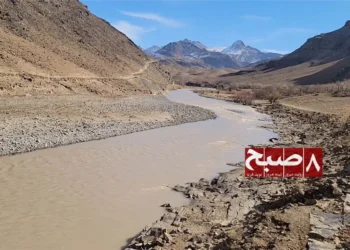
A dry riverbed and low water flow are seen along the Tarinkot River in Uruzgan province, as residents await construction of the Aghajan Dam. (Photo credit: 8am.media)
Daily Reports

Uruzgan Residents: Two Years After Groundbreaking, Aghajan Dam Construction Still Not Started

27 September 2026 [t_time:1790532173]
A loudspeaker used by a cart vendor sits among stacked bottles at a roadside stall in Kabul amid rising complaints of noise pollution. (Photo credit: 8am.media)
Daily Reports

Kabul Residents: Noise Pollution Disrupting People’s Peace and Sleep

27 September 2026 [t_time:1790517220]
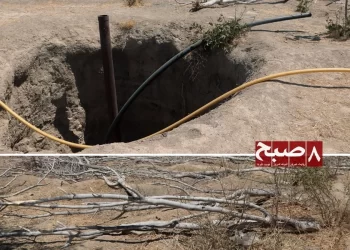
A freshly dug well and withered, uprooted fig branches reflect the deepening water crisis facing orchards in Kandahar province. (Photo credit: 8am.media)
Daily Reports

Kandahar Drought: 30 Percent of Orchards at Risk of Drying Up

22 September 2026 [t_time:1790084129]

Latest

Loading latest news...

Popular stories

  • Surveillance footage shows Taliban fighters surrounding and shooting a bound man in Herat. (Photo credit: Social Media)

    Taliban Shoot Young Man from Herat After Torturing Him with Hands Tied

    Share
    Share Tweet
  • UN Report Reveals Shifts in Family Attitudes and Rise in Domestic Violence in Afghanistan

    Share
    Share Tweet
  • Al-Qaeda Releases Hamza bin Laden Message on 9/11 Anniversary

    Share
    Share Tweet
  • Sources: Kandahar Bombing Leaves Seven Dead and Eight Injured at Mirwais Hospital

    Share
    Share Tweet
  • Afghanistan’s Empty Seat at the Annual UN General Assembly

    Share
    Share Tweet

Podcast

Insights
Insights

Join Lynne O’Donnell for 8AM’s podcast series, Insights.
Lynne talks with generals, diplomats, soldiers, journalists, politicians, activists, people who have front row seats for conflicts around the world, and citizens with a story to tell, happy or sad. For this first series, Afghanistan is the focus. Lynne and her guests talk about the collapse of the republic in August, 2021, and the impact since — for the people of Afghanistan, for the security of the region, for the safety of the world. It’s important, interesting and insightful.

Insights/22: Controlling the Narrative with Mina Sharif
byinsights8am

Controlling the Narrative

Lynne O’Donnell talks with Mina Sharif, author, activist, women’s rights campaigner, educator and mentor. They discuss who controls the narrative and who speaks for Afghanistan’s people when the Taliban appear to have seized control not only of the country but of the message, too.

Have a listen

Insights/22: Controlling the Narrative with Mina Sharif
Episode play icon
Insights/22: Controlling the Narrative with Mina Sharif
Episode Description
Episode play icon
Insights/21: Media Meltdown with Zahra Joya
Episode Description
Episode play icon
Insights/20: Terror Inc with Scott Richards
Episode Description
Episode play icon
Insights/19: Busting Stereotypes with Bushra Gohar
Episode Description
Episode play icon
Insights/18: Media Matters with Waliullah Rahmani
Episode Description
Episode play icon
Insights/17: What Goes Around Comes Around with Sima Samar
Episode Description
Search Results placeholder
Hasht-e Subh

8AM Media, also known as Hasht-e-Subh Daily, stands as Afghanistan's premier independent and non-profit newspaper, resonating as a beacon of journalistic integrity since its establishment in June 2007 by esteemed Afghan journalists and human rights advocates. With a steadfast commitment to citizen journalism and civic education, Hasht-e-Subh Daily has earned its place as the most esteemed publication in the nation.

Publisher: Sanjar Sohail
Email: [email protected]
Executive Director: Parwiz Kawa
Email: [email protected]

Read More

Faiq: Civilians in Afghanistan Should Not Pay the Price of Pakistan-Taliban Dispute Over TTP

11 Miners Trapped Under Debris After Mine Collapse in Takhar Province

Eighth Moscow Format Meeting on Afghanistan to Be Held in Russia

Textbook and Teacher Shortages Hit Schools as Students Say Taliban Prioritize Turbans Over Education

The Beard: Religious Tradition or a Tool of Political and Social Distinction?

Editor’s Choice

Every Saturday morning, 8AM MEDIA English Services Department will guide you through the week’s biggest stories from Afghanistan and the international community.

Subscribe

© 2026 - ©Hasht-e Subh Daily

No Result
View All Result
8am.Media
پښتو ویب‌پاڼه
ویب‌سایت فارسی
اۉزبېکچه ویب‌سایت
  • Home
  • News
    • Afghanistan News
    • World News
  • Opinion
    • Editorial
    • Analysis
  • Reports
    • Daily Reports
    • Investigative Reports
  • Society
    • The story of people
  • Women’s Word
  • Columns
    • Three Years After Afghanistan’s Fall: The Taliban’s Resurgence
    • Towards Equality
    • The Resurgence of the Taliban: Two Years Since Afghanistan’s Fall
    • Hebatullah Report Special Edition
    • Resistance for Education Special Edition
    • Special Column on Taliban’s Education Curriculum
    • Nawroz
  • Interviews
  • Contact Us
    • About Us
    • 8AM MEDIA Annual Awards
    • Submit an Article to Hasht-e-Subh
  • 8am.media

© 2026 - ©Hasht-e Subh Daily