On the third anniversary of the fall of Afghanistan’s former government and the Taliban’s return to power, Afghan women and girls have expressed deep concern about the ongoing dire situation and their complete exclusion from the public sphere. They have accused the Taliban of widespread human rights violations. Through protests both inside and outside Afghanistan, women and girls have called for the overthrow of the Taliban regime and the recognition of gender apartheid in Afghanistan. They have urged the international community and organizations to hold the Taliban accountable in international courts and to cease financial support for the group. Simultaneously, the chairman of the U.S. House Foreign Affairs Committee stated that the Taliban are systematically and violently torturing people, emphasizing that the people of Afghanistan are suffering under the iron fist of the “terrorist Taliban regime.” The German Foreign Minister also commented, stating that the “inhumane regime of the Taliban” has turned Afghanistan into a prison for women. TIME magazine has called for Taliban leaders to be prosecuted in international courts for their violations of women’s rights.
Reactions of Women and Girls
Protest movements and many women and girls, both inside and outside Afghanistan, have organized large demonstrations demanding the recognition of gender apartheid imposed by the Taliban in the country.
These women, in separate statements and videos, have asserted that the Taliban have no connection to Afghanistan’s social fabric, contemporary realities, or the civil demands of the people of Afghanistan. Any engagement with this group, they argue, would perpetuate the “terrorist” rule in Afghanistan.
Inside the country, women have held protests indoors, while citizens abroad have taken to the streets, accusing the Taliban of dehumanization and structural discrimination against their opponents, particularly women and LGBTQ individuals. They claim that the Taliban have committed war crimes and crimes against humanity, urging the world to cut financial support to the group and impose targeted sanctions to prevent the regime’s continued rule.
Parwana Ibrahimkhail Nijrabi, a women’s rights activist, reacted to the third anniversary of Afghanistan’s fall to the Taliban by telling the Hasht-e Subh Daily: “August 15th is a dark day in Afghanistan’s history, a day when the people of Afghanistan were handed over to the terrorist Taliban, and gender apartheid was imposed on women. Currently, more than 16 million women are subject to violence and systematic exclusion from society.” She added that the fall of Afghanistan to the Taliban was not just the collapse of the country, but also the collapse of the “conscience” of the former government’s leadership.
Reaction of Anti-Taliban Political Movements
The Jamiat-e-Islami Party, led by Salahuddin Rabbani, issued a statement saying: “In the past three years, the people of Afghanistan have endured the most difficult circumstances, but they have not provided even the slightest legitimacy for the Taliban’s usurping control of the country.”
Meanwhile, the National Resistance Front of Afghanistan marked the third anniversary of Afghanistan’s fall by stating that the Taliban’s presence in the country poses a serious threat to neighboring and regional countries. In a statement, the Front accused the Taliban of committing crimes against humanity and promoting extremism. According to the Front, the Taliban have established extremist schools and relocated terrorist groups within Afghanistan, jeopardizing relations with neighboring countries and the region.
The Front’s statement added: “The Taliban’s seizure of power has led to the emergence of various military, political, and civil movements, including active women’s movements, inside and outside the country, fighting against this oppressive group.”
The Afghanistan Freedom Front (AFF) also declared that there is no solution to the country’s problems other than a comprehensive fight against the Taliban. The Front called for unity among all anti-Taliban forces, stating that the time for “coordination, convergence, and alignment among all anti-Taliban forces” has arrived.
The Front’s statement added: “Taliban armed morality police, under the guise of propagating virtue and preventing vice, insult the honor and dignity of women and men of Afghanistan in broad daylight. The filthy hands of the Taliban militia in their dungeons and torture chambers are stained with the violence, abuse, and assault of brave Afghan women and girls who have dared to demand their human rights.”
Muhammad Mohaqiq, leader of the People’s Islamic Unity Party of Afghanistan, warned in a statement that if the Taliban do not respond to the demands of the people of Afghanistan, a war against the group will be “inevitable.”
The Afghanistan National Liberty Party, led by Rahmatullah Nabil, said that if the Taliban do not heed national and international demands, a national uprising against the group will be necessary. According to the party, the Taliban are an “intelligence group” acting on behalf of several “hostile countries and terrorist organizations,” imposing thousands of atrocities on the people of Afghanistan under the guise of Islamic Sharia.
The Association for Coordination of Diplomats of the Islamic Republic of Afghanistan has also warned that the Taliban’s illegitimate control over Afghanistan threatens regional and global security. According to the association, the Taliban have caused a historical disaster for the people of Afghanistan and have imposed severe restrictions on women.
The association’s statement added: “There is no rule of law in the country. Taliban prisons are filled with former security forces, human rights defenders, and Afghan women fighters. In the absence of a legitimate government, Afghanistan has become a haven for terrorist groups.”
International Reactions
Michael McCaul, Chairman of the U.S. House Foreign Affairs Committee, issued a statement on Thursday, August 15th, marking the third anniversary of the Taliban’s takeover of Afghanistan. In his statement, McCaul said that the people of Afghanistan are suffering under the “iron fist of the terrorist Taliban regime.” He noted that the “reckless withdrawal of the United States” emboldened the Taliban, allowing them to turn Afghanistan into a haven for terrorists. He added that the Biden administration, without ensuring the Taliban’s compliance with the Doha Agreement, unilaterally withdrew from Afghanistan. McCaul also emphasized that Afghanistan remains a haven for terrorist groups, with al-Qaeda leader Saif al-Adl reportedly calling on his fighters to come to Afghanistan for training. According to McCaul, the Taliban have not only sheltered “their terrorist allies” but have also been unable to combat ISKP. He added that the U.S.’s ability to gather intelligence on terrorist groups in Afghanistan has been severely diminished.
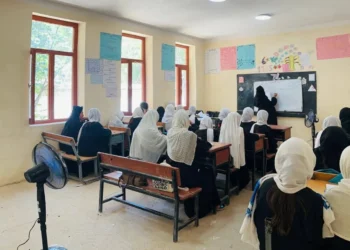
McCaul further noted that one of the conditions of the Doha Agreement between the U.S. and the Taliban was “the protection of women’s rights.” His statement claimed that the Taliban have grossly violated human rights and have systematically and violently arrested, tortured, and physically punished people, including carrying out extrajudicial killings. He emphasized that the Taliban, through extensive restrictions, have erased women from society.
Annalena Baerbock, Germany’s Foreign Minister, strongly criticized the Taliban, stating that their “inhumane regime” has destroyed the hopes and dreams of millions of Afghan women and girls, preventing them from living “as women.” She added that Afghan women and girls are trapped in “house prisons.” According to Baerbock, the Taliban’s radical Islamic worldview has severely and systematically violated women’s human rights. She warned that if the Taliban do not meet Afghanistan’s international obligations, the country will not be able to rejoin the community of nations.
Meanwhile, Canadian officials, including Foreign Minister Mélanie Joly, International Development Minister Ahmed Hussen, and Immigration, Refugees and Citizenship Minister Marc Miller, in a joint statement, said that since the Taliban’s takeover of Afghanistan, women and girls have been imprisoned in their homes. They noted that the presence of terrorist groups in Afghanistan under Taliban control poses a threat to regional and global security. The Canadian officials also highlighted that Afghanistan’s progress over the past two decades (in democracy, human rights, and education) has been undone. They emphasized that Afghanistan has once again become a haven for terrorist groups, which has dire consequences for the stability and security of Afghanistan, the region, and the world.
Binaifer Nowrojee, President of the Open Society Foundation, also wrote in TIME magazine that the time has come for Taliban leaders to be prosecuted by the International Criminal Court (ICC) for their severe violations of women’s rights. According to Nowrojee, this action would put pressure on the Taliban to adhere to human rights standards.
Nowrojee, in her article published on Thursday, August 15th, examined the situation in Afghanistan, including the restrictions on women’s education, employment, and public presence, as well as physical punishments. She wrote: “The Taliban can be held accountable. This militant group is responsible for some of the most serious violations of international criminal law. Just as the International Criminal Court issued arrest warrants for Putin and five senior Russian officials, it can do the same for Taliban leaders.”
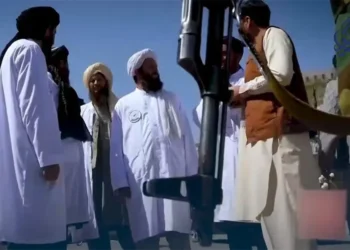
These reactions come as the Taliban have declared August 15th as “Victory Day,” celebrating the occasion with a military parade of U.S.-leftover weapons at Bagram Air Base, while urging the international community to engage with them. However, Taliban opponents have referred to August 15th, 2021, as a “Black Day” in Afghanistan’s history, calling for the Taliban regime’s downfall.
Despite their talk of victory, the Taliban face a nation in dire straits. AFP has reported that about one-third of Afghanistan’s population survives on nothing more than “bread and tea.” The United Nations and the World Bank have also warned of an economic depression in Afghanistan in the coming years.
You can read the Persian version of this new here: