
As several American citizens remain detained in Afghanistan, U.S. officials have announced an escalation of pressure on the Taliban.
Sebastian Gorka, Senior Director for Counterterrorism at the United States National Security Council, wrote on X on Thursday, February 19, that Washington “will not rest” until Dennis Coyle and Mahmood Habibi return to the United States.
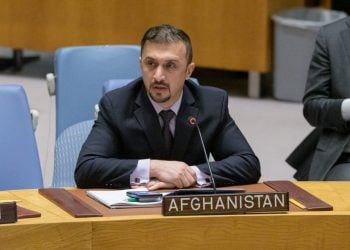
Meanwhile, U.S. representatives at the United Nations Security Council have drafted a resolution to extend for one year the mandate of the sanctions monitoring team.
Under the proposal, sanctions against Taliban-affiliated entities, including travel bans, an arms embargo, and asset freezes, would remain in place.
U.S. officials said the move is driven by human rights violations, restrictions on women and girls, and the Taliban’s “use of hostage-taking as leverage.”
At the same time, Tim Burchett, a Republican member of the United States House of Representatives, introduced a bill in January titled the “No Taxpayer Funding for Terrorists Act.”
The bill would require the U.S. State Department to develop a strategy to prevent countries and non-governmental organizations from financially supporting the Taliban.
This comes as aid agencies warn that around 40 percent of Afghanistan’s population is facing severe hunger and is in urgent need of humanitarian assistance.
U.S. President Donald Trump also issued an executive order on September 5, 2025, authorizing the State Department to designate countries as “state sponsors of wrongful detention” and to impose new sanctions against them.
Some lawmakers have proposed that the Taliban be added to that list.
Regarding Mahmood Habibi, a U.S.-Afghan citizen, U.S. State Department officials have said he was detained by the Taliban more than three years ago, although the Taliban claim they are unaware of his whereabouts.
Previously, several foreign nationals released from Taliban custody reported harsh prison conditions, including detention in basements and a lack of access to basic services.
The escalation of U.S. political and legal pressure on the Taliban comes as formal relations between the two sides remain unestablished, and the detention of foreign nationals has become one of the central sources of tension between Kabul and Washington.