The latest report from the U.S. State Department on human trafficking in Afghanistan paints a grim and alarming picture of the Taliban’s conduct. The report reveals that the Taliban have not only failed to prevent the recruitment of children into their military ranks but that recurring incidents of bacha bazi (sexual exploitation of boys) and sexual slavery have been committed by members of the group. Former Afghan security personnel who fled to neighboring countries are now also at risk of being exploited for military purposes in proxy wars, including the war in Ukraine. Other key findings of the report include sexual exploitation and forced labor of migrants, lack of effective international support, and rising abuse of vulnerable groups such as women, children, and ethnic minorities.
The U.S. State Department stressed in its report that the Taliban have taken no meaningful steps to combat human trafficking. According to the findings, Taliban-controlled institutions have failed to meet even minimum international standards and have carried out no investigations, prosecutions, or victim support. For the third consecutive year, Afghanistan under Taliban rule remains at the lowest global ranking in combating human trafficking (Tier 3).
The report called for an immediate halt to the illegal recruitment and use of children by the Taliban, including at the local level. It also urged dialogue with other armed groups to end such practices and recommended the separation of children from all armed groups, coupled with adequate protection, treatment, and rehabilitation support.
The State Department specifically called on the Taliban to put a stop to the use of children in sexual slavery, particularly bacha bazi. The report emphasized the need to step up efforts to identify trafficking victims and to carefully screen vulnerable populations such as returnee migrants, street children, armed group members, and those involved in the sex trade. Referring these victims to NGOs and international organizations for assistance was identified as a key priority.
The report also underscored that trafficking victims should not be punished for unlawful acts that stem directly from their status as victims of trafficking, including those involved in sex work. According to the State Department, cooperation with civil society groups that assist vulnerable populations, including male and female victims of trafficking, must be expanded. It further recommended reopening shelters across the country for victims and passing a comprehensive anti-trafficking law that criminalizes all forms of human trafficking.
The report clarified that the Taliban have not taken any steps to implement anti-trafficking laws, and for the third year in a row, they have issued no reports on the validity or enforcement of laws passed before August 15, 2021. Observers noted that the Taliban have declared all child protection laws nullified and that judicial processes are carried out based on their interpretation of Islamic jurisprudence. Enforcement of the Taliban’s so-called “laws” varies across the country, with local leaders often issuing their own independent directives.
Observers also reported that the Taliban prohibit lawyers from citing Afghanistan’s Penal Code passed before August 15, 2021, leaving vulnerable populations without legal protection in the Taliban’s judicial system. For the third consecutive year, the Taliban provided no record of investigations, prosecutions, or convictions in human trafficking cases.
According to the report, the Taliban’s Ministry of Interior is responsible for investigating crimes, including trafficking. The ministry claimed to have arrested 300 traffickers over the past three years, but provided no further details.
The report stated that the Taliban have not presented any record of investigations, prosecutions, or convictions of their own members accused of involvement in trafficking crimes. Observers noted that the Taliban struggle to distinguish between human trafficking and migrant smuggling, and a lack of institutional capacity remains a major obstacle. Impunity within the Taliban ranks is another serious issue, with no formal accountability mechanisms in place.
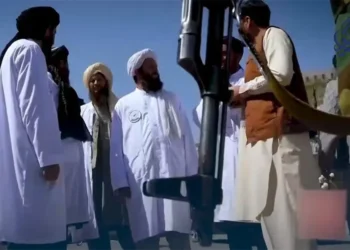
Although bacha bazi is officially banned, the practice continues. Observers reported instances of Taliban members engaging in it. The report documented that the Taliban have even recruited children as young as 12 into support roles. The group has denied using child soldiers, claiming their regulations prohibit boys without beards from entering battlefields or military bases. However, observers found that local Taliban members have forged ages on ID cards to enlist children.
The report noted that Taliban-controlled institutions have taken no significant measures to identify or provide services to trafficking victims. An NGO reported running two shelters in Kabul for child crime victims and homeless children, which can also support child trafficking victims.
According to the State Department report, another NGO runs three shelters for women in Kabul that provide services to survivors of domestic violence, including potential trafficking victims. The Taliban’s Ministry of Labor and Social Affairs manages a boys’ orphanage, reportedly able to assist crime victims, including trafficking victims. Nonetheless, structural and comprehensive victim support remains extremely limited.
The report emphasized that there is no evidence of Taliban-run shelters for male or female trafficking victims. Civil society representatives reported facing serious obstacles in obtaining licenses to provide victim support services. Limited capacity, scarce resources, and a repressive environment severely hamper anti-trafficking efforts.
Observers highlighted that the Taliban resist addressing sexual trafficking and obstruct the provision of support services, especially for women and girls. Civil society activists, including those assisting trafficking victims, reported working in an atmosphere of fear, insecurity, threats, and constant Taliban interference. These conditions have severely restricted effective victim support and access to justice.
The Taliban have imposed heavy restrictions on NGOs, directly undermining their ability to deliver support services to trafficking victims.
It was also reported that Taliban officials often detain child trafficking victims with adults in custody centers, where children face forced labor, sexual abuse, torture, and unlawful detention. Observers noted that the Taliban routinely arrest street children without screening for trafficking indicators, increasing their risk of further harm.
The Taliban have not reported having any formal procedures or mechanisms for identifying and referring trafficking victims to support services. However, observers indicated that in some cases, an informal referral system exists, whereby the Taliban occasionally refer child victims to the Child Protection Department within the Ministry of Labor and Social Affairs. If the case is confirmed, children are transferred to facilities either Taliban-controlled or NGO-run for assistance.
The Taliban admitted to using corporal punishment for what they call “moral crimes,” including extramarital sex. This approach deters trafficking victims from reporting abuse, since they risk punishment for acts that directly resulted from trafficking.
Observers pointed out that the Taliban impose inappropriate penalties on victims of sexual trafficking. Survivors of bacha bazi often refrain from reporting abuse due to fear of Taliban punishment and social stigma.
The Taliban have a “Commission for Purifying Ranks” made up of senior members tasked with preventing children from joining their forces. However, the Taliban have not reported identifying or removing any child soldiers in 2024.
According to the report, the Taliban have taken limited preventive steps. In December 2024, the group’s self-declared “Amir” issued a decree declaring human trafficking “illegal” under Sharia. The order instructed relevant ministries to coordinate anti-trafficking efforts, investigate related crimes, imprison convicted traffickers, and conduct public awareness campaigns.
However, the Taliban provided no details on implementation, and observers reported that the decree conflated human trafficking with migrant smuggling, significantly reducing its effectiveness.
The report added that the Taliban’s Deputy Minister of Interior was tasked with leading anti-trafficking efforts, while their Ministry of Labor and Social Affairs was responsible for enforcing child labor regulations in coordination with Taliban security agencies.
The Taliban’s Ministry of Interior claimed to have developed a four-year strategy against human trafficking but gave no details. The Taliban also reported no awareness-raising campaigns, although provincial officials in Nangarhar reportedly ordered imams to speak about the dangers of trafficking during Friday prayers.
The report emphasized that the Taliban took no action to prevent the illegal recruitment or use of children in combat and support roles. They also provided no data on labor inspections during the reporting period. By contrast, in 2023, 259 factories were inspected, and 42 cases of child labor were identified. The Taliban also made no effort to curb demand for commercial sex acts.
The report confirmed that trafficking affects all communities. Victims of both domestic and cross-border trafficking are exploited inside Afghanistan, while Afghanistan citizens are also trafficked abroad.
Domestic trafficking is more common than cross-border trafficking. Traffickers exploit men, women, and children in bonded labor, a form of forced work where traffickers manipulate debts to compel continued labor, often exploiting entire families in industries such as brick kilns and carpet weaving. Economic collapse, extreme weather events, forced repatriations from neighboring states, and food insecurity have all heightened vulnerability to traffickers, particularly in bonded labor situations, as people borrow money from smugglers to survive rising costs.
The report stressed that since the Taliban’s takeover on August 15, 2021, vulnerabilities to exploitation have grown. Victim support networks have collapsed, women’s and girls’ rights have been eroded, the refugee crisis has worsened, fear among the population has deepened, and internal displacement—including forced relocations—has increased.
Internally displaced persons, returnees, undocumented migrants, stateless individuals, and refugees face heightened risks. Those connected to the former government and their families are especially vulnerable.
Droughts and extreme weather have displaced communities, further exposing them to trafficking. Most trafficking victims in Afghanistan are children, forced into carpet weaving, brick kiln labor, domestic service, sexual exploitation (including bacha bazi), household chores, herding, farming, workshops, construction, mining, begging, unskilled work, poppy cultivation, salt mining, petty crime, drug and arms smuggling, trucking, and jobs in hospitality.
Civil society experts say boys are especially vulnerable to bacha bazi compared to girls. According to the report, children—mostly boys aged 13 to 18—are forced by their families to migrate unaccompanied within Afghanistan or to Türkiye, Iran, and Pakistan to work and support their families.
Some families, burdened with debts—including drug-related debts—sell their children to traffickers, who force them into slavery or underage marriage in exchange for dowries. Others compel children to beg or deliberately sell them into sexual exploitation, including bacha bazi.
The Taliban and other armed groups illegally recruit children as soldiers and for support roles, often through coercion or deception, including false promises. Groups such as Islamic State–Khorasan (ISIS-K) also use child soldiers for direct combat, planting improvised explosive devices, carrying weapons, spying, and guarding bases.
According to the report, Taliban and other groups forcibly recruit children and detain those linked to rival armed groups, including likely trafficking victims. Children are recruited from schools in Afghanistan and Pakistan and enrolled in Taliban-run madrassas that provide military training and ideological indoctrination. The Taliban also encourage relatives to send their children to join their ranks to expand their trusted forces.
The report stressed that armed groups target impoverished and rural children, with displaced children at particular risk. Taliban detention facilities hold detainees, including child and adult victims of sexual trafficking, accused of “moral crimes,” where they face forced labor or conditions akin to forced labor, in violation of international standards. Before August 15, 2021, Afghan security forces and non-state armed groups also unlawfully recruited child soldiers.
The report found that traffickers exploit boys in bacha bazi. Observers documented cases of this practice among the Taliban and nearly all armed groups.
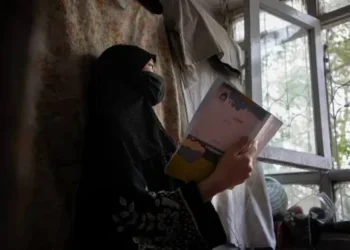
It emphasized that restrictions on women’s and girls’ mobility and rights, coupled with sharply reduced access to education and employment, have made them significantly more vulnerable to trafficking, including child and forced marriage. Female-headed households and widows are particularly exposed to poverty and exploitation risks.
The U.S. State Department said women’s freedom of movement is severely restricted unless accompanied by a male guardian. Even before August 15, 2021, about 90 percent of women in Afghanistan had experienced some form of domestic violence during their lives. Many women were forced back into abusive households after the Taliban shut down women’s shelters, and domestic violence is reportedly on the rise. Observers stated that women are deterred from fleeing abusive situations due to Taliban punishments for “moral crimes,” increasing their vulnerability to trafficking.
The report added that enforcement of the Taliban’s hijab decree—which compels adult women to adhere to strict dress codes and punishes male guardians for violations—has further curtailed women’s mobility. Reports indicate that the Taliban particularly target women and girls from certain ethnic minorities. Some have been arbitrarily detained and disappeared on allegations of violating the decree.
Experts noted that some people, due to a lack of access to social services or because of their sexual orientation or gender identity, are subjected to exploitation, threats, and violence, or forced to flee Afghanistan through irregular routes.
According to the report, ethnic and religious minority groups such as Hazara Shia Muslims, Ahmadis, Sikhs, Hindus, Baháʼís, and Christians face mounting risks of abuse from both the Taliban and groups such as Islamic State – Khorasan Province (ISKP). These minorities are forced into hiding or flight, making them even more vulnerable to traffickers. Shia communities in particular have been targeted by Taliban and ISIS-K through forced displacements and repeated attacks, heightening their exposure to trafficking.
Men, women, and children from Afghanistan pay intermediaries to find work abroad, mainly in Iran, Pakistan, and Europe. Some of these intermediaries and employers then subject Afghanistan citizens to forced labor or sexual trafficking. Many also seek asylum in neighboring countries, primarily Pakistan and Iran, often through irregular migration routes.
International organizations reported that hundreds of thousands of Afghanistan citizens, including tens of thousands of registered refugees, have been forcibly returned from Pakistan and Iran. Many of these returnees are at risk of trafficking due to economic instability and other pressures. Some women and girls in Afghanistan, India, Iran, and Pakistan have been sold into marriage, later exploited in sexual trafficking and domestic servitude.
According to an international organization, worsening economic and security conditions, political instability, and factors such as drought in several provinces have increased the incidence of families selling their daughters into marriage, sometimes involving Taliban members. Some women and girls are forced into marriage as a means to escape Afghanistan.
Afghanistan boys and men are subjected to forced labor and bonded labor in agriculture and construction, particularly in Iran, Pakistan, Greece, Türkiye, and Gulf states. Observers reported that since August 15, 2021, some Afghanistan refugees in Iran, Iraq, Pakistan, Türkiye, Europe, and Central Asia have avoided reporting abuse out of fear of deportation back to Afghanistan.
Traffickers in Iran, including Iranian criminal groups, exploit Afghan children in forced labor as beggars, street vendors, and in criminal activities such as drug, fuel, and tobacco smuggling.
The report added that Iranian police sometimes detain, torture, and extort child trafficking victims from Afghanistan before deportation. The Iranian government and the Islamic Revolutionary Guard Corps (IRGC) have forced Afghan migrants, including children as young as 12, to fight in Iran-backed militias stationed in Syria—sometimes under threat of arrest and deportation.
Former Afghan military personnel hiding from the Taliban or fleeing to other countries, including Iran, face heightened risks of recruitment into the Russia-Ukraine war due to financial hardship and security threats. Smuggling networks transport Afghan migrants from Iran to Europe, forcing them into sexual trafficking and forced labor in restaurants to repay smuggling debts. Some Afghan traffickers have forced boys into bacha bazi in Germany, Hungary, North Macedonia, and Serbia.
You can read the Persian version of this report here:
وزارت خارجه امریکا: بچهبازی در صفوف طالبان و تشدید قاچاق انسان در افغانستان