The Human Rights Service of the United Nations Assistance Mission in Afghanistan (UNAMA) has announced in its latest report that at least 547 civilians were killed or injured as a result of conflicts during the final three months of 2025. According to the report, 70 people were killed, and 447 others were injured. The organization also recorded more than 520 arbitrary arrests, 50 cases of ill-treatment of women and men, 14 extrajudicial killings, 28 arbitrary detentions, and at least seven cases of torture and ill-treatment of former military personnel. UNAMA stated that the Taliban have imposed severe restrictions on women’s rights, banning their access to medical education, health services without a mahram, work in beauty salons, and presence in public spaces. The organization also reported the execution of two individuals and the public corporal punishment of 287 others, including women and children, as well as the continued detention of social media users and internet restrictions. In addition, escalating border tensions between the Taliban and Pakistani forces resulted in more than 500 civilian casualties, including 47 killed and 456 injured, causing widespread physical, psychological, and financial harm to the civilian population.
In its report, UNAMA expressed concern over the intensification of human rights restrictions on women and stated that “extrajudicial killings, torture, and ill-treatment of former members of Afghanistan’s security and defense forces” had been documented. The report noted that the Taliban Ministry for the Propagation of Virtue and Prevention of Vice, in cooperation with other ministries of the group, has enforced regulations focusing on issues such as men’s beards, women’s hijab, mahram requirements, the prohibition of music and images of living beings, and mandatory congregational prayers.
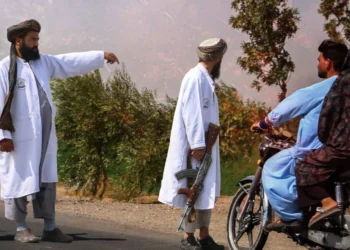
The report states that from October 1 to December 31, 2025, at least 520 cases of “arbitrary” arrest and detention and 50 cases of “ill-treatment” of women and men by the Taliban Morality Police were recorded. According to UNAMA, these cases were mainly related to issues such as trimming beards or adopting Western-style haircuts, playing or listening to music, and what was described as violations of hijab regulations. Based on UNAMA’s documentation, “the removal of women from the health sector” was identified as one of the most significant recorded developments. UNAMA reported that on November 19, the Taliban Ministry of Hajj and Religious Affairs instructed mosque imams to address beard shaving as a major sin in their Friday sermons.
UNAMA emphasized that “on November 14, no female student was allowed to sit for the medical graduation examination. Women and girls have been barred from higher education since December 20, 2022, and from studying at health institutes since December 2, 2024. These restrictions pose a serious threat to the future of the country’s health system.”
The report states that since September 7, 2025, the Taliban have prevented female United Nations staff who are citizens of Afghanistan from entering UN premises, and that this restriction has been implemented at UN facilities nationwide.
UNAMA added that the Morality Police of the Taliban in Kandahar and Uruzgan provinces have prohibited women without a mahram from accessing health services. According to the report, female health workers are also unable to attend work without a mahram. The Taliban’s Morality Police continuously monitor health centers to prevent women without a mahram from accessing services and to prevent female staff from working without a mahram.
According to the UNAMA report, in Uruzgan, the Taliban’s Morality Police have instructed drivers not to transport women without a mahram. In Kandahar, the Taliban’s Morality Police have threatened shopkeepers not to sell goods to women without a mahram. The report specifies that officials of the Taliban Ministry for the Propagation of Virtue and Prevention of Vice also prevent women without a chadari from accessing public spaces, including transportation, health centers, and government offices.
The report also refers to the detention of women in Herat for not wearing a burqa and states that they were denied access to hospitals, government offices, and wedding halls. Although enforcement of the burqa requirement has decreased in Herat, the Taliban continue to prevent women without a chadari from entering hospitals, government offices, and other public places. The UNAMA report further states that the Taliban have imposed restrictions on women’s movement in some provinces.
According to the report, in October, the Taliban prevented women from entering a weekly bazaar and dispersed their gathering by firing shots into the air. In Zabul province, women who were engaged in morning walks were stopped and told not to leave their homes for exercise. Specifically, on October 6 in Zabul, the Taliban’s Morality Police blocked a group of women who were walking for morning exercise and warned them not to leave their homes for this purpose again.
Detention of a Girl Under 18 for Refusing Forced Marriage
The Taliban Ministry for the Propagation of Virtue and Prevention of Vice has repeatedly claimed to have resolved hundreds of cases of violence against women. However, UNAMA has documented multiple cases of violence, including forced marriages. The report states that a Taliban court ordered the detention of a girl under the age of 18 for refusing a forced marriage. According to UNAMA, the girl remains in custody at a Taliban provincial prison.
UNAMA also referred to the continued ban on women’s beauty salons and stated that during the reporting period, several cases of arrest or threats of arrest of women operating beauty salons or their male relatives were recorded. The operation of women’s beauty salons has been prohibited since July 2023 under a directive issued by the Taliban Ministry for the Propagation of Virtue and Prevention of Vice.
According to the report, the Taliban have imposed new restrictions on media, including a ban on the display of images of living beings. UNAMA stated that this measure has led to the temporary suspension of some media outlets. A list containing 679 prohibited book titles has also been issued, which must be collected from all educational institutions.
UNAMA also documented the execution of two individuals in Khost and Badghis provinces and the public corporal punishment of 287 others, including 30 women, three boys, and one girl, on charges of theft, extramarital sexual relations, and “sodomy.”
Extrajudicial Killings of Former Military Personnel
The report states that despite the Taliban’s claim of a general amnesty, at least 14 cases of extrajudicial killings, 28 cases of arbitrary detention, and at least seven cases of torture and ill-treatment of former members of Afghanistan’s security and defense forces have been documented. Among those affected were former personnel who had recently returned to Afghanistan from Iran and Pakistan. According to UNAMA, on December 9, in Jabal al-Saraj district of Parwan province, in the areas of “Do Bandi” and “Sangi Khil,” two individuals were shot dead by unidentified gunmen in two separate incidents. One of the men was a former official of the Ministry of Interior, and the other was the cousin of a former deputy police commander. Both had recently returned from Iran.
The report states that the Taliban continue to detain users accused of publishing “inappropriate” content on social media, and that internet restrictions have had a negative impact on online businesses.
Civilian Casualties in the Conflict Between the Taliban and Pakistan
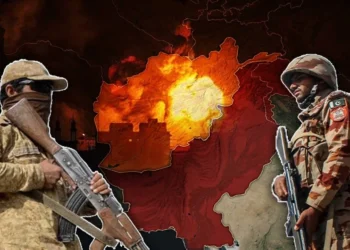
In its quarterly report on the human rights situation, UNAMA’s Human Rights Service stated that during the final three months of 2025, it recorded 547 civilian casualties, including 70 killed and 447 injured. According to UNAMA, the majority of these casualties occurred between October 10 and 17, 2025. UNAMA also reported that escalating border tensions between the Taliban and Pakistani forces during this period resulted in more than 500 civilian casualties in Afghanistan, including 47 killed and 456 injured. The organization emphasized that these figures represent the highest number of civilian casualties resulting from border clashes with Pakistan since UNAMA began systematic data collection in 2011.
The UNAMA report states that on October 11 and 12 of the previous Gregorian year, heavy clashes and exchanges of fire between the Taliban and Pakistani forces in Dand-e Patan district of Paktia province and in the Nari and Dangam areas of Kunar province resulted in several civilians being injured after mortar rounds struck residential homes. According to the report, mortar fire in Helmand province also left one person dead and one injured.
According to the report, during the clashes on October 15, described as the bloodiest day of these tensions, 35 people were killed, and 422 were injured. UNAMA stated that 89 percent of these casualties occurred in the Spin Boldak district of Kandahar province. The report further specifies that armed clashes and Pakistani airstrikes on residential areas led to the deaths of 17 people and injuries to 346 others in Kandahar.
The report also states that two rocket explosions occurred in the Taimani project area, resulting in nine deaths and 37 injuries. Additionally, in Khost province, journalists and daily wage laborers were targeted by gunfire.
Incidents After the Ceasefire
UNAMA stated that despite the announcement of a ceasefire on the evening of October 15, attacks continued in the following days. Among them was an airstrike in Paktika on October 17 that resulted in casualties among members of a cricket team. According to the report, Pakistani air and artillery strikes in November also killed 15 people and injured 13 others. UNAMA stated that the most significant incidents included airstrikes in Khost, Paktika, and Kunar on November 24 and 25, during which several members of one family lost their lives.
The report states that in December 2025, as well, shootings targeting workers in Paktika, clashes in Spin Boldak, and mortar impacts in Kunar caused further civilian deaths and injuries. According to UNAMA, these incidents have had severe consequences for civilians, with many victims suffering permanent physical injuries such as amputations and blindness, as well as trauma and psychological harm. The destruction of homes, businesses, and livestock has also caused significant financial losses, and many residents have been forced to flee their homes.
UNAMA has recommended to the Taliban and Pakistan, identified in the report as the parties to the conflict, that they strictly adhere to international humanitarian law, cease the use of wide-impact weapons such as mortars and rockets in residential areas, and conduct prompt, independent, and transparent investigations into alleged human rights violations, holding perpetrators accountable. The organization also recommended that attention be given to the needs of victims and that damages be compensated. The report has been shared with both Pakistan and the Taliban.
According to the report, the Taliban have rejected allegations of Pakistani attacks and violations of Afghanistan’s airspace and territory, and have denied claims that Afghanistan’s soil is being used against Pakistan, emphasizing a diplomatic resolution. Pakistan, for its part, maintains that it is a victim of terrorism, particularly by Tehrik-i-Taliban Pakistan (TTP) operating from Afghanistan, and considers its military actions as “self-defense” and targeted operations against terrorists. Pakistan also claims that Taliban forces initiated the firing without prior provocation.
You can read the Persian version of this report here: