The United Nations Assistance Mission in Afghanistan (UNAMA) has presented a roadmap referred to as a “Comprehensive Approach for Afghanistan.” This plan, prepared by UNAMA on February 17, 2025, has been introduced as a “presentation to the Doha format participants” and is also known as a “roadmap.” UNAMA stated that this roadmap, by providing a structured political pathway, seeks to achieve peace and reintegrate Afghanistan into the international community. According to UNAMA, this approach is designed to address the issues identified in the independent review conducted by the UN Secretary-General’s Special Coordinator and offers a coherent framework and consultative mechanism for engagement on these matters. UNAMA added that the ultimate goal of this process is to achieve a clear outcome. According to the roadmap, the final objective is “an Afghanistan at peace with itself and its neighbors, integrated into the international community and committed to global obligations.” UNAMA noted that this objective has also been endorsed in UN Security Council Resolution 2721. However, protesting Afghan women and girls argue that with its new plan, UNAMA is, in practice, paving the way for legitimizing the Taliban instead of defending the rights of the people of Afghanistan.
Working Groups
A copy of UNAMA’s roadmap, obtained by the Hasht-e Subh Daily, states that the working groups focus on building trust by finding joint solutions to practical problems in agreed-upon areas. UNAMA added that these solutions are intended to address the basic needs of the people of Afghanistan. According to UNAMA, this process is expected to lead to short-term achievements that demonstrate the benefits of cooperation and engagement. Based on the roadmap, the issues under discussion by the working groups include counter-narcotics, private sector development, counterterrorism, international obligations, human rights, particularly women’s rights, sanctions, inclusive governance, central bank assets, and diplomatic representation.
Mosaic
UNAMA stated that this workstream addresses key issues that hinder the achievement of the outcome identified in the earlier independent review conducted by the UN Secretary-General’s Special Coordinator. According to UNAMA’s roadmap, these issues are generally more complex, controversial, involve multiple stakeholders, and are often interconnected; therefore, resolving them will require more time.
The roadmap outlines that specific issues raised within the “mosaic” framework also include Afghanistan’s international obligations, human rights, including women’s rights, central bank assets, counterterrorism, diplomatic representation, inclusive governance, and sanctions. UNAMA noted that there are multiple direct and indirect connections between the two workstreams of the roadmap or the “comprehensive approach.”
UNAMA announced that this approach involves various stakeholders, including members of the Doha Format, regional countries, the G7+ group, the Taliban, and other relevant actors such as the UN Security Council Sanctions Committee, countries holding Afghanistan’s assets, as well as non-Taliban Afghans and representatives of civil society.
According to UNAMA’s roadmap, the process seeks to advance the gradual progress of peace and Afghanistan’s reintegration into the international community by dividing issues into two categories—”practical” and “complex”—and by engaging key actors.
Based on the roadmap, the minimum level includes a structured engagement that, according to UNAMA, leads to a better shared understanding of key issues. The intermediate level involves identifying six initial actionable steps and clarifying the process of structured engagement. Under the roadmap, the third level focuses on advancing the implementation of initial steps and gaining a more precise understanding of political obstacles.
UNAMA added that this approach provides a structured and coherent framework for engagement on key issues and also offers a consultative mechanism for identifying necessary steps toward achieving the final desired status.
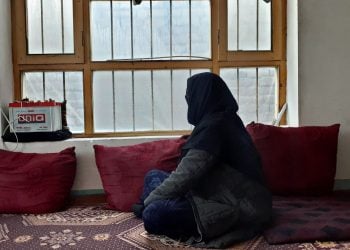
Meanwhile, protesting women and girls argue that with its new plan, UNAMA is, in practice, facilitating the Taliban’s legitimization rather than defending the rights of the people of Afghanistan. They state that in this roadmap, women, civil society, and real victims have been ignored and that no role has been considered for them. These protesters emphasize: “This plan must be stopped, and our voices must be heard.”
You can read the Persian version of this report here:
نقشه راه یوناما؛ گذار به صلح یا پذیرش طالبان؟ | روزنامه ۸صبح