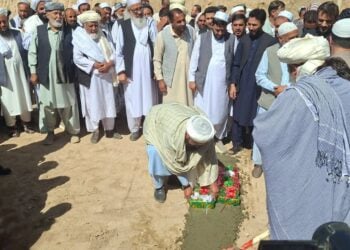
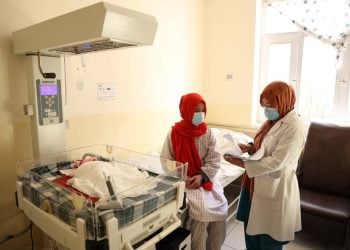
Many Kyrgyz representatives from the Pamir region of Badakhshan province, who traveled to Fayzabad, the provincial capital, to raise their concerns, have voiced frustration over the lack of healthcare facilities, impassable roads, and extortion by Taliban fighters under the pretense of collecting tithe and “zakat” (alms). They warn that if their basic needs remain unmet, they will be compelled to leave Afghanistan in groups. They report that in the Pamir region, 9 out of every 20 women die during childbirth due to the absence of essential medical services. Additionally, they claim that the living area in Fayzabad, constructed by the previous government for Kyrgyz residents, has been repurposed as a military base by the head of the Taliban’s Directorate of Borders and Tribal Affairs.
Residents of the Wakhan region in Badakhshan Province state, they have endured severe deprivation for over three years. They are deeply concerned about the persistent lack of healthcare services and economic hardships. These residents criticize the Taliban, pointing out that as winter approaches, their problems intensify, yet the group pays no attention to their plight.
Many Kyrgyz people in the Pamir region report suffering from hunger, seasonal diseases, “deceptive practices by local traders,” and mistreatment by Taliban fighters. They warn that if their grievances are ignored, they will be forced to migrate in groups.
Some Kyrgyz individuals, who traveled to Fayzabad to seek solutions, told Hasht-e Subh Daily that they had approached numerous local Taliban officials but received no response to their demands.
Badakhshan residents living in tents at the foot of the Pamir mountains explain that for eight months of the year, the region remains extremely cold, rendering farming impossible. Their primary livelihood is animal husbandry.
Mullah Adina, a Kyrgyz representative from Badakhshan, came to Fayzabad with others to address the Kyrgyz community’s issues. He criticized the indifference of local Taliban officials, stating: “We, the Kyrgyz people of the Pamir region, face numerous challenges, including a lack of doctors, healthcare centers, and roads. During winter, the roads become impassable, leaving us without transportation. This has resulted in many preventable deaths among our patients.”
Sharing a personal tragedy, Adina urged the Taliban regime to take their concerns seriously. “Because of the long journey, we spend days on the road to reach Fayzabad. I watched several loved ones die before my eyes without being able to help. For example, while taking my sister to the hospital, she and her child both died en route. Instead of celebrating childbirth, we often mourn due to the lack of resources.”
Adina warned, “If the Taliban fail to improve the living conditions of the Kyrgyz people, we will be left with no choice but to migrate to neighboring countries, especially Kyrgyzstan.”
Hassan Khan, another Kyrgyz resident from the Pamir region, echoed similar grievances: “We live in a remote area where patients cannot receive treatment. The transport fare is 60,000 Afghanis. Local traders exploit us by buying our livestock at low prices and selling food and medicine at exorbitant rates. They deceive us, and no one addresses our complaints.”
Hassan criticized the local Taliban authorities for their inaction. “In winter, transportation becomes a nightmare. We rely on donkeys and other animals to traverse the terrain, but our patients are left stranded for days, and the Taliban have done nothing to help.”
He also highlighted the hardships Kyrgyz people face when visiting Fayzabad, noting that they lack a proper place to stay. “Under the previous government, a guesthouse was built for us. When we came to Fayzabad, we stayed there and returned home after completing our work. Now, the Taliban allow only men to use it, and ten people are crammed into one room. The building has become a military base where the head of the Taliban’s Directorate of Borders and Tribal Affairs resides.”
Sultan, another Kyrgyz resident, revealed: “In the Pamir region, if 20 women give birth, 9 die due to a lack of medical facilities. The death rate among women and children continues to rise. When we raise these issues with the Taliban’s health officials, they ignore us.”
He condemned the Taliban’s behavior, accusing them of extorting money under pretenses. “For two summers, Taliban fighters have taken our livestock as ‘taxes’ in the name of tithe and zakat. This year, they seized one out of every 20 goats and cows.”
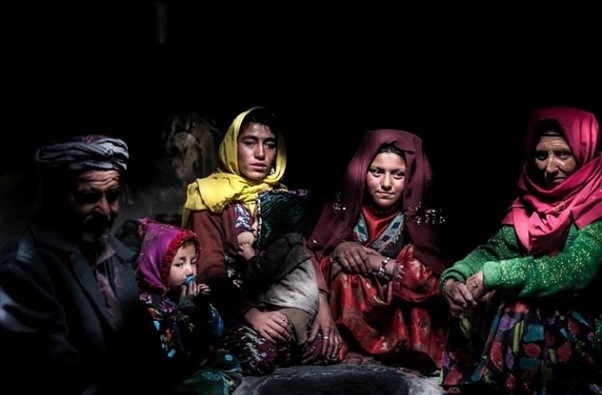
Despite collecting taxes, the Taliban provide no services to the Kyrgyz people, who remain deprived of basic government support. In desperation, Kyrgyz representatives have traveled to Fayzabad to appeal to Taliban authorities for relief from their dire circumstances.
Local Taliban officials in Badakhshan acknowledge the Kyrgyz community’s struggles and have urged health organizations to assist. Aminullah Tayeb, the Taliban’s deputy governor in Badakhshan, claimed: “We have addressed these people’s issues to the best of our ability, including constructing roads and healthcare clinics. However, due to resource constraints, we need the cooperation of international organizations. We have discussed these problems with them, and they have promised support.”
The plight of the Kyrgyz people in Badakhshan has drawn international attention. In October, the government of Kyrgyzstan sent a relief team with medical supplies to address their needs. The team met with local Taliban officials to discuss solutions to the Kyrgyz community’s economic and social challenges.
According to a report by AKIpress News Agency, this aid team, led by Kyrgyzstan’s Deputy Minister of Labor, Social Security, and Migration, Darmanbek Uulu, included specialists in cardiology, dentistry, and obstetrics. During their visit, they provided medical services to 755 individuals, including 195 women and 180 children. The team also trained Kyrgyz residents in diagnosing infectious diseases and using veterinary medicines for their livestock.
You can read the Persian version of this daily report here:
قرغیزهای بدخشان بهدلیل باجگیریهای طالبان مجبور به ترک کشور هستند