
Some residents of the Ismaili community in Badakhshan province say the Taliban have placed growing pressure on their daily lives. They explain that alongside intensifying religious repression, Ismailis in Fayzabad, the provincial capital, face systematic and repeated attacks. In the most recent incident, unidentified armed individuals shot two Ismailis in Fayzabad, leaving them seriously wounded. At the same time, the Taliban have introduced rewards to push Ismailis to change their faith. In an official document, the group called on followers of this religion to abandon their beliefs and promised incentives and encouragement in return.
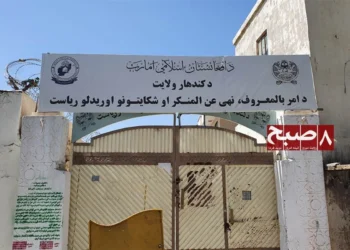
Members of the Ismaili community in Badakhshan say the rising pressure has caused deep fear and uncertainty. They report that the Taliban have announced plans to convert their Jamaatkhana into mosques. According to local Ismailis, the Taliban claim that some places used as mosques during the period of the “Mujahideen” were later turned into Jamaatkhana, and they now want to reverse that change. Ismaili residents reject this claim, saying they purchased the land and paid all construction and maintenance costs themselves through personal contributions.
One Ismaili from Badakhshan says, “The Taliban want to turn Ismaili Jamaatkhana in Zebak, Ishkashim, Wakhan, and Shughnan into mosques. They have told us to attend mosques and change our religion. So far, they have closed the Jamaatkhana in Zebak.”
The same person adds, “They pressure Ismaili children in schools and mosques to change their religion. Some Ismaili shopkeepers who go to district mosques to pray face open discrimination. Two months ago, Mullah Wahibullah, the imam of the Ishkashim mosque, told Ismailis during Friday prayers to leave the prayer rows.”
According to an official Taliban letter, the group announced in Badakhshan that Ismailis who convert to Sunni Islam will receive security protection and financial benefits. The letter states that young people who adopt Sunni Islam will be able to obtain employment in government offices. It also stresses that youths who change their faith should be sent to religious schools outside Ismaili areas and receive special attention.
The letter further proposes hiring “missionary and experienced” teachers with salaries for schools and religious institutions in Ismaili-populated areas. The Taliban also state that students referred to their religious schools will qualify for financial support.
As repression and targeted violence against Ismailis continue in Badakhshan, gunmen shot and wounded two young Ismailis in Fayzabad, the provincial capital. The attack took place on Thursday evening, January 22, 2026, in the Dasht-e Qergh area, as the victims were closing their shop. Sources identify the wounded as Salamat Shah Hassan and Shah Nazar, both from Shughnan district. Medical staff at the Badakhshan provincial hospital say the two young men arrived in critical condition and remain under treatment.
Earlier, the United Nations Assistance Mission in Afghanistan reported that the Taliban forced more than 50 Ismailis to convert to Sunni Islam during the first three months of the current year. The report says Taliban agents beat, threatened, and coerced those who refused to change their religion, including issuing death threats.
The report also states that local Taliban officials, including members of the Ministry for the Propagation of Virtue and Prevention of Vice, took at least 50 Ismaili men from their homes at night for religious questioning. According to UNAMA, Taliban authorities have not only pressured Ismailis to abandon their faith but have also established several religious schools in Ismaili-populated areas.
Previously, the human rights organization Rawadari reported that evidence shows the Taliban have imposed organized restrictions and discrimination on this religious minority since taking control of Afghanistan. The organization says these actions amount to systematic religious persecution and human rights violations. Over the past four years, Ismailis in the People of Afghanistan have been excluded from political, administrative, and social life and have faced deliberate efforts to weaken and suppress their religious and cultural identity.
Rawadari also reports that some Ismailis, mostly in low-ranking government jobs, felt forced to hide their religious identity or change their faith to keep their employment. The organization notes a sharp rise in hate speech and public takfir against the Ismaili community since the Taliban returned to power. According to its findings, the Taliban Morality Police, local commanders, extremist clerics, and Taliban-linked mosque imams openly spread this rhetoric in classrooms, public programs, and religious gatherings. In some cases, Rawadari says, the Ministry for the Propagation of Virtue and Prevention of Vice and Taliban extrajudicial tribunals have ordered the annulment of marriages between Hanafi women and Ismaili men.
Recently, Rawadari obtained a copy of the Taliban courts’ penal guidelines. Clause Eight of Article Two describes followers of the Hanafi school as Muslims, while labeling followers of other sects and beliefs that differ from “Ahl-e Sunnat wal Jamaat” as “innovators.” Rawadari says this classification openly discriminates against religious minorities in a country that is home to Twelver Shias, Ismailis, followers of other Islamic traditions such as Ahl-e Hadith, as well as Sikhs and Hindus, and directly violates the principle of non-discrimination based on religion and belief.
You can read the Persian version of this report here:
اسماعیلیههای بدخشان؛ زیر فشار تبعیض و سرکوب سیستماتیک طالبان