
Residents of Qaisar district in Faryab province have raised concerns about the shortage of safe drinking water and the lack of sufficient water for farming and agriculture. Some women say that while their male relatives work the fields, the burden of fetching water falls entirely on them, forcing them to travel long distances by pack animal to bring water home. Villagers across Qaisar identify the water crisis as only one of several pressing hardships: women have no employment opportunities, functioning medical clinics are largely absent, roads are difficult to navigate, and boys’ schools remain too far for most children to reach. Residents add that women whose husbands and male relatives have left for neighboring countries or distant regions in search of work face acute economic hardship, and that job opportunities for these women are urgently needed.
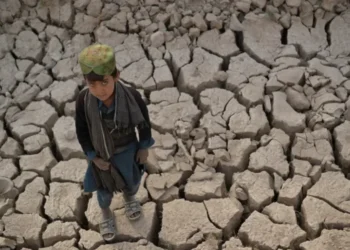
The water crisis compounds broader anxieties about drought across Faryab. Some residents of Qaisar say the shortage has already dried out many of their grape orchards, and that people must travel considerable distances to fetch drinking water from springs and remote sources.
Shamsullah Haq, a resident of Khwaja Kanti Muhammad Omar village in Qaisar district, describes the situation in stark terms. “Because of the recent droughts, people are struggling with a severe shortage of water,” he says. “The people of this village rely on grape orchards and need water more than most, but the majority of the vines have already dried up. On behalf of the community, we urge officials and relevant agencies to step in and help address these problems.” Haq says that most women in the area are in urgent need of income and that livelihoods must be created for them. With many men having left the country, he notes, women now shoulder a disproportionate share of household responsibilities. He also points out that children in the village are being cut off from education simply because schools are too far away. “Children here are being denied access to literacy and learning,” he adds. “The nearest school is 20 to 25 kilometers away, and most children cannot make that journey. Local or community-based classrooms must be set up in this area. The lack of a clinic, combined with the state of the roads, has already cost people their lives. There is no proper medical facility, no paved road, and no safe drinking water. Organizations working in this region must take notice. Women make up half of society, and they deserve access to work.”
Raabia, a resident of the Shakh area of Qaisar district, echoes these concerns. “We face so many problems, and health issues top the list,” she says. “The men go out to work, and we are left to haul drinking water ourselves from springs on pack animals. We have no access to clean water, and this creates endless difficulties for us.”
The United Nations Office for the Coordination of Humanitarian Affairs (OCHA) has previously reported that Faryab has endured its worst drought in five years. Declining vegetation cover, below-average rainfall, and low soil moisture have put the livelihoods and food security of thousands of families at serious risk. OCHA has warned that without immediate intervention, the drought could have far-reaching consequences for both the economy and the social fabric of life in Faryab.
You can read the Persian version of this report here: