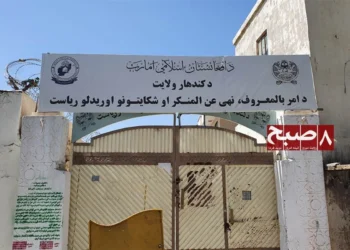
The Taliban’s new law on the “Propagation of Virtue and the Prevention of Vice” bans journalists from publishing or broadcasting content the de facto government believes violates Sharia law or insults Muslims.
Article 17 describes several restrictions on the media, including a ban on publishing or broadcasting images of living people and animals which the Taliban consider unIslamic.
Under the title “Duties of a Muhtaseeb Regarding the Media and Information,” the law states:
“A Muhtaseeb is responsible for ensuring that media and information officials comply with Islamic virtues when publishing. Content that contradicts Sharia or disrespects Muslims is prohibited. Publishing images of living beings is forbidden.”
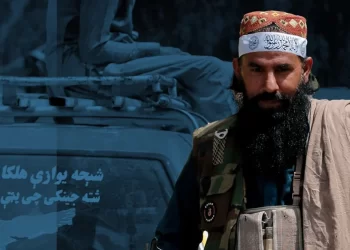
The Muhtaseeb (Morality Police) are empowered to impose discretionary punishments and discipline citizens of Afghanistan. They are granted authority by Hibatullah Akhundzada, the Taliban’s supreme leader.
If the new law is broken, the punishment is up to three days in prison or a penalty “considered appropriate” by the Muhtaseeb.
In response to the publication of the new law, the Committee to Protect Journalists (CPJ) said they were “deeply concerned”.
“The Law for the Propagation of Virtue and the Prevention of Vice grants the Taliban’s notorious morality police extensive powers to further restrict Afghanistan’s already decimated media community,” said CPJ Asia Program Coordinator Beh Lih Yi.
“This law marks yet another appalling blow to press freedom in Afghanistan, where the morality police have worsened a crackdown on journalists and fundamental human rights for the past three years.”
Over 13,000 people have been arrested by the Taliban ministry in the past year, including several journalists.
This month, the Ministry for the Propagation of Virtue and the Prevention of Vice reported the “successful” implementation of 90% of its reforms across audio, visual, and print media.
Afghan journalists have been detained by the Taliban for reasons such as broadcasting music and talking to female callers. The playing and listening of music was outlawed by the de facto government in 2021.
After the Taliban retook control of Afghanistan in 2021, they initially promised to allow press freedom. In the three months after the Taliban took control, 43% of Afghan media outlets disappeared.
Since then, repression of media has increased with multiple reports of censorship, beatings, and arbitrary arrests of journalists. Female journalists have been especially targeted.
Eight out of ten women journalists in Afghanistan have stopped working. The few female journalists who still work are subject to severe abuse and restrictions including the covering of their faces, no access to official sources, and the inability to travel without a chaperone.
The CPJ has assisted more than 100 journalists to flee Afghanistan after the Taliban retook control. In 2023, CPJ reported helping 47 Afghan journalists in exile.