The government of Afghanistan has always been fragile, and its fragility has created complex and numerous conflicts in the country. Four bloody wars, including the war between the Mujahideen and the Afghan government in the 1980s, the civil war among jihadist groups in the early 1990s, the Taliban’s war against former Mujahideen in the late 1990s, and ultimately the war between the Taliban and international jihadist organizations against the Afghan government in the first two decades of the 21st century, occurred within the framework of Afghanistan’s fragile government. The military triumph of the Taliban, which once again led to the disruption of governance in Afghanistan, is the result of the fourth phase of conflict within this fragile government. After the commencement of the latest state-building phase in Afghanistan, initiated in the early years of the 21st century, the Taliban, with support from Pakistan and the alignment of their political affiliates, embarked on a campaign to overthrow the government. They subjected innocent citizens to the most horrific forms of violence. Despite various efforts by the government and society of Afghanistan to end this bloody conflict, the Taliban, driven by ideological rigidity and within the framework of Pakistan’s national interests, nullified all the legitimate efforts of the people of Afghanistan. The shortsightedness of Afghan politicians further exacerbated the failure of political negotiations to resolve the conflict, the political naivety of the jihadists who attempted to form a coalition government with the Taliban until the very end, and the ignorance of the country’s policymakers regarding the limits of national interests, especially those of Western countries, particularly the United States, in Afghanistan. The failure of efforts for a peaceful resolution of the conflict led to the gradual erosion of Afghanistan’s institutions, especially the armed forces, which defended their land until the last moment. The military victory of the Taliban led to Afghanistan’s repeated descent into the vicious cycle of governmental breakdown and disruption in the process of state-building. Afghanistan’s failure to establish and sustain an effective government is also the result of the failure and lack of foresight of Western governments and ruling parties in Afghanistan. Western governments executed one of the bloodiest wars in human history in Afghanistan, in which around 240,000 people were killed, hundreds of thousands were injured, and several trillion dollars from Western taxpayers’ pockets were spent in vain. According to official SIGAR statistics, the United States alone spent $2.6 trillion in Afghanistan to achieve two objectives: to eradicate terrorism and to establish an allied government in South Asia. (SIGAR 2021) However, the exact figures of the amounts spent on this war by US intelligence and military agencies have not been disclosed yet. But when the last American general fled Afghanistan at midnight on August 30, 2021, America had not achieved any of its two main objectives at the end of its “longest war in its history.” A war that resulted in the deaths of over two thousand American soldiers and the sacrifices of over seventy thousand soldiers and officers of Afghanistan. ( SIGAR 2021).
Before the fall of Kabul to the Taliban, many Western intellectuals and policymakers, including those who had benefited from Afghanistan for years, did not seriously consider the disaster of the Afghan government’s collapse and its internal, regional, and global consequences. They continued to avoid acknowledging that supporting a self-sustaining Afghanistan, one that would break the cycle of governmental breakdown and strengthen its legitimacy, authority, and capacity, would be in the global interest in which we seek stability. Afghans themselves believed that international assistance to Afghanistan was unlimited and would enable the country to stand on its own feet. They either ignored or forgot the bitter reality of the short-term and self-serving nature of government relations and correspondences, or the political excitement in Afghanistan overshadowed them. Consequently, such shortsightedness led to the collapse of the government of Afghanistan. This failure was not due to the military triumph of the Taliban but was the result of the shortsightedness of Afghan politicians, miscalculations by Western powers, and the lack of necessary capacity to manage a country as vast and complex as Afghanistan during times of crisis. Therefore, examining the collapse of the government of Afghanistan within the framework of “fragile states,” in detail, analyzing the crisis in Afghanistan, its factors, and consequences, and comparing it with similar examples is enlightening. This article aims to delve into the issue of the collapse of the Republic of Afghanistan within the framework and use the literature on fragile states.
A fragile state is an aberration of modern governance. The political science literature evaluates fragile states from three perspectives or based on three variables/factors. These metrics include legitimacy, governance, and capacity (Carmen & Samii, 2019). A fragile state refers to a structure that, compared to a functional government, has weaker legitimacy, governance, and capacity and in some cases is lacking some of these foundations. This article examines the fragility of the government of Afghanistan, focusing on these three variables over the past two decades of the present century, starting from the first American bomb dropped on Afghanistan in an afternoon on October 7, 2001, and ending with the last American armed general fleeing Afghanistan in the midnight of August 30, 2021.
Weak Legitimacy
The adherence to the social contract by both the government and citizens determines the level of legitimacy of the government and the awareness of the society. A government that respects the social contract (constitution and its subsets) is perceived as more legitimate by its citizens. The weak legitimacy of the government diminishes the effectiveness of accepted administrative and political systems, leading to increased corruption within the government apparatus and exploitation of national resources and wealth. Weak legitimacy is the primary driver of organized corruption, conflict proliferation, and the collapse of the Republic of Afghanistan. Afghanistan, due to its political economy based on rent and land and traditional social relations, has developed a centralized government and a decentralized society. When the balance between formal laws and societal norms is maintained, society supports the government, and the government can easily gain legitimacy and exercise authority. However, when the balance between government and society is disrupted, conflict and destruction emerge, resulting in a fragile state on one side and a marginalized society on the other. Therefore, the weak legitimacy of governmental institutions in Afghanistan is related to both the failure of the government and the discord within society in the political process. In other words, the failure of the social contract and subsequently the failure of the government are as much caused by government policies as they are by the inability of various societal factions to reconcile. Without harmony and solidarity between the government and society in Afghanistan, the vicious cycle of governmental breakdown will continue, and Afghanistan will remain dependent on the mercy of others in the rigid inter-state system based on power and state interests. Therefore, for Afghanistan to stand on its own, it needs to institutionalize the relationship between society and government within the framework of progressive theory and understand Afghanistan’s situation in the international system.
The government of Afghanistan has consistently endeavored to regulate the relationship between society and the state through both conservative and revolutionary approaches. Despite differences in details, these two policies have been founded on one principle: the management of peripheries through the adaptation of formal laws from the center. While the uniform enforcement of laws across the nation can facilitate state-building and development, the adaptation methods in Afghanistan have provoked reactions from traditional societal forces, leading to the continuous weakening of the government. Consequently, institutionalizing the relationship between the government and society should have been the primary focus of state-building in the past two decades. Unfortunately, due to the mundanity of politicians and the shortsightedness of intellectuals of Afghanistan regarding the country’s history and politics, this issue was not seriously discussed. No one wanted to discuss the reduction of the government’s legitimacy as it would imply diminishing the legitimacy of the nation’s overarching political umbrella. Conversely, countless intellectuals reduced the reduction of government legitimacy to individuals and ethnic structures. The result of this shortsightedness was the collapse and degradation of institutions into the abyss of a medieval era that has engulfed the people of Afghanistan, especially its women, for several years. Therefore, the collapse of the government of Afghanistan is not just the collapse of the legitimacy of official institutions but also the downfall of the legitimacy of informal societal institutions. Effective governance requires a society that supports the government and a structured relationship between the society and the state. The absence of such a relationship results in a fragile state on one hand, and an inefficient and isolated society on the other. (Kohl, 2002; McDal, 2001, 2004). The discontinuation of the government-society relationship in Afghanistan has repeatedly led to the collapse of established structures. This dilemma once again led to the fall of the government and the triumph of the Taliban in 2021. The collapse of the government during this period was still due to the everyday politics of the government and its opponents, excessive focus on ethnocentrism, widespread corruption, nepotism, and ultimately, the lack of a national and comprehensive vision for Afghanistan in the international system and an understanding of its intricacies. Within this context, power-hungry groups, especially former mujahideen, horrifyingly accumulated wealth, corrupted government institutions, and undermined the foundations of a powerful state through illicit appointments in government offices. They repeatedly challenged the legal framework of political authority and, relying on ethnicity and lineage, questioned Afghanistan’s national fabric. Utilizing feudal relationships and logistical contracts, these mujahideen soon became the owners of power and wealth in both the capital and provinces. Within the framework of a fragile state and the absence of the necessary capacity to establish systematic relations between Kabul and the peripheries, the government resorted to strategies of dealing with local players through personal channels, feudal networks, ethnic and tribal relations, familial loyalties, and bribery to maintain its authority in the provinces. Gradually and in the long term, this strategy eroded the government’s power and legitimacy nationwide. This prestige-seeking approach damaged the government’s reputation and led to the increased presence of corrupt politicians and, ultimately, the promotion of corruption in the country.
The newly emerging powerholders predominantly derived their legitimacy from their jihadist and insurgent backgrounds, relying on arms, tribal affiliations, access to vast rent-seeking resources, and the exploitation of their networks. In this process, the role of the government as the primary symbol of official and historical authority faded into the background. Unlike the pre-war periods where the government had a strong hand in law enforcement, in the post-2001 era, local powerholders and tribalists challenged the government’s law enforcement to assert their influence and control over their interactions with the government. These forces, when in government positions, would declare themselves supporters of the state, but once ousted from power, would become opponents of the government. This turmoil and reliance on political tribalism as a tool for power acquisition transformed into a norm of political maneuvering, providing the grounds for the erosion of institutions and the legitimacy of the government. A subtle external shock was necessary to topple the internally crumbling government.
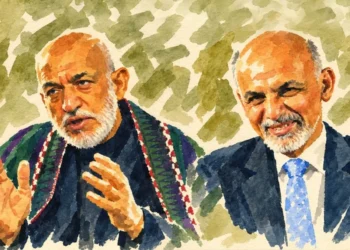
During his first term as president, Hamid Karzai attempted to preserve his power and address such internal crises by employing a conservative policy based on utilizing traditional leaders and influencers. His method, a new version of the patrimonial system based on tribal covenants and alliances, familial relations, and feudal networks, was inspired by the conservative family-centric policies of his predecessor, Mohammad Zahir Shah. Karzai’s approach had two parallel objectives. First, he believed in maintaining power by resorting to traditional mediation mechanisms within local, tribal, ethnic, and national frameworks. This method required bribery of local politicians and influencers for mediating between the central government and local power circles. Secondly, Karzai aimed to take control of Kabul independently by marginalizing former mujahideen and insurgency commanders through the revival of traditional socio-political networks, thus seizing power autonomously in the capital. This method was based on an understanding of Afghanistan’s traditional transition and the economic transformations in rural areas resulting from the war, where traditional influencers had been marginalized due to the loss of political economy and communication networks, yielding no success in return (Shankar, 2008; Jones, 2008; Wilder& Mielke, 2013). Therefore, during his second term as president, Karzai attempted to shift his centralist perspective to a new, non-conservative approach based on collaboration with warlords. This new policy resulted in weakening the central government further and promoted the growth and strengthening of jihadist and insurgent leaders within the hierarchy and formalities of the government and in national and local institutions (Katzman 2015)
Ashraf Ghani took the traditional patrimonial approach of Karzai’s era into a new phase. He adopted an approach of intense centralization and even personalization of power. Ghani came to power after contentious elections, facilitated by a mediation agreement brokered by John Kerry, the U.S. Secretary of State, between Ghani and Abdullah Abdullah. Kerry intervened in the tumultuous 2014 election of Afghanistan when Abdullah refused to accept the results, leading to a political deadlock in the country. Kerry managed to secure the consent of Ghani and Abdullah to form a National Unity Government, in which power would be divided between Ghani as president and Abdullah as chief executive, and the leaders would have to work together in the government. However, despite the agreement, Ghani and Abdullah rarely cooperated. Ghani consistently attempted to limit Abdullah’s sphere of influence, while Abdullah repeatedly criticized Ghani for violating the agreement. The power struggle between Ghani and Abdullah continued to persist during the 2019 presidential elections. In that period as well, the government was divided between the two presidential candidates with the mediation of the United States. However, Ghani continued to increase the concentration of power in the presidential palace, while Abdullah continued to criticize him politically. In both presidential terms, Ghani did not deviate from his approach of centralization and personalization of power, utilizing micromanagement, feudalism relationships, ethnic politics, fragmentation of the country, and minimizing a vast country like Afghanistan into the Arg palace. He even created parallel commissions and advisory offices in the palace to challenge the ministries under Abdullah’s control. These commissions and advisors had full authority to interfere in the affairs of the ministries. The interference of these commissions and advisors from the palace in the ministries disrupted the normal functioning and governance arrangements, significantly undermining the legitimacy of the government long before the Taliban takeover.
The intertwined legacy approach of Karzai’s patrimonialism and Ghani’s power centralization strategy converged on a unified agenda: reviving the central government and consolidating state power in the presidential palace through any means necessary, including coercion, corruption, intimidation, political bribery, and nepotistic networks. Both political approaches obstructed long-term development and gradually diminished the legitimacy of the government as the primary institution managing the country. Electoral corruption in the presidential elections served as a key indicator of the government’s declining legitimacy in Afghanistan.
Each of the four presidential elections in the first two decades of the twenty-first century demonstrated that Afghan politicians still harbored an insatiable thirst for power and an enduring appetite for undemocratic means to gain it. While the 2004 and 2009 elections were not as contentious, they still saw bolstering of ethnic favoritism and foreign interference in the voting process and determination of results. However, the elections of 2014 and 2019, marked by ethnic polarization, fraud, foreign interference, and irresponsible politicians, were highly controversial and legitimacy-depleting.
The 2014 elections were severely ethnocentric and systematically influenced by fraud (Johnson 2019). In the first round, Abdullah Abdullah secured 45% of the vote, and Ashraf Ghani garnered 31%. In the final round, Ghani was declared the winner with over 56% of the vote. The media extensively reported fraud in the elections by Ghani’s team, operational staff of the Election Commission, and government officials in southern and eastern provinces in favor of Ghani. (Gall 2014) The European Union election observers’ report indicated that over two million votes, representing one-quarter of all votes, were cast into ballot boxes in unknown polling centers. (Goldstein 2014) These votes were mostly cast in polling centers located in provinces under Taliban threat, where voting was impossible. However, the results showed that about 99 percent of eligible voters had cast their ballots in these centers. (Goldstein 2014). Abdullah rejected the election results and emphasized that if the election process was not halted, he would establish a parallel government. (Afghanistan Election Observation Mission 2015). To prevent a political crisis, John Kerry traveled to Kabul and mediated the creation of a “National Unity Government” between the two presidential candidates. As a result, the government was divided between Ghani and Abdullah, but the outcome was contrary to expectations. Instead of increasing cooperation between the two presidential candidates, the government became an arena of competition between the two political camps, further eroding the legitimacy of the government of Afghanistan. This legitimacy crisis worsened during the 2019 elections due to increased hostility between Ghani and Abdullah. These elections delineated Afghanistan’s electoral landscape along group and ethnic lines and were rife with organized fraud. (Johnson, 2019, Mashal, 2019) The announcement of the election results by the Independent Election Commission of Afghanistan, which declared Ghani the winner, became a serious point of contention between Ghani and Abdullah, a dispute that in its early stages left Mike Pompeo, the US Secretary of State, unable to resolve it. On the day of the presidential inauguration on March 9th, Ghani and Abdullah held parallel inauguration ceremonies. Government officials, American officials, and foreign diplomats attended Ghani’s inauguration, while Abdullah’s inauguration was attended primarily by former mujahideen. This parallel inauguration in the contemporary history of Afghanistan was unprecedented and contrary to the interests and legitimacy of the government of Afghanistan and, if not managed properly, could have led to further violence and civil war.
The United States government intervened vigorously to prevent the escalation of the crisis in Afghanistan. It exerted pressure on Ghani and Abdullah, threatening to cut its annual aid of around one billion dollars to Afghanistan if the parties failed to peacefully resolve the crisis (Pamuk, 2020). Under this pressure, the parties were forced to sign an agreement outlining a power-sharing arrangement, with Ghani serving as president and Abdullah as head of the High Council for National Reconciliation. It was agreed that ministries and their subsidiaries would be divided between the two camps. However, despite America’s efforts to establish a participatory government, electoral fraud, low voter turnout, ethnic factionalism, and politicization of ethnicities, coupled with declining public trust in the transparency of the electoral process and institutions, severely undermined the legitimacy of the elections and the Afghan government. The government that emerged from these elections, based on Ghani’s centralization and Abdullah’s factionalism, weakened the foundations of the government’s legitimacy. Ghani sought to monopolize all power by creating parallel administrations within the presidential palace, while Abdullah, through clandestine maneuvering and factionalism, contributed to weakening the government in times of intense conflict, threatening the overall existence of the government. Consequently, the erosion of the government’s legitimacy led to the weakening of institutions and government functionality, decreased political trust in the government, and increased corruption and factionalism. Ultimately, the government was confined to a small enclave known as the Arg (presidential palace), surrounded by politicians who lacked a clear and broad vision for Afghanistan’s future. This led to the severance of meaningful relations between the government leadership, institutions, provinces, and armed forces, ultimately resulting in the collapse of the government and the military takeover by the Taliban. Thus, the fall of Kabul was not the consequence of the defeat of Afghan forces but rather the result of the gradual erosion of the comprehensive legitimacy of the government of Afghanistan due to the foresight failure of Afghan politicians and leaders. A government whose legitimacy was crumbling also failed in planning and executing effective measures for its survival.
Weakness of Authority
Fragile governments like Afghanistan have weak authority. Authority refers to the government’s ability to enforce laws and exert executive power to ensure the security of the people and the integrity of the country, encompassing defense, security, law enforcement, and collective support institutions. The weakness of government authority in these areas and institutions was a major factor in the collapse of the Islamic Republic of Afghanistan. When Americans and their allies entered Afghanistan, the Afghan government was completely isolated and bankrupt. There was hardly anything left called a government, except claimant power groups (Taliban and Northern Alliance) and people who suffered the agony and desolation of conflict between these two groups. Americans and their allies attempted to fill the void of security and authority with an expenditure of around $83 billion on building structures and capacities of the armed forces and $36 billion on supporting governmental structures (Kessler, 2021). As a result of this investment, the foundations of authority in Afghanistan were laid in the form of army, police, intelligence, air forces, and special forces as the main pillars of the government of Afghanistan’s authority.
In the early 2010s, the Afghan government claimed to have 300,000 officers and soldiers solely in military and police formations (Whitlock, 2019). If this number were accurate, it would be unlikely for the armed forces to succumb to approximately 60,000 Taliban. The number of forces and their actual presence have always been contentious, but the quality of forces, their training methods, the level of corruption at leadership levels, political interference in ranks and positions of the armed forces, and ultimately the failure of the government and its allies to mobilize these forces in combat situations were never considered in explaining their failure against the Taliban. In summary, four factors related to government authority can explain the collapse of the Republic of Afghanistan against the Taliban: the peace agreement between the United States and the Taliban in Doha, the reduction of logistical and military assistance from the United States and its allies to the armed forces, widespread corruption, and the lack of long-term vision by Afghan leaders and their allies regarding the importance of the country’s stability in the region.
The negotiations in Doha, which commenced in September 2018 and culminated in a bilateral agreement between the United States and the Taliban in February 2020, conducted without the involvement of the Afghan government, opened up avenues for enhancing the political legitimacy and military motivation of the Taliban while, on the other hand, creating grounds for the erosion of the Afghan government’s authority. The armed forces faced shortages in supplies and logistical reinforcements, resulting in a decline in their political and moral support on the battlefield. This occurred despite Afghan forces having the upper hand in all war zones before the signing of the Doha agreement. (Sadat 2021) The Doha agreement bolstered the morale and motivation of the Taliban for victory on the battlefield, while within the leadership circles of the Afghan government, there was no clear and comprehensive vision regarding the war and negotiations. After the signing of the Doha agreement, while Afghan politicians and citizens were becoming more optimistic about the possibility of ending the war through negotiations, the Taliban were strengthening their ranks on the battlefields. The illusion of the government and politicians about the war and negotiation left the armed forces in confusion and lack of direction on the battlefields. As the Taliban seized control of districts through extensive attacks, Afghan politicians and their foreign allies were still deluded about negotiating with this group, thus further empowering the Taliban on the battlefield and boosting their political stature unprecedentedly.
Moreover, the reduction in foreign aid, especially the decrease in logistical support from the United States to the Afghan armed forces, was one of the main factors leading to the effective decline of military forces on the battlefield. Following the Doha agreement, the United States concentrated all its efforts on facilitating and expediting the withdrawal of troops from Afghanistan, thereby relegating support for the Afghan armed forces to a marginal matter. This not only led to a decrease in the quality of military operations by Afghan forces but also resulted in a decline in the morale of soldiers on the battlefield. According to General Sami Sadat, a three-star general and former military commander, “Afghan forces had been trained in the American method. These forces relied on special reconnaissance units, helicopters, and airstrikes. We lost our advantage over the Taliban on the battlefield due to the reduction in air support and supplies.” (Sadat 2021).
More importantly, widespread corruption and political interference in military affairs led to a decrease in the quality of work by army and police personnel. In the past three years, under Ghani’s government, generals and army officers were frequently replaced without considering their records, solely due to political and ethnic affiliations. Even as districts were falling one after another in early 2021, incumbents and commanders in the presidential palace were suddenly moved from one place to another by certain circles, mostly composed of Afghans returning from the West who were unfamiliar with the military, war zones, and the complexities of Afghanistan (Labate, 2021). Young officers rapidly ascended the ranks, mainly due to personal relationships and ethnic and political affiliations, lacking the necessary knowledge and experience of tough and intricate military campaigns in Afghanistan’s history.
This occurred while approximately two thousand experienced generals and officials were pushed into retirement before the end of their mission (Ghobar, 2017). The young generals and managers who replaced the seasoned ones mostly served as translators, contractors, guides, and advisors to coalition forces and NGOs before assuming military positions, lacking the necessary awareness and experience of the tough and intricate military battles in Afghanistan and the history of the nation’s campaigns.
Simultaneously, newly appointed young officials were deeply entrenched in corruption and ethnic favoritism rather than having a sacrificial commitment, adherence to national calls, and a broad national outlook. Consequently, soldiers’ determination for service and sacrifice under the command of corrupt, untrustworthy, and inexperienced commanders diminished daily (Sadat 2021). Widespread corruption in the armed forces led to the creation of a phenomenon known as “Imaginary Soldiers,” where young generals and jihadist commanders allocated quotas and emoluments and deposited their salaries and rations into their accounts. The official number of officers and soldiers in the armed forces was reported to be over 352,000 in 2019 (Whitlock 2019). while recent findings and data indicate that this figure was six times higher than the actual numbers (SIGAR 2021, p.100) Officers and high-ranking commanders exaggerated the number of soldiers to receive their allowances and rations (SIGAR 2021, p.100). Furthermore, commanders and high-ranking officials pilfered taxes, ammunition, rations, and food before reaching the battlefields (Basit 2021). Corruption and political interference in military affairs lead to a decrease in the quality and morale of the armed forces, ultimately resulting in disinterest among soldiers on the battlefield.
Lastly, the post-2001 melancholy policy, based on day-to-day meetings and interactions between diplomats, politicians, and foreign spies without a clear and long-term vision of Afghanistan, dealt a blow to the political authority in Afghanistan (Coll 2018). From the onset of the war on terrorism to the fall of the Republic of Afghanistan, American and European spies and diplomats, along with those of other countries, aimlessly and without a clear political and security plan, oscillated between Kabul, Islamabad, and other capitals in the region (Coll 2018) This routine extensively marginalized Afghanistan’s politics, plunging Afghan politicians and Afghanistan into the quagmire disorganization. However, in such an unacceptable and unpleasant atmosphere, American generals, managers, and spies incessantly reported success against insurgency and development in Afghanistan to Washington (Whitlock 2019) Therefore, the resurgence of insurgency, the escalation of war, and the fall of Kabul were both the consequence of the weakness of the Afghan government’s authority and the result of American concealment of their gradual failure in Afghanistan.
The regional structure of the Afghan conflict also significantly impacted the collapse of the republic. Primarily, the Afghan war was heavily influenced by the rivalry between Pakistan and India in South Asia (Hain and Gash, 2011; Mitton, 2017). One side sought to support the Taliban while the other aimed to bolster the government in Kabul. The competition between Iran and Saudi Arabia also had a profound effect on the duration and complexity of the war, shaping the positions of policymakers and negotiation tables for resolving the Afghan conflict. China and Russia also consistently created obstacles to finding a rational solution to the Afghanistan conflict and reducing American presence in the region. The complexity of the regional dimensions of this war led political parties in the United States and Europe to speak less about it to safeguard their reputations and electoral gains. However, the regional dimensions of the war resulted in overt polarization of foreign actors in both conflict and conflict resolution in Afghanistan. On one side, the United States and its allies ostensibly supported the government, while covertly aiming to withdraw from Afghanistan, and on the other side, regional countries except for India openly and covertly strengthened the Taliban materially and spiritually. The lack of consensus among regional and international actors led to numerous meetings in various capitals of the region, ultimately culminating in the Doha talks between the Taliban and Khalilzad, much of which remains shrouded in ambiguity, resulting in the fall of Kabul to the Taliban. Afghanistan’s government, due to its lack of authority and internal disarray, could not provide a more effective alternative to the regional and international complexities of conflict and conflict resolution and ultimately surrendered to a process from which it had been marginalized.
Capacity Shortage
The shortage of government capacity was also a major factor in the gradual collapse of the Republic of Afghanistan. Capacity primarily refers to the economic and human resources of a country and the government’s ability to manage and effectively utilize them (Carman et al., 2010). The Afghan government and its international partners consistently invested in increasing capacity, especially human resource capacity, between 2001 and 2021 as a foundation for the legitimacy and effectiveness of the government. A generation of Afghan youth underwent unprecedented capacity-building processes in various fields and ascended to positions within the Afghan administration. However, political and systemic corruption, administrative capacity gaps, and ethnic favoritism in public administration squandered all the accumulated energy for government capacity building. The motivated and youthful generation of Afghan bureaucrats became divided into patron-client networks due to shortsighted political interference in administration, and consequently, they expended their energy justifying the political stances of their patrons rather than building an efficient government capable of providing services to the people.
Overall, the capacity of the Republic of Afghanistan was affected by three anomalies. The first factor was the weakening of government foundations and the lack of trust by the people in governmental institutions due to corruption. Corruption was so widespread that it gradually became the norm of governance. Almost all politicians, leaders, and managers had a share in plundering and illegally amassing wealth from the government budget, foreign aid, drug trafficking, and even from the pockets of citizens. These politicians, managers, and leaders, using such revenues, bribed their followers and supporters to use them as a deterrent force and to gain exemptions during law enforcement pressures. Thus, corruption became the main business of politics in Afghanistan, extending from the presidential palace and its subsidiaries to the armed forces, education, judiciary, customs, and other governmental institutions. SIGAR reported in 2015 that corruption in the Afghan government is rampant, and almost everyone is involved in it (SIGAR 2021, P. 100) Corruption not only created fictional soldiers, managers, teachers, schools, and judges, but its scope extended day by day to public institutions, especially revenue-generating institutions and customs. American authorities believe that almost half of Afghanistan’s customs revenue fell victim to corruption because all customs officials were corrupt and at the same time had to bribe the police, government officials, parliament members, and even the Taliban to survive and evade the law, requiring more income that they stole from the treasury (SIGAR, 2015, 2021; Afghanistan Analysts Network, 2021). According to SIGAR, almost half of Afghanistan’s customs revenue in 2015 was wasted due to corruption, a trend that continued until the end of the Republic of Afghanistan and was uncontrollable (SIGAR 2015, p. 1; SIGAR 2021, p. 102). Therefore, the government’s failure to prevent corruption severely weakened its capacity. Combating corruption required reforms in six major areas: defining and enforcing corruption-prone and healthy administrations, amending Article 102 of the Constitution and establishing clearer procedures for the arrest and trial of parliament members in case of committing a crime, creating new laws to prosecute and arrest individuals suspected of corruption, establishing specific frameworks for disclosing and verifying the assets of government officials, facilitating cooperation between anti-corruption agencies and international bodies for implementing laws, and allocating more resources to the Financial Transactions and Reports Analysis Center of Afghanistan (FinTRACA) in “Da Afghanistan Bank” and other relevant institutions for monitoring the flow and circulation of illicit funds in Afghanistan (SIGAR 2021, P. 103). However, the weak capacity of the government did not allow for the creation of an effective and transparent structure to reduce corruption and prevent it. This led to the government’s inability to effectively and comprehensively manage legitimate revenues, economic management, wealth distribution, and service provision. The lack of capacity gradually diminished the government’s stature among the people and its international supporters. In recent years, the Islamic Republic of Afghanistan lacked the trust of most citizens in public servants and institutions because the government hierarchy from the president to lower-level bureaucrats, to parliament, to government oppositions, and even to civil society institutions failed to present a clear and transparent picture of governance to the people of Afghanistan. They either lied to the people about the government’s capacity or exaggerated hatred and criticism of the government. The government’s failure was the result of this financial-political melancholy and the daily olympiad of those involved in affairs both within and outside the government in the absence of a coherent strategy for advancing national affairs.
Taliban extensively campaigned on the issues of corruption and government mismanagement. This opened the door for the expansion of the Islamic/Taliban narrative of governance. The Taliban worked systematically to universalize this narrative as an alternative solution. For example, the group made organized efforts in key areas such as the judiciary to undermine the credibility of Afghanistan’s judicial system in some provinces. In areas under their control, the Taliban established traditional judicial bodies that were more accessible and less costly compared to government courts and bureaucracy (Jackson and Wiegand, 2020) They aimed to challenge the credibility of Afghanistan’s courts using this method, replace formal and traditional indigenous methods with Islamic dispute resolution methods, and ultimately promote the Taliban system as an alternative to the government (Jackson and Wiegand, 2020).
Evidence and findings show that even people from areas under government control resorted to Taliban courts because government courts were expensive and time-consuming, requiring them to pay exorbitant sums to the police, prosecutors, and judges to advance their cases through the judicial process. The lack of capacity not only in the judiciary but in all areas led to a decrease in credibility and a gradual erosion of government institutions. Government support for girls’ education, civil society, media, communications, rural development, and agriculture in the two decades of the Republic of Afghanistan was unprecedented. However, organized corruption and the lack of capacity to manage resources and develop towards building an effective government led to the downfall of this government. In the void of effective governance in Afghanistan, the Taliban breathed new life and returned to power.
Summary
The collapse of the Afghan government was the primary factor behind the escalation of the conflict, the increase in Taliban activities, and the failure of efforts to achieve a political solution to the conflict between 2001 and 2021. During this period, the government of Afghanistan failed to establish legitimacy, authority, and capacity. Consequently, the return of the Taliban was fundamentally a result of the Afghan government’s failure and its international allies’ inability to build a government based on the necessary foundations of legitimacy, authority, and capacity. As a result, the Taliban came to power, and two decades of efforts to establish a functional state failed. The Taliban established their emirate on the ruins of the governmental structures built by the Republic of Afghanistan, the Americans, and their allies.
The weakness of legitimacy was one of the major factors in this downfall. Afghanistan’s political process was supported by the United States and its allies for two decades to create a legitimate and democratic system. However, Afghan elites and political leaders failed to create and strengthen a free and transparent electoral system. They did not see elections as a platform for peacefully transferring power but rather as an opportunity and means to gain a share of power, sparing no means or tools to achieve such a share. As a result, elections were continuously held fraudulently and nepotistically, and the governments emerging from those elections failed to meet society’s demands for accountability, security, and welfare. On the contrary, groups vying for power turned the government into a scene of political conflict in situations where war was rampant. In those situations, the government and its rivals resorted to populism, everyday literature, bribery of politicians, especially youth, and relied on tribal bases. Thus, Afghan politicians, due to their shortsightedness and lack of broad and long-term vision for Afghanistan as an independent country in complex international relations, transformed the nation into their daily competitive arena. This process severely damaged the government’s legitimacy and provided fertile ground for the Taliban’s political infiltration. Politicians who wanted to have a share of power by any means possible, even if it meant reducing their country to mere circus tents, could not manage the country and, as a result, undermined the formation of an effective government in Afghanistan. Their shortsightedness compromised the foundations of state-building in Afghanistan and, consequently, led to the downfall of the republic and the process of democratization in Afghanistan. The government’s lack of authority was also one of the main factors in the collapse of the Afghan Republic. Weak authority not only prevented the formation of a national armed force, making it highly politicized and corrupt, but also made it vulnerable to insurgent forces, networks, and councils.
The networks and councils of the Taliban were revived amidst the collapse of the Afghan government, expanding their battlegrounds within this void. The corrupt leadership of Afghanistan proved incapable of managing the armed forces, which could ensure the security of the people and preserve the borders. The Taliban, with direct assistance from Pakistan, extensively exploited this void and expanded their operations in cities and villages. The escalation of Taliban attacks did not signify the effectiveness of this group on the battlefield; rather, it revealed the ineffectiveness of Afghanistan’s government in managing the war and the ignorance of war managers regarding the complexities and consequences of the Taliban resurgence and the agendas of their supporters.
In addition to the lack of legitimacy and authority of the government, the absence of necessary capacity within governmental institutions also facilitated the gradual erosion of the Afghan Republic. The government’s inability to provide services in villages, districts, and provinces, coupled with the Taliban’s extensive propaganda in these areas to establish alternative service frameworks, undermined public support for the government. Therefore, when districts fell one after another into the hands of the Taliban, the people remained silent. Thus, the lack of capacity to provide services was a major factor in reducing people’s trust in the government, expanding the Taliban’s sphere of influence, and ultimately leading to the collapse of the Afghan Republic.
State-building through military intervention in Afghanistan was the costliest social engineering project of Western governments in an underdeveloped country. The United States and its allies, by sacrificing thousands of lives, consuming trillions of dollars, and spending two decades, left Afghanistan in a state reminiscent of pre-2001 with a collapsed government, uncertain economy, and international isolation. The failure of this project, which led to the victory of the Taliban as a supportive group of Al-Qaeda, which has yet to sever its ties with this terrorist organization, challenges Western state-building thought, which is based on rentier economics and interventionist philosophy. American and European intellectuals, politicians, military personnel, and diplomats have admitted the failure of this project (Whitlock, 2019). James Dobbins, the first US ambassador to Afghanistan after the collapse of the Taliban regime and the special envoy for Afghanistan and Pakistan in 2013 and 2014, states: “We don’t invade poor countries to make them rich; we don’t invade dictatorships to make them free and democratic; we invade violent centers to make them peaceful. That’s why we invaded Afghanistan and we failed in this mission.” (Whitlock, 2019). In addition to the explicit failure of the United States and its allies, the Afghan government, including the three branches of power, opposition forces, civil society, and even the people, have moral roles and responsibilities in the collapse of the republic. They mistakenly treated governance, which requires a broad and long-term vision of the country’s present and future, with everyday formalities, interactions, sensitivities, and personal and tribal competitions.
You can read the Persian version of this analysis here: