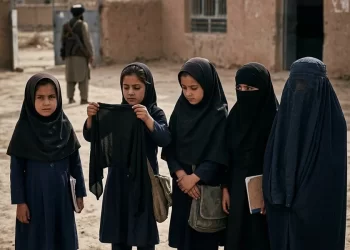
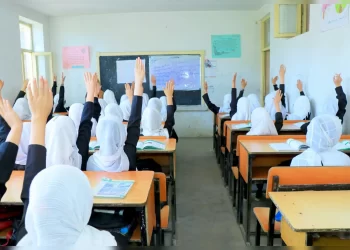
This year, as with previous years, the results of the Afghanistan National Entrance Examination were announced, but the Taliban once again prevented girls from participating in the exams. If we evaluate this issue by human rights standards, it is one of the most catastrophic events globally. It is regrettable that the world witnesses this brutal oppression and systematic gender apartheid, yet not only fails to react appropriately and effectively but also, by adopting a policy of appeasement and tolerance towards the Taliban, tacitly condones their discriminatory policies. Depriving half of the population of their most basic rights can only happen under the Taliban’s rule. Unfortunately, part of the society agrees with the Taliban’s approach, justifying it with religious texts and cultural and traditional values. However, those citizens who oppose the Taliban’s gender policies feel too powerless to stand against the ruthless and violent suppression machinery of the Taliban. The Taliban have resorted to such extreme measures in suppressing dissent that they have entirely stripped citizens of their power to protest. This group, which resorts to brutal torture or shooting people at the slightest excuse, will surely react harshly when individuals or groups protest against them.
Depriving girls above the sixth grade of education and learning has long-term disastrous consequences. Families with economic means migrate to foreign countries to provide their children with an appropriate educational environment. This leads to the emigration of the middle class, a small but crucial part of society, from Afghanistan. The diminishing presence of the middle class paves the way for the Taliban to engineer the country to their liking without facing serious challenges. Sociologically, the dynamism of any society relies on the presence of an urban middle class. Perhaps this is why the Taliban are at odds with the middle class and try to disrupt their way of life by creating fear and terror.
Furthermore, denying girls access to modern education places them at a crossroads. Some are forced to turn to Taliban religious schools to escape stagnation and depression. Currently, tens of thousands of girls are studying in religious schools. Naturally, the education and training of girls in the Taliban’s religious schools indoctrinate them ideologically and mentally preparing them to accept the Taliban’s backward ideas. Numerous reports indicate that during the three years the Taliban have been building schools for girls, many girls have leaned towards extremist views, and some have even married Taliban members. The Taliban, generally inclined towards polygamy and now holding power and decision-making authority, use religious schools to select second, third, and fourth wives from among the female students to satisfy their sexual desires. Sometimes, families, out of fear of Taliban punishment or to escape poverty and destitution, agree to marry their daughters to men twenty or thirty years older, leading their daughters towards an uncertain and ambiguous future.
Those girls who refuse to study in religious schools under the Taliban’s control are forced to grapple with depression and lack of prospects, with many succumbing to unwanted and early marriages. In a poor and backward society where girls have no opportunities to work and earn money, they are seen as a burden on the family, and heads of families prefer to marry them off to individuals who can provide them with sustenance. Being a girl in Afghan society comes with countless pains and sufferings, one of which is the compulsion to marry. According to prevalent social and traditional norms, girls are expected to bear children, serve their husbands, be submissive and obedient to the men of the family, and avoid participating in any social activities. When these social norms are coupled with the lack of education for girls, women face significant hardships, remaining idle and inactive.
Even if we judge women by old standards and believe their only duty is motherhood, an uneducated woman who is unaware of the principles of upbringing and household management cannot adequately fulfill her maternal responsibilities. The reality is that at least part of the women in our society, due to restrictive traditions, are so mired in ignorance and illiteracy that they cannot shoulder even the smallest responsibilities, let alone properly fulfill their maternal duties and strive to raise good children. In other words, the illiteracy and ignorance of women adversely affect future generations, making them irresponsible and uninformed. An Arab poet once said, “The mother is a school; if you prepare her well, you will prepare a noble and good generation.”
For oppressive regimes like the Taliban, keeping girls uneducated and ignorant provides the best opportunity to mold them according to their desires and instill ideas that ensure the establishment of their rule. The Taliban are currently busy monitoring girls to their advantage. In Kabul, on every street and alley, you will encounter religious schools and seminaries managed by the Taliban and their sympathizers, tasked with familiarizing girls with Taliban ideology and indoctrinating them with the group’s views. Interestingly, you will encounter various ideological spectrums in these schools, from extreme Salafis to radical Sufis, and initially, you may be surprised how these diverse groups serve the Taliban’s rule. But upon deeper reflection, you realize that they all share a common goal: strengthening and consolidating the Taliban Emirate’s foundations. The Taliban seem to pragmatically support these ideologies because they serve their oppressive rule. The Taliban claim to follow the Hanafi school of thought, yet Salafis also hold prominent positions within the group, forming important commands and factions.
For over a hundred years, reactionary forces have been opposing modern education and viewing modern sciences and concepts with suspicion. Regressive groups have always propagated and repeated the claim that modern education promotes impiety and ideological deviation, trying to destabilize Muslims’ beliefs and replace religious values with Western concepts. Over the past century, reactionaries have tried various methods to block modern education or distort and corrupt modern values and concepts. Currently, under Taliban rule, schools and universities are in poor condition. Some believe that the Taliban deliberately wants to keep schools and universities in a bad state to prevent the perceived influx of modern values and concepts into society. When we understand that the Taliban have a problem with the very existence of universities and schools, it becomes clear that they are unwilling to let girls familiarize themselves with these values and concepts, fearing that they might lose their purity and holiness.
Groups like the Taliban can gain power in societies where people have simple mindsets, lack critical thinking skills, and cannot distinguish right from wrong, strictly adhering to traditional values and norms. The most significant advantage of modern education is that it allows us to examine traditions critically and inherited dogmas and test their validity. It is challenging for people with sufficient critical thinking to surrender their leadership to individuals carrying ancient messages that bring darkness and dead ends. Perhaps the Taliban instinctively understand this issue, which is why, in their three years of renewed rule, they have done everything possible to close off avenues of awareness and, through extensive propaganda, make citizens suspicious of modern achievements.
The experience of other human societies shows that women in today’s world are one of the most critical segments of society in creating social, cultural, economic, and political changes. It is difficult for a political regime to ignore women’s presence in society for a long time and banish them to the background forever. Due to women’s decisive role in transformations, oppressive regimes either try to suppress them entirely or limit their presence to symbolic and superficial roles. Although the people of Afghanistan, both women and men, suffer greatly under the Taliban’s authoritarian rule, it is certain that women are the vanguard in creating positive change and transformation in society and can play a crucial role in leading the community out of this dark and terrifying tunnel. In this context, it is essential to note that women’s awareness is the Achilles’ heel of oppressive regimes. Therefore, women must strive to increase their awareness and understanding of their surroundings by all possible means. Now that the Taliban does not allow women to receive formal education, they must not give up and should seek alternative ways.
You can read the Persian version of this analysis here:
چرا طالبان از دختران باسواد و آگاه میترسند؟ | روزنامه ۸صبح