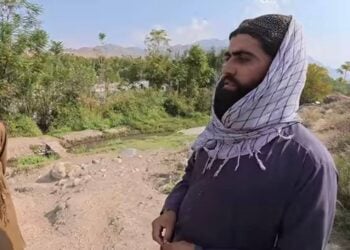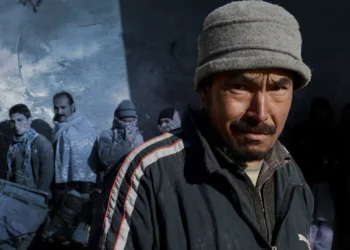

On Friday morning, July 17, 2026, the Taliban flag was lowered from atop the district building of Yaftal-e Payin in Badakhshan province, and for several hours, the flag of a newly emerged front calling itself “Sepahiyan-e Mihan” (Soldiers of the Homeland) flew over it. No group’s reaction to Yaftal spoke to the significance of the event as much as the Taliban’s own reaction did. Some analysts described it as a “symbolic event,” social media spoke of the “start of a path,” and Taliban spokesmen tried to reduce it to the actions of “a few irresponsible individuals.” But the Taliban’s real response was revealed not in their official narrative, but in their behavior: dispatching the Taliban army chief of staff from Kabul, transporting reinforcements by helicopter, and conducting house-to-house searches in the following days. A regime that dismisses an event as insignificant yet reacts to it in this manner inadvertently reveals a truth: what happened in Yaftal was, even in the Taliban’s own eyes, far more than the action of a handful of armed men. The event also challenged one of the Taliban’s most important political narratives, one that speaks of the establishment of complete security, public satisfaction, and undisputed control over the entire country.
So what exactly had the Taliban encountered? To answer this, a distinction must be drawn between two concepts that are often mistakenly conflated: control over territory and authority over society. A government may hold cities, roads, checkpoints, and administrative offices, yet still fail to eliminate a society’s capacity for collective action and resistance. Control of territory can be achieved through military means, but authority takes shape only when society accepts it. The gap between the two lies in layers of social life that persist even through years of silence.
Viewed from this angle, the central question about Yaftal is no longer how the operation was carried out, but what capacities within society made it possible. Carrying out such an operation, at the very least without familiarity with the region’s geography, knowledge of mountain routes, local networks of trust, and the ability to coordinate collectively, is difficult to imagine. These capacities are not the product of a single night or a single operation; they take shape over months and even years, remain embedded in memory and social relationships, and reveal themselves only at a particular moment. For this reason, if we confine our attention solely to the military details of the operation or to internal rifts within the Taliban, we overlook the most important part of the story: what within Badakhshan society itself created the conditions for such an event to occur.
The answer can be found in a concept I refer to as the “social infrastructure of resistance”: a set of historical, cultural, and relational capacities that preserve the ability for collective action and sustained resistance, even during periods of silence. Just as a road remains a road even in the absence of traffic, these capacities do not disappear in the absence of visible action. The social infrastructure of resistance can have various layers. In this piece, four layers stand out for analyzing the Yaftal event: historical memory, geographic knowledge, local networks of trust, and the political awareness of the younger generation. Seen from this perspective, Yaftal was neither the beginning of resistance nor its end; rather, it was a moment when this hidden infrastructure surfaced from beneath the skin of Badakhshan society for a few hours.
Historical Memory
What happened in Yaftal did not occur in a historical vacuum. The event took shape against a backdrop of experiences accumulated in Badakhshan’s social memory over decades, and even more than a century. Until the late nineteenth century, Badakhshan was effectively a semi-autonomous mirdom (principality); its mirs, according to local accounts, traced their lineage to Alexander and were not fully subordinate to either Kabul or Bukhara. It was only Abdur Rahman Khan’s military campaigns in the 1880s that forcibly integrated the region into the structure of a centralized state. A century later, these same mountains became one of the bases of resistance against the Soviet army. During the Taliban’s first period of rule as well, Badakhshan, alongside Panjshir, was never fully absorbed into the Taliban’s order, and Faizabad remained one of the main centers of resistance until the regime’s collapse in 2001.
Of course, these historical periods do not constitute a single, continuous movement. Their actors, goals, and ideologies have differed. But each period has provided raw material for memory that later generations can draw on to interpret power, define injustice, and imagine the possibility of resistance. In political sociology, an experience that is repeatedly recounted, reconstructed, and passed on to later generations is no longer merely a memory; it becomes part of a society’s framework for understanding power. Resistance in Badakhshan is not a natural property of its soil and mountains, but the product of the social reproduction of experiences, narratives, and relationships.
Geographic Knowledge
Historical memory does not translate into action without a geographic foundation. The second layer of the infrastructure of resistance is geographic knowledge. According to residents, the attackers entered Yaftal from an area called “Shekarlab” in the north of the district, a mountainous route that previous generations had also used at various times, and one the Taliban themselves had once used to advance into the region. Knowledge of mountain passes, blind spots in surveillance, the right timing for movement, and routes of retreat is not information that can simply be obtained from a map. This knowledge takes shape through daily life, local movement, and the transmission of experience from one generation to the next. An outside force may see elevations and passes on a map, but it is local people who know which route is open in which season, which path is exposed to view, and from which point one can pass without drawing attention.
Geography alone does not create resistance. Afghanistan has many mountainous areas that lack Badakhshan’s political history. Geography is not the primary cause of resistance; rather, it is a factor that strengthens the capacity for coordination, endurance, and continuity. When combined with memory, trust, and organization, it turns from a natural landscape into an operational asset. Taliban intelligence failures or tactical surprise may also have played a role in the operation’s success, but these factors alone do not explain why one group was able to make effective use of the local environment. The regime’s weaknesses create opportunity; local knowledge determines who is able to seize it.
Networks of Trust
The third layer is local networks of trust: kinship ties, relations between villages, local elders, and the forms of trust that enable coordination, the flow of information, and concealment. The strongest evidence of the importance of these networks is the Taliban’s behavior after retaking the district center. The Taliban did not limit themselves to pursuing the armed individuals; they launched house-to-house searches and detained several tribal elders, local notables, and young people. The scale of this response suggests that the Taliban, at the very least, suspected the attackers had drawn on a social environment extending well beyond their armed core.
If the matter had simply been the presence of a few unidentified attackers, the focus would have remained on finding those individuals. Going after elders and local networks instead shows that the Taliban viewed the threat as social, not merely military. They wanted to know who had known, who had stayed silent, who had shown the way, and who might, in the future, become a conduit for organizing. Of course, local networks do not always serve resistance. The same relationships that build trust and enable concealment can, in the event of internal rifts, also become channels for infiltration, rivalry, local revenge, and collapse. Social infrastructure is a capacity, not a moral or political guarantee. Its strength depends on the degree of cohesion, trust, and the ability to contain disputes.
Political Awareness of the Young Generation
The first three layers are largely inherited; but inheritance alone does not generate movement. What links it to action today is the political awareness of the younger generation. Available evidence suggests that a segment of Badakhshan’s youth has moved beyond scattered discontent toward a clearer understanding of power, rights, and the limits of social tolerance. This claim does not rest on the Yaftal event alone. Over recent years, protest in Badakhshan has been consistent, issue-based, and selective. In Sawr 1403 (April-May 2024), residents of Darayim and Argo protested against a campaign to destroy poppy fields, protests that turned violent and forced the Taliban leadership to send a delegation from Kabul. In Sawr 1405 (April-May 2026), protests broke out again in Argo; at least two people, including a child, were killed by Taliban gunfire, and protesters blocked the Faizabad-Keshem highway. Alongside this, disputes over mines, taxation, the sidelining of local commanders, and the monopolization of power have deepened political discontent.
Of course, the mere occurrence of protest is not, by itself, a sign of political awareness. What distinguishes these protests from isolated reactions are the patterns and characteristics that point to the formation of a certain political understanding of power and society. These characteristics can be observed in at least three signs.
The first sign lies in Badakhshan’s popular protests. These are not merely momentary, emotional, and unplanned reactions. They have formed around specific issues and have marked boundaries that society is unwilling to let pass without response. Linking livelihood concerns to the structure of power, transforming individual grievance into a collective demand, and the repetition of protests over similar issues all point to the formation of a kind of political awareness.
The second sign can be seen in the language and symbols of the Sepahiyan-e Mihan front. In statements attributed to the group, the language is one of freedom, justice, and human dignity, not simply conquest, jihad, or revenge. In an audio recording attributed to Commander Qayum Malang, the poverty of the people, the displacement of millions of citizens, and the denial of education to girls are cited among the group’s motivations for the struggle. In the emblem attributed to the group, whose authenticity has not yet been independently verified, an eagle, the Hindu Kush mountains, and the slogan “Freedom, Justice, Homeland” appear, but the religious symbols of earlier jihadist movements are absent.
This linguistic shift matters. A generation that has preserved the memory of resistance but has changed its vocabulary from “conquest and jihad” to “freedom, justice, and human dignity” is not simply repeating the past; it is reinterpreting it in light of today’s needs and values. Some of this language may, of course, be a strategy for winning public support. But even the choice of such a strategy shows that the sources of legitimacy have shifted. Today, any group seeking social support has little choice but to speak of girls’ education, social justice, inclusion, and human dignity. This in itself is a sign of a changed political landscape.
The third sign can be observed in Badakhshan’s educational and cultural context. The province has a long history of religious, literary, and academic education, and Badakhshan University has operated in Faizabad since the 1990s. Political awareness does not arise from a vacuum; the presence of teachers, students, university faculty, and an educated generation provides resources for dialogue, comparison, critique, and reflection. For this reason, attributing the Yaftal event to “the exploitation of young people’s emotions,” as the Taliban’s army chief of staff has claimed, does not appear to be a convincing explanation. Discontent that has been reproduced over several years, across a range of issues and in a relatively consistent language, is not simply the product of fleeting emotion. Emotion may spark a protest, but what makes protest repeatable and enduring is political awareness and consciousness, together with the capacity for coordination and collective mobilization.
Conclusion
Militarily, Yaftal may have lasted only a few hours, but its significance should not be measured in hours. The event was a reminder that a deep gap separates the seizure of territory from mastery over a society. States can retake buildings, raise flags again, and dispatch more troops; but historical memory cannot be raided, local knowledge cannot be confiscated, networks of trust cannot be dismantled overnight, and political awareness cannot be replaced with an official narrative.
Perhaps the most important question after Yaftal is not who planned the operation or how it ended. The more important question is what kind of society made its occurrence possible. As long as that social infrastructure remains intact, even if silent and out of sight, the possibility of collective action reemerging will not disappear either. Seen from this angle, Yaftal is less the story of a district’s fall for a few hours than the account of a society that showed silence does not always mean acceptance, and quiet does not always signal surrender.
You can read the Persian version of this analysis article here: