The news of an Afghan national attacking members of the U.S. National Guard in Washington is more than a simple security incident; it reflects decades of violence, displacement, and social collapse that Afghans, both inside and outside the country, have endured. For me, and for millions of other Afghan migrants who have fled Afghanistan multiple times, each time leaving parts of our lives and identities behind, the attack evokes a profound crossroads: between the tribal mindset of those who dragged the country into war and destroyed any chance of national unity and peace, and the West, which once represented a refuge of freedom and democracy, and to which we fled now confronting the very threats we escaped.
We left the country, but the wounds engulfing Afghanistan have neither healed nor remained contained. Today, even the lives of Afghan refugees and the security of host societies in the West are under threat. This reality is not simply a tragedy; it is a clear warning to all Afghans who have spent decades in denial and still fail to grasp that the Taliban’s influence within communities will eventually engulf everyone. This raises a crucial question: How did the Taliban, a newly empowered regime, manage to cross borders so swiftly and plant the roots of its extremist ideology deep inside Western societies? And more importantly, have Afghan migrants and the West truly understood the consequences of the decisions and policies that have, albeit unintentionally, contributed to legitimizing violence and terror?
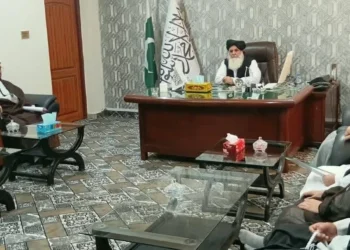
The Taliban’s influence is no longer confined to Afghanistan. In Europe, the decision to grant entry to Taliban-appointed diplomats into the Afghan Embassy in Berlin and allow them effective operational control demonstrated that the regime has succeeded in infiltrating the heart of Europe through the very security crises it helped create. This occurred at a moment when violent incidents involving some Afghan refugees had already placed Germany’s political climate under pressure. The Taliban exploited and manipulated this environment, using the instability to legitimize their presence. It shows how violence and crisis can be transformed into diplomatic influence and a veneer of legitimacy, a deeply troubling message for the international community.
Yet the Taliban’s reach is not limited to violence or formal diplomacy. A network of former diplomats of the Afghan Republic and security advisers abroad has played a key role in sanitizing the regime’s image. Many of these individuals present the Taliban as an “inevitable political reality,” portray the oppression of women and minorities as a cultural matter, and dismiss the non-recognition of the regime as unrealistic. Others describe the Taliban in Western media and think tanks as a pragmatic, locally rooted movement, while concealing the horrifying realities within Afghanistan.
A striking development is the emergence of a group of Afghans who once acted ambiguously during the Republic and now operate in think tanks across Europe and the United States, working to sanitize the Taliban’s image without damaging that of Western governments. Through diplomatic and academic language, these circles humanize the Taliban and construct a veneer of legitimacy around them, a danger even more insidious than direct violence.
Another tool in the Taliban’s cultural whitewashing is the use of Western women who travel to Afghanistan under the regime’s protection and publish videos portraying the country as safe and the Taliban as benevolent. Some of these women dance in places where Afghan girls are whipped or imprisoned for claiming the most basic human rights, education, work, or freedom of expression. This not only turns the suffering of Afghan women into spectacle and entertainment, but also sends a deeply dangerous message to the world: the Taliban’s outward image may appear acceptable or even legitimate while the reality inside Afghanistan remains brutal and repressive.
For Afghan migrants, the message is clear: those of you who have worked tirelessly for years to build new lives have a vital role in protecting your community. The time has come to separate yourselves decisively from Taliban sympathizers and prevent foreign networks or media narratives from misleading you. Individuals who pose security threats or assist in the Taliban’s whitewashing campaigns must be reported to relevant security institutions. By forming civic organizations and support networks, you can bring the real story of Afghanistan and the suffering of its people to the world. It is your moral and human obligation to protect your community and ensure that history does not repeat itself.
The message for Western policymakers and governments is equally unambiguous: today’s decisions on engagement with the Taliban will have direct and long-term consequences. A core element in countering Taliban-linked extremism is mobilizing the Afghan diaspora in Western countries, communities that have lived peacefully for years and become part of the social fabric. With awareness, vigilance, and effective cooperation, this diaspora can prevent the Taliban from acquiring legitimacy and help counter the regime’s propaganda and influence networks.
It is essential to fully distinguish the people of Afghanistan from the Taliban regime; no political or administrative engagement should result in legitimizing the group. A monitoring system for Afghan extremism in the West must also be established to facilitate shared intelligence among countries and identify Taliban propaganda networks, enabling preventive action against their influence.
Supporting the pro-democracy opposition and strengthening credible Afghan alternatives is also crucial. These alternatives must not be sidelined; they require sustained backing. Finally, preventing the Taliban from using embassies and consulates as sources of revenue and influence must be guaranteed. These missions should remain under independent, non-political administration so the Taliban cannot exploit them for legitimacy or financial gain.
For the Afghan diaspora, the path forward is equally clear. Building a unified front against extremism is essential; internal divisions must be set aside and the common enemy clearly defined. Every Afghan has a moral responsibility to report individuals suspected of extremism or support for the Taliban to security authorities, “for which, one hopes, each country will designate a proper contact point.” Clear boundaries must be drawn with Taliban sympathizers; no gathering, mosque, online group, or cultural center should be allowed to become a platform for the regime. Strong civic institutions are also necessary; the Afghan community needs structures capable of conveying an accurate narrative of its suffering and aspirations to the world, preventing the Taliban and their supporters from distorting Afghanistan’s story.
The recent attack in Washington, the Taliban’s presence at the Berlin embassy, and cultural normalization campaigns are not isolated events; they are part of a serious warning that must not be ignored. Without unified action today, tomorrow will be too late. The struggle against the Taliban is not only a fight for Afghanistan’s future, but it is a fight for humanity, freedom, and the prevention of the global normalization of violence, tribal barbarism, and terror.
You can read the Persian version of this analysis here: