Returning Home Is Only the Beginning
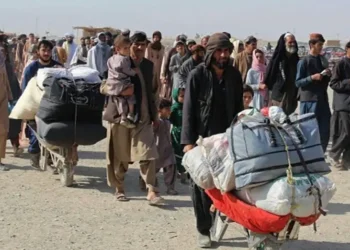
For millions of Afghans returning from Iran and Pakistan, crossing the border does not necessarily mean reaching safety, stability, or a new beginning. Many return to a country where employment opportunities are very limited and, at times, finding even a small opportunity is impossible; public services are under pressure, and the cost of rebuilding a new life can exceed the resources available to their families. For those who spent years or even decades abroad, or who may have been born and raised in a different culture, returning may also mean losing established livelihoods, professional networks, savings, and access to services on which their families depended.
The International Organization for Migration (IOM), through its Displacement Tracking Matrix, reported that approximately 6.04 million Afghans had returned from Iran and Pakistan between mid-September 2023 and 30 May 2026 (IOM, 2026). The speed and scale of these movements have placed considerable pressure on communities receiving returnees in different parts of Afghanistan, while many families face difficulties accessing housing, livelihoods, civil documentation, and essential services, adjusting to cultural differences, and finding jobs.
The economic pressures associated with mass returns were also highlighted by the United Nations Development Programme (UNDP, 2026). Its Afghanistan Socio-Economic Review for 2024–2025 describes widespread poverty, household debt, declining international assistance, and increasing pressure on already overstretched services and livelihoods.
These developments bring us to a key question: how can humanitarian organizations support Afghan returnees in moving beyond short-term survival towards long-term economic integration?
Beyond Immediate Relief
Emergency aid such as food, temporary shelter, cash support, healthcare, and protection services can help families meet urgent needs after arrival. However, it cannot achieve lasting reintegration if it ends before people have realistic opportunities to earn a living.
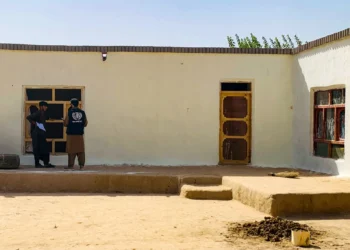
The United Nations 2026 Response Plan for Afghan Returnees recognizes the need for a parallel approach: immediate, life-saving assistance at border crossings, followed by broader reintegration support in priority districts. It includes livelihoods, housing, education, health, protection, and support for host communities (United Nations in Afghanistan, 2026).
Without such opportunities, some returnees may remain dependent on short-term assistance, while others may be compelled to move again in search of work and security. Humanitarian organizations should therefore treat economic inclusion as a central component of reintegration rather than a separate development objective to be addressed much later.
Recognizing Skills, Experience, and Potential
One of the most overlooked resources among returnees is their human capital. Many have acquired work experience, technical skills, business knowledge, and professional habits while living in Iran or Pakistan. Others have experience in construction, agriculture, manufacturing, transport, retail, or informal businesses. Moreover, the majority of them are young and have a high level of education.
Yet experience gained abroad does not automatically translate into employment after return. Some people lack recognized qualifications or the documents needed to demonstrate their skills. Others have professional experience that does not match available vacancies. Limited access to professional networks and information about local labour markets can create additional barriers.
Research by Loschmann and Marchand (2021), published in Small Business Economics, examines the labour-market reintegration of returned refugees in Afghanistan. Using household survey data collected in five provinces in 2011, the authors found that returned refugees were less likely to be in wage employment than non-migrants. Educational attainment, social networks, employment before migration, savings brought back upon return, and other return-related factors were associated with labour-market outcomes. Although the underlying data are historical and cannot be assumed to represent present conditions, the study provides an important empirical foundation for understanding why return alone does not guarantee economic integration.
More recent evidence reinforces the need to consider reintegration as a process rather than a single event. UNHCR’s study Rebuilding Lives: How Return Duration Shapes Income Generation and Reintegration Dynamics for Afghan Returnees examined 2,868 households that had returned from Pakistan. Its findings make clear that economic recovery does not follow a uniform trajectory: food security, household income, debt, and other outcomes vary over time and across household groups (Pirani, Kosmidou-Bradley, & Huang, 2025).
The International Labour Organization (ILO, 2013) also assessed livelihood opportunities among returnees, internally displaced people, and host communities in 22 high-return locations across Afghanistan. This work provides a useful foundation for designing interventions that reflect local economic activities and opportunities instead of relying on identical programmes in every location.
What Human Resource Management Can Contribute
Human resource management (HRM) offers practical tools for connecting humanitarian reintegration programmes with the needs of employers and workers. Applying these tools could help organizations move beyond counting beneficiaries towards measuring meaningful employment outcomes.
First, organizations can establish skills-matching systems that identify returnees’ existing abilities and connect them with suitable vacancies. Such systems should recognize informal work experience as well as formal qualifications.
Second, employers can be encouraged to adopt fair recruitment practices. Returnees should not be excluded simply because they lack conventional employment histories or cannot immediately provide every document normally requested by an employer. Simultaneously, employers must comply with applicable legal requirements and verify qualifications where necessary.
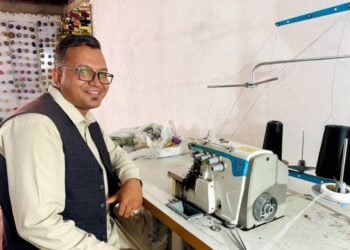
Third, targeted support can help returnees establish small businesses or become self-employed. Depending on local conditions, this may involve business training, mentoring, access to markets, financial services, and carefully designed start-up assistance. Providing a small grant alone is unlikely to ensure long-term success without business advice, a viable market, and access to customers.
Finally, humanitarian organizations should measure results beyond the number of people trained or assisted. More meaningful indicators include whether participants find work, how long they remain employed, whether their income becomes more stable, whether businesses survive, and whether their families can meet essential needs. These indicators should be disaggregated, where possible, by sex, age, disability, location, and household circumstances.
Inclusion, Women and Host Communities
Economic reintegration cannot be considered successful if large groups of returnees are unable to participate. Women, people with disabilities, female-headed households, young people, and families without strong social networks may face additional barriers.
Women and girls returning to Afghanistan face particularly serious constraints because of restrictions on education, employment, and public participation. UNDP’s recent socioeconomic assessment identifies restrictions on women’s rights as one of the factors affecting Afghanistan’s broader economic and social conditions (UNDP, 2026). Humanitarian organizations must assess these barriers realistically and identify lawful, safe, and feasible ways to support women’s livelihoods, skills, and access to essential services.
At the same time, assistance should not focus exclusively on returnees. Communities receiving large numbers of newcomers may already struggle with unemployment, limited infrastructure, inadequate housing, and pressure on public services. If programmes are perceived as favouring one group over another, competition over scarce resources may intensify.
The United Nations 2026 Response Plan for Afghan Returnees explicitly adopts a whole-of-community approach, seeking to strengthen resilience and social cohesion among returnees and the communities hosting them (United Nations in Afghanistan, 2026).
A community-based approach can reduce this risk. Employment programmes, vocational training, small-business support, and infrastructure projects should, where feasible, benefit both returnees and vulnerable members of host communities.
From Short-Term Projects to Sustainable Reintegration
The challenge facing humanitarian organizations is not simply to deliver more assistance, but to connect immediate relief with credible pathways towards economic independence.
This requires coordination among humanitarian agencies, development organizations, public institutions, employers, training providers, and local communities. It also requires realistic assessments of market demand, transparent selection criteria, protection against exploitation, and monitoring to determine which interventions produce lasting results.
Recent UNDP evidence indicates that mass returns are occurring alongside widespread poverty, household debt, and pressure on basic services (UNDP, 2026). In such circumstances, employment support cannot be designed in isolation from housing, documentation, healthcare, education, and other conditions that influence a household’s ability to rebuild its livelihood.
No single programme can resolve Afghanistan’s wider economic difficulties. Humanitarian organizations cannot create a functioning labour market on their own, nor can employment programmes replace essential protection and social services. Nevertheless, they can help reduce specific barriers that prevent returnees from using their skills and contributing to local economic life.
This requires a shift from measuring immediate outputs to assessing longer-term outcomes. Organizations should ask not only how many people received assistance, but also whether their interventions improved access to decent work, strengthened household income, supported viable businesses, and reduced dependence on emergency aid.
Afghan returnees should not be viewed solely as recipients of humanitarian assistance. They are also people with experience, knowledge, ambitions, and the potential to contribute to their communities. Recognizing that potential requires more than welcoming people across a border. It requires creating practical opportunities for them to rebuild their lives with dignity.
The real measure of reintegration is therefore not how many people return, but whether they can establish safe, stable, and meaningful lives after returning. Humanitarian assistance can open the door; sustained economic inclusion is what helps people move forward.
References
- International Labour Organization. (2013). Assessment of livelihood opportunities for returnees/internally displaced persons and host communities in Afghanistan. ILO.
- International Organization for Migration. (2026). Afghanistan — Returnee Resilience Overview (June 2026). Displacement Tracking Matrix.
- Loschmann, C., & Marchand, K. (2021). The labor market reintegration of returned refugees in Afghanistan. Small Business Economics, 56, 1033–1045.
- Pirani, N., Kosmidou-Bradley, G., & Huang, C. (2025). Rebuilding lives: How return duration shapes income generation and reintegration dynamics for Afghan returnees. UNHCR Regional Bureau for Asia and the Pacific.
- https://www.undp.org/afghanistan/publications/research-challenge-return-reintegration-afghanistan
- United Nations Development Programme. (2026). Afghanistan socio-economic review: Mass returns at a time of growing insecurity 2024–2025.
- United Nations in Afghanistan. (2026). 2026 Response Plan for Afghan Returnees (RPAR).
About the author:
Rahmat Habibi is a researcher and human resource management professional with experience in public administration and higher education. He is currently pursuing a Master’s degree in Human Resource Management, and his research focuses on humanitarian affairs, migration, economic inclusion, and reintegration.