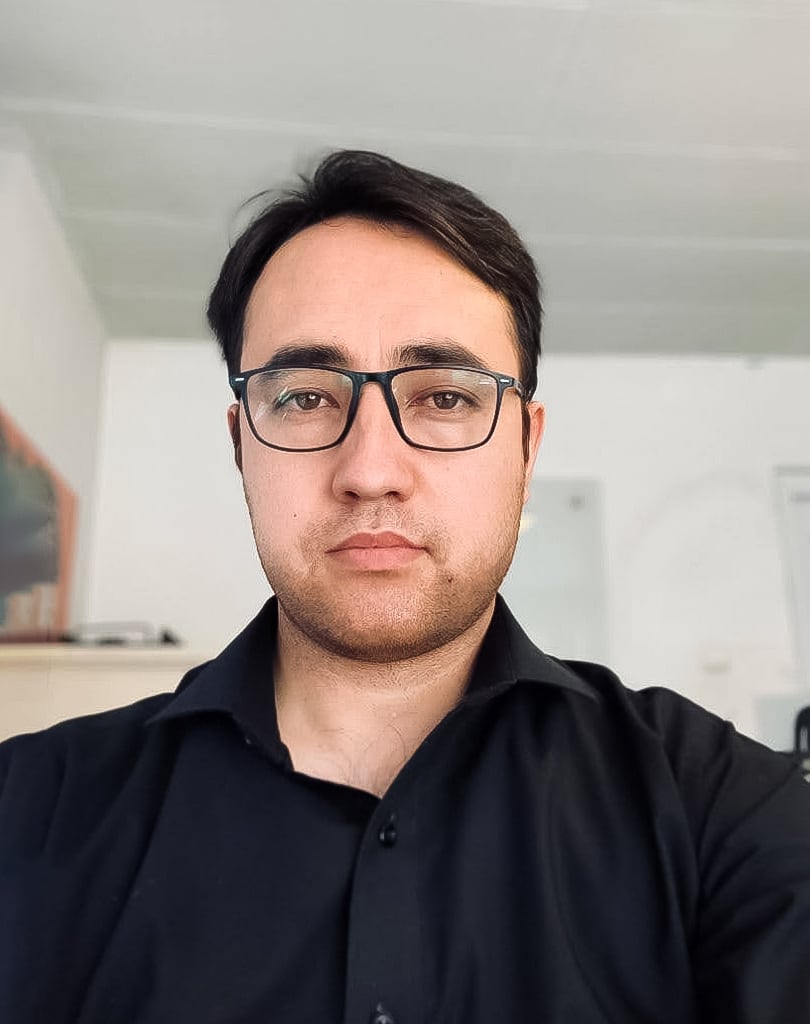
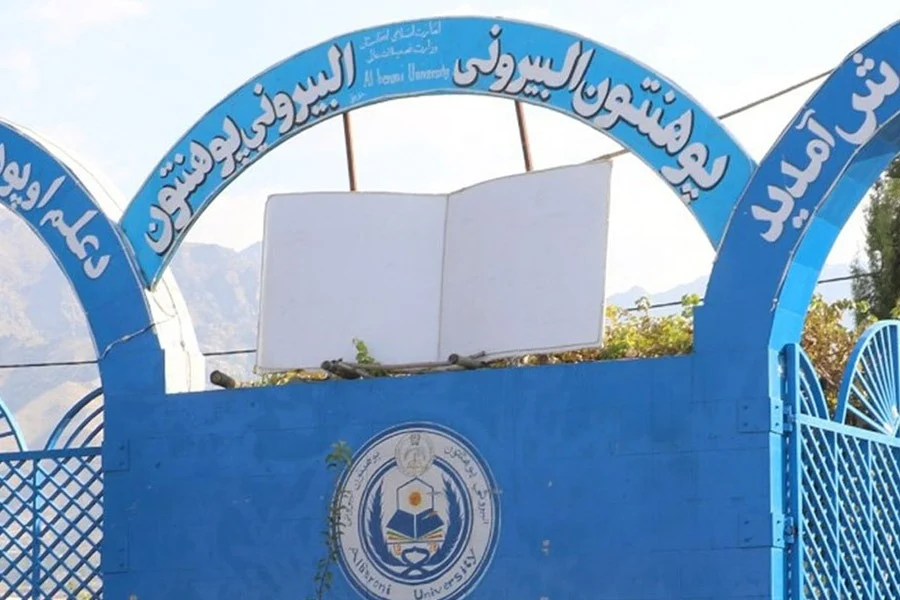
Several students at Alberuni University say that Mushtaq Haqyar, a member of the Taliban who has been appointed Deputy for Student Affairs at the university, insults and humiliates students who do not have a beard and a cap. The students add that they go to his office to complete their living allowance forms, but instead of applying the principles that determine students’ eligibility for the allowance, this Taliban official decides who is eligible based on students’ beards, caps, and language. Students at the university stress that those with trimmed beards are thrown out of his office with humiliation and insults, and without their forms being signed.
Students at Alberuni University in Kapisa province say they went to the office of this local Taliban official to process their living allowance documents, and that students without beards and caps were insulted and humiliated. According to them, Haqyar is intensely prejudiced and discriminates based on language, and he also denies the allowance to Persian-speaking students on various pretexts. They say Haqyar told some students, “Your beard has been trimmed before,” and that they will not be considered eligible for the living allowance until their beards grow long.
These students say that, under university rules, any student who comes to the university from distant provinces or districts and is not admitted to the dormitories is considered eligible for a living allowance. According to them, any student who can earn at least 65 percent in each semester is also covered by this process. They say that in the past, each student was paid 7,000 afghanis in living allowance per semester, but the Taliban have now reduced this amount to 5,000 afghanis.
One student at Alberuni University, whose name is withheld for security reasons, says: “Mushtaq Haqyar tramples on students’ legal rights because of beards and deprives many of the right to a living allowance. The beard must be long and must never have been trimmed. If it has been trimmed, he says: Why has your beard been touched?”
This student adds: “He behaves very badly, has an ugly tone, and uses abusive language. He is full of discrimination and ethnic chauvinism. Why should we face so much trouble just to get our rights?”
Students at Alberuni University say that Haqyar himself set these rules, and that for a student to be considered eligible for the living allowance, the person must have “a fistful of beard.” Otherwise, he does not sign their living allowance form. According to the students, until Haqyar approves this form, a student is not considered eligible to receive the living allowance.
Another student, who also does not want his name mentioned in the report, says: “I am one of the students who need the living allowance money, but I was deprived of this right by Mushtaq Haqyar, the Deputy for Student Affairs. He insults students’ dignity, throws them out of the office with degrading words, and even tears up students’ living allowance forms.”
This student adds: “In the past, when it was time to receive the living allowance, we took the form to the Student Affairs office and the whole process was completed. Now Mushtaq Haqyar has created a new rule himself and summons each student individually and gives approval. The majority of those who have gone to his office have left it humiliated and insulted.” According to him, Haqyar tells students: “Why is your beard short? Why has it been trimmed? Why don’t you have a cap?” He adds that Haqyar also indirectly picks on students over their language, and that, in his words, “his discrimination is mostly because of language issues.”
This student says: “I took my living allowance form to him with a relatively long beard, because I had not trimmed it for two whole months to pass Haqyar’s test. Despite this, he picked on my beard and said: ‘Why has it been trimmed?’ He did not accept the form and said: ‘You had shortened your beard and you are not eligible for the living allowance.'”
These students are complaining about the discriminatory treatment of a local Taliban official at Alberuni University at a time when the Taliban have previously handed students a mandatory 14-article pledge and obtained their signatures on it. Under this pledge, students are obliged to follow the group’s principles, and if they disobey, they face the risk of being barred from studying at the university.
The students say they have been required to wear traditional Afghan shirts and trousers, and to have a beard, a cap, and a turban, and that they have been warned not to disobey these Taliban principles. According to them, this comes even though a university is a scientific and professional place, and conduct and regulations there should be assessed based on knowledge and research.
According to the students, in this mandatory pledge, non-Sunni students are required to change their religion, observe strict restrictions, follow compulsory dress and behavior codes, accept limits on their movement, refrain from listening to music, and fully obey the Taliban’s laws. They say these measures have restricted their academic and personal freedoms.
Article six of the pledge ignores the religious diversity of Afghanistan. In this article, the Taliban stress that all students must follow the Sunni faith, accept it, and raise no questions about it. Non-Sunni students say this pledge has forced them to change their religion.
Previously, students at various universities across the country had also expressed deep concern about the harsh treatment by the Taliban and their Morality Police at universities. They said the Taliban have turned universities into the kind of religious madrasas in which they themselves studied in Pakistan. They added that students and professors who believe in critical thinking and science have become discouraged from continuing their work in these institutions.
You can read the Persian version of this report here: