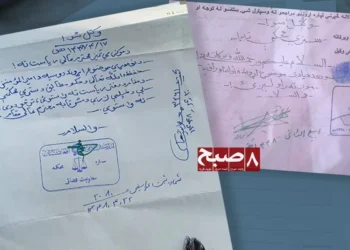
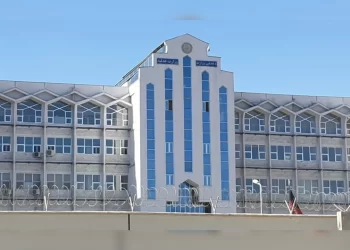
Sources in Mazar-i-Sharif, the capital of Balkh Province, say that Taliban measures regarding the issuance and execution of property deeds across various parts of the city have fueled a black market, enabled large-scale bribery, prolonged the deed registration process, and left residents in a state of confusion. According to sources, the group has divided different parts of the city into various categories and has completely banned the issuance and execution of property deeds in certain urban areas.
Sources add that the areas where the execution of property deeds and the buying and selling of homes and land have been completely prohibited include Khalid bin Walid Township and Faqirabad in the south of the city, Karte Ansari, Karte Wahdat, Karte Ishani, Muttahid Township, and several other areas in the east of the city, as well as Karte Zahiruddin, the Baba Yadgar ring road in the west, and Nowshad, Norkhuda, and Dasht-e-Shor in the north of the city.
Residents of the aforementioned areas complain that if they attempt to sell their property, they are harassed and mistreated by Taliban members.
One resident of Khalid bin Walid Township, who had sold his home the previous year, says he was detained for several nights by Taliban intelligence and was only released on bail after the sale contract was annulled. The resident says he was also beaten while in Taliban intelligence custody. He adds that he later sold his home through customary means and reached an agreement with the buyer to transfer the property based on a tazkira document. He stresses that several weeks later, he approached a broker and, after paying $1,200 USD, was able to complete the deed registration.
Several other residents of Khalid bin Walid Township say that in addition to the ban on deed registration in the area, they have repeatedly received warnings from the Taliban to refrain from constructing homes in the neighborhood. According to these residents, the Taliban told them that, in accordance with a decree from their leader, the land in this area is state-owned and was seized illegally during the republic era.
Meanwhile, those who own homes or land in the city center say that the amount of commission and bribery varies depending on the value of the land.
One resident of District Three of Mazar-i-Sharif, who has listed his home for sale, says that a broker demanded 20,000 USD to process the deed. He adds that if he does not go through a broker, he would, if lucky, receive his deed after two years. A broker confirmed that they have a “code” at the Taliban court office and that when they visit, they identify themselves using that code, just like ordinary visitors.
In areas not subject to Taliban prohibition, completing a deed still takes at least six months to two years.
Abdul Basir, a resident of Karte Amani who recently managed to obtain the deed for his home, says: “We filed the petition two years ago, but only just received the deed. We went to the court many times, but they kept saying it wasn’t ready yet, come back in a month, come back in two months, and so on. For several months, the deed was even lost before it was found, and we finally got it.” He adds that for several months, he faced additional difficulties because his father’s name had been recorded incorrectly in the deed.
This is even though, according to Abdul Basir, Karte Amani is not among the areas classified as “transaction-prohibited” by the Taliban court. He emphasizes that had the area been among the prohibited zones, he might never have managed to obtain the deed at all.
Rahmanullah, a resident of District Twelve of Mazar-i-Sharif who recently purchased a plot of land, says he was detained once by a Taliban district office for constructing a wall. He was told at the district office that his land deed was invalid, even though, by his own account, he had obtained that deed from the Taliban court through enormous difficulty. He says that his building materials remain on the land, and he is unable to build a house, while he himself lives in a rented home in District Seven.
At the same time, visitors to the Taliban court say that instead of qualified and experienced professionals, several Taliban members with only religious seminary backgrounds have been assigned to work there, and these individuals have no knowledge of legal matters, particularly property rights.
Some visitors have complained about the inexperience of these Taliban members, saying that due to their lack of education and experience, they are forced to wait for days for the issuance of property deeds, marriage certificates, birth certificates, inheritance documents, and other official papers.
This comes as residents of Mazar-i-Sharif also report mistreatment and violence by some Taliban members inside the group’s court office.
You can read the Persian version of this report here:
بازار سیاه قباله در بلخ؛ از ممنوعیتهای سلیقهای تا رشوهستانی «شفری» در محاکم طالبان