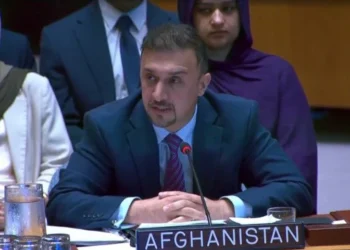
The United Nations has published a new report by Richard Bennett, the Special Rapporteur on Human Rights, detailing Afghanistan’s ongoing human rights crisis. According to Bennett’s findings, the Taliban have committed sexual assaults against detained women. The report underscores the severity of the ongoing humanitarian, human rights, and political crises, describing how the Taliban sustain a system of institutionalized discrimination and repression. Extrajudicial killings of former government officials and military personnel persist, while child abuse and child recruitment by the Taliban and other armed groups also continue. Additionally, sexual minorities—including transgender individuals, lesbians, and others with diverse sexual identities—face threats and sexual assaults at the hands of the Taliban. The report links the rise in depression, suicide, forced marriages, and underage marriages to the Taliban’s gender-based repression, suggesting that these actions may amount to crimes against humanity. Furthermore, Bennett notes that Taliban madrasas promote extremist ideologies, posing security risks beyond Afghanistan’s borders, while Taliban policies have also deepened ethnic tensions and mistrust within Afghan society.
Bennett highlighted that the people of Afghanistan still endure severe humanitarian, human rights, and political challenges. He pointed out how the Taliban have intensified repression, restricting women’s and girls’ access to education, suppressing civil society, and silencing journalists. Despite these challenges, Afghan citizens continue to resist the Taliban’s rule.
The report commends the bravery of Afghan women and youth who defy Taliban orders to seek education, and it also acknowledges the risks journalists face in reporting human rights violations. Bennett emphasizes Afghanistan’s commitments to international treaties, noting the Taliban’s disregard for these obligations. By honoring these commitments, Afghanistan can help preserve institutions, laws, and policies that uphold the rule of law. Bennett argues that the Taliban’s widespread violations against women and girls, its repression of civil society, and discrimination against religious minorities starkly contradict Afghanistan’s international obligations.
In addition, the report reveals that the Taliban impose a system of institutionalized gender discrimination and oppression that excludes women, disregarding Afghanistan’s international commitments. Bennett stresses that international law mandates the protection of human rights and fundamental freedoms, regardless of economic, political, or cultural contexts. The Taliban’s oppressive policies, he concludes, deny Afghan citizens their rights, causing profound and lasting harm.
Mr. Bennett highlighted that Hibatullah Akhundzada’s ratification of the “Law for the Propagation of Virtue and Prevention of Vice” has enforced even stricter limitations on both women and men. These restrictions have silenced women’s voices, mandated full body coverings, and effectively barred women from participating in society, while also imposing extensive controls over the media and men.
The report details how the Taliban detain and mistreat those who defy the group’s laws and directives, noting the severe physical and mental health impacts on individuals. Women and girls, in particular, face heightened stress, isolation, and anxiety, with the report indicating a rise in depression, suicidal thoughts, and suicide among this demographic.
The UN Special Rapporteur has reported a growing number of cases of depression, anxiety, isolation, and suicide among women and warned that “the institutionalization of gender repression by the Taliban and the dehumanization of women and girls may foster a dangerous ideology in future generations in Afghanistan, particularly among boys and young men.” He added that “the Taliban’s system of gender repression could constitute a crime against humanity, including gender-based violence.” Bennett further cautioned that this deep-rooted gender repression stems from the Taliban’s ideology, the promotion of which could create security risks beyond Afghanistan and the region.
The report concludes, according to Mr. Bennett, that the Taliban’s system of discrimination, segregation, disrespect for human dignity, and exclusion is institutionalized. He warned that this system of gender oppression might constitute a crime against humanity. The report also mentions that women who met with Bennett consistently referred to the Taliban’s treatment as “gender apartheid.” The Special Rapporteur believes this term reflects the ideological nature and abuses of the Taliban, demanding strong and effective international action. He called for an “all-tools approach” to address human rights violations in Afghanistan.
The report documents instances of violence and sexual assault against women in Taliban detention centers, with sources recounting experiences of suppression and sexual abuse. One woman, recalling her detention, said, “When they asked questions, they whipped me and hit me. My head hit the wall… One of the [Taliban fighters] tore my hijab and then touched my body.”
Some detainees informed the Special Rapporteur that, although they did not experience sexual violence while in detention, they still face ostracism from their families due to widespread misconceptions. The report states that due to entrenched cultural biases, people often assume that detained women have been sexually assaulted, leading to further marginalization.
Mr. Bennett stated that the culture of silence surrounding sexual assault and related crimes has become more entrenched, with harmful gender stereotypes and societal misconceptions often placing blame on victims. This dynamic leads to underreporting of sexual assaults and violence against women. The report further indicates that women have lost much of their independence, including financial independence, as support systems for their essential rights and access to justice have been dismantled.
Since Mr. Bennett’s previous report to the UN General Assembly, he has received information about severe violations against children, including killings, maiming, recruitment as child soldiers, sexual assault, other forms of sexual violence, abductions, and attacks on schools and hospitals. The report points out that, despite a significant reduction in hostilities since 2021, there is an ongoing trend of child deaths and suffering from injuries caused by explosive remnants of war.
Mr. Bennett referenced credible reports indicating that the Taliban and other armed groups continue to recruit children—a practice previously conducted by multiple warring parties, including the former government’s security forces before the Taliban’s takeover. The report underscores that such recruitment amounts to sexual violence against children, drawing attention to “bacha bazi,” a severe form of child abuse and exploitation. Mr. Bennett expressed deep concern about Afghanistan’s lack of child protection mechanisms, emphasizing that the Taliban’s dismantling of key legal frameworks has left institutions intended to aid victimized children without sufficient support, services, or access to justice.
The report also notes that in certain areas, schools are being repurposed as military bases by the Taliban, with incidents of armed group attacks occurring near these educational facilities. Mr. Bennett warned that using schools for military purposes could make them military targets.
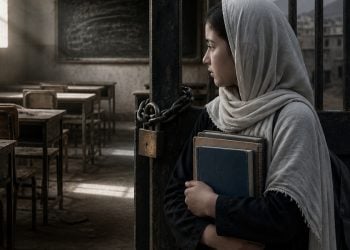
The report stresses that denying education to girls and women exposes them to greater risks, including forced and underage marriages. It notes that this deprivation heightens physical and mental health issues, such as anxiety and depression, and leads to gender-based violence and child marriage, which in turn increase the risks of early pregnancy and related health complications. Mr. Bennett highlighted that restricting girls’ access to education not only intensifies a humanitarian crisis but also leads to far-reaching, severe consequences.
The UN Special Rapporteur expressed concern that the Taliban’s ideological extremism has increasingly shaped Afghanistan’s educational framework, based on their interpretation. He emphasized the need for further investigation into Taliban-run religious schools, as their content may sow seeds of instability within Afghanistan and beyond. He also noted that, during this period, the Taliban have not formed an inclusive or representative government, instead imposing their governance on the population.
According to the report, high-ranking Taliban officials are predominantly Pashtun and Sunni Muslim. Despite the Taliban’s repeated claims of uniting Afghanistan, they continue to marginalize and discriminate against various religious and linguistic groups. The UN Special Rapporteur also warned that anti-Pashtun sentiment is rising, with Taliban policies exacerbating ethnic tensions and distrust across society.
The Special Rapporteur on Human Rights reported that religious minorities, including Shiites—especially Hazaras and Sufis—face ongoing violence and threats. Shiite communities, particularly Hazaras, continue to be targets of ISIS attacks, and Hindus and Sikhs have faced such assaults as well, prompting almost complete emigration from Afghanistan. The report documents that violence against Shiites includes Taliban-led arbitrary home raids.
Mr. Bennett received reports of land disputes across various provinces, many of which have ethnic and tribal dimensions and are influenced by political and economic factors. He expressed concern regarding these conflicts.
In interviews with religious minorities, Mr. Bennett documented the Taliban’s frequent use of the term “kafir” for individuals associated with non-Taliban activities. One Hazara Shiite man shared the impact of this label: “They say you are a kafir and do not belong in this country. It makes me feel as though we have no place in society, or that we should leave the country.”
The report also describes continued harassment of sexual minorities, transgender individuals, and others with diverse sexual orientations by the Taliban. The UN Special Rapporteur met with LGBTQ+ individuals and found they face high risks of sexual violence, torture, and other cruel, inhuman, or degrading treatment during detention.
The Special Rapporteur on Human Rights highlighted that Afghanistan has one of the world’s largest populations of individuals with disabilities. He noted that the ongoing economic and humanitarian crisis, worsened by mass emigration, has disrupted the work of international and national organizations providing essential services, including rehabilitation, vocational training, and advocacy for people with disabilities. Rights activists informed the Special Rapporteur that humanitarian aid often does not reach disabled persons, particularly those in remote or hard-to-access areas, leaving them highly vulnerable. The report also emphasizes that gender-based violence and oppression by the Taliban have led to multiple forms of discrimination against persons with disabilities, putting them at increased risk of abuse. One woman shared her experience: “Imagine being a woman in an Afghan village and the mother of a disabled child. It feels like constant fear, abandonment, and rejection.”
The report states that after abolishing the previous constitution and other laws they consider contrary to Sharia, the Taliban continue to issue decrees and directives based on their interpretation of Sharia law. Many of these rulings remain unpublished or are issued verbally, which has increased legal uncertainty.
The report also notes that Taliban courts have systematically replaced former republic judges with their members, all advised by Taliban muftis who, according to the report, lack adequate training and are exclusively male. Despite the Taliban’s claims that their judges are knowledgeable in Sharia and proficient in Arabic, the report indicates this is often not the case.
Some defense attorneys informed the Special Rapporteur that the Taliban mandate references to Sharia sources not available in Dari (Persian) or Pashto, making it challenging for legal professionals and ordinary citizens, especially those without Arabic proficiency, to fully understand Taliban rulings. This situation has led to ambiguity and frequent arbitrary application of laws. Furthermore, female defense attorneys have been excluded from bar and judicial exams for the third consecutive year, further obstructing women’s and girls’ access to justice.
The report states that the Taliban’s Supreme Court is reviewing cases decided under the former government, which poses a risk to divorced women. Additionally, the report highlights the Taliban’s continued extrajudicial killings, documenting credible evidence of the deaths of former officials and security force members, including individuals affiliated with the National Resistance Front and ISIS. Detaining journalists, human rights defenders, and critics of the Taliban, the report notes, amounts to enforced disappearances.
A media worker quoted in the report stated, “They blindfolded me, bound my hands, and put me in a vehicle. I was held in a dark basement, subjected to physical torture, sexual violence, severe beatings, and firearm threats.”
The report specifies that the Taliban continue to conduct public corporal punishments that constitute torture. According to announcements from their Supreme Court, various punishments, including retribution measures, have been administered frequently since early 2024.
The Special Rapporteur on Human Rights noted that NGOs and civil society groups face numerous obstacles, such as canceled or non-renewed licenses. The Taliban’s Ministry of Economy, according to the report, has withheld new licenses from certain organizations.
The report also outlines the Taliban’s restrictions on media. Journalists are often detained on charges of collaborating with foreign media or disseminating critical information, subjected to surveillance, and verbally threatened, all to stifle news dissemination. The Special Rapporteur further notes that the Taliban have threatened and monitored victims’ relatives, prohibiting them from speaking to the media.
Additionally, the report states that the Taliban have censored printed publications, limiting bookstores and publishers in Kabul from freely distributing content. The right to peaceful assembly has been stripped away, with women increasingly at risk of violence and repression for protesting.
The UN Special Rapporteur on Human Rights reported a lack of transparency around the Taliban’s budget and expenditures. Taliban officials have not publicly disclosed their 2023 spending or provided details on the 2024 budget. The report, citing World Bank data, indicates that nearly half of the Taliban’s 2022 budget was allocated to security expenses.
You can read the Persian version of this daily report here:
گزارش تازه بنت؛ از تجاوز در بازداشتگاهها تا جنایت علیه بشریت | روزنامه ۸صبح