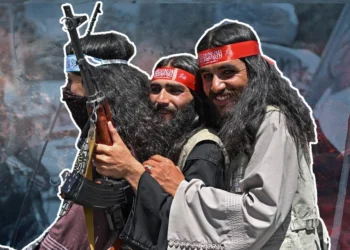
Four years after the Taliban’s return, Afghanistan remains mired in legal disorder, systematic repression of freedoms, ethnic and gender inequality, and the erosion of public hope. The fundamental question is: what is the alternative, and where do we stand now? If internal fractures within the Taliban regime lead to renewed conflict, and if the democratic opposition remains fragmented and uncoordinated, will the bitter experience of the 1990s repeat itself? Is there not an urgent need to forge a viable alternative?
At such a juncture, the role of clear, actionable, and broadly agreed political roadmaps from the democratic opposition is more vital than ever—plans that speak to people inside the country, resonate in international diplomatic circles, and help foster coordination and unity among anti-Taliban forces. Above all, what is needed now is a comprehensive framework that synthesises diverse proposals into a single, inclusive roadmap.
Since 2021, the Cambridge Afghanistan Series (CAS)—also known as the Cambridge Massoud Conference (CMC)—has sought to fill this gap and rethink the country’s political architecture. Supported by the Mosaic Global Foundation and guided by its fifteen-member Academic Board—in consultation with civil society of Afghanistan—the conference has become a platform where political and civic movements opposed to the Taliban share their visions and move closer to a common language.
In the previous round (CAS-III), representatives of six major movements presented their respective roadmaps. The findings of a review conducted by Mosaic were encouraging: despite differences, around 90% of the principles overlapped. These plans converged on core values such as popular sovereignty, equal citizenship (including gender equality), rule of law, meaningful participation of women and citizens in politics, and a rejection of centralised power and extremism. In other words, the goals are shared; the differences lie mainly in the path and timing. The conference remains committed to hosting open, respectful dialogue to address these differences.
The focus of the fourth round (CAS-IV) is to consolidate these overlaps into a Composite Comprehensive Roadmap (CCR)—a national framework with unified language, actionable steps, a clear timeline, and measurable indicators. The aim is not to form a government-in-exile or issue lofty declarations, but to offer a credible political address that people inside Afghanistan can rely on, and that regional and global actors cannot ignore. The more unified and evidence-based the “voice of the alternative” becomes, the narrower the path for normalising the current situation or engaging with the Taliban on their terms—and the greater the chance to advance the real demands of the people of Afghanistan, from ending discrimination to restoring women’s rights and shaping a future political order.
But writing about a beautiful destination is not enough. The reality today is that the people of Afghanistan live under pervasive psychological insecurity. As Ahmad Massoud writes in his recent book, Afghanistan is experiencing a “dual apartheid”—ethnic and gender-based. The Taliban rule through violence, civil space is under constant pressure, and freedom of expression has been extinguished. Any conversation about the future must therefore do two things simultaneously: reduce present harm and prepare reforms for tomorrow. These are the twin goals of the CAS—addressing current crises with practical solutions while also envisioning a broader future.
In both respects, the conference seeks to tackle the core differences among opposition movements with clarity and practical options. These differences, which were also raised last year, include:
- Addressing ethnic injustice and defining “social justice”
- Determining the path to change—military or peaceful
- Clarifying the role of external and internal actors
- Reaching consensus on the desired system of governance—centralised, federal, or decentralised parliamentary
- Ensuring territorial cohesion—preserving Afghanistan’s current geographic and political framework while fostering meaningful links among diverse social groups to reduce divisions and strengthen a shared sense of belonging
Through respectful dialogue, the conference aims to build consensus on the shape of a future state, strategies for confronting the Taliban, and the design of a political transition that ensures both legitimacy and stability. This includes agreement on a fair procedure for reaching a political settlement, and a balanced approach to security, justice, freedom, equality, and reconciliation—one that avoids chronic impunity and cycles of revenge. It also seeks to guarantee fundamental rights, especially women’s rights, in ways that align with human rights-compatible interpretations of Islamic jurisprudence.
These questions cannot be answered overnight. But a common language can be built, and slogans can be transformed into executable options.
The CAS’s strength lies in this method: instead of generalisations, each domain is translated into practical outputs. A page clearly outlines a non-negotiable consensus, while another presents issues of divergence with concrete options. Based on this approach, a draft Composite Roadmap is formed, building on over 90 percent consensus, with plans to discuss differences openly between the roadmaps—with a realistic timeline and indicators that allow all stakeholders to track progress and demand accountability. This approach has two benefits: it builds meaningful hope inside the country and enhances the political weight of the alternative abroad.
This effort is not the work of politicians and experts alone. The past two decades have shown that without bridging the gap between legal texts and lived reality, no political order can endure. That’s why the conference includes dedicated dialogues with women, youth, civil society activists, academics, and independent media—ensuring proposals are grounded and implementable from the outset: from girls’ education to journalist protection, from accountable local governance to oversight of the security sector. Engagement with religious scholars is also essential. A reading of Sharia—drawing on the political culture of the Persianate world—that upholds human dignity and the right to education and participation is vital for the social legitimacy of any future roadmap.
Alongside all this, realism is essential. Some regional actors lean toward pragmatic de facto recognition of the Taliban, and some Western capitals emphasise dialogue with them without strengthening the alternative. If we do not build a unified voice and present a coherent alternative, others will decide for us. But if a principled, actionable alternative is placed on the table, even sceptics will be compelled to take it seriously. This is the window the CAS seeks to keep open: a legal, rights-based transition rooted in domestic legitimacy and heard internationally.
The hopeful sign is that the raw material for unity already exists. Extensive overlaps among the reviewed and synthesised 20 roadmaps and proposals—on popular sovereignty, rule of law, equal citizenship, meaningful participation of women, and rejection of centralisation and extremism—show that a shared destination is within reach. The challenge, though difficult, is achievable: to turn these overlaps into a unified text that meets today’s realities and builds tomorrow. This hopeful realism may best capture the spirit of the conference—an optimism grounded in data, experience, and real possibilities, not slogans.
In the weeks leading up to the fourth round of the conference, what matters most is bringing the conversation out of academic halls and into homes, mosques, cafés, and social media. Media can simplify complex issues for public understanding; academics and legal experts can work on specific clauses; the diaspora can support networks in education, health, and security; and youth can bring new skills and networked organisation to the heart of this movement. The future will not be built on wishful thinking, but through collective effort. The Cambridge Afghanistan Series aims to advance that shared effort to a point where no power-holder can ignore it. If this time a unified alternative with a clear programme is placed on the table, it will generate real hope inside and a more resonant voice abroad—a voice that comes from the people and speaks for the people.
You can read the Persian version of this analysis here:
آیا اپوزیسیون دموکراتیک افغانستان میتواند به زبان مشترک برسد؟