Following the Taliban’s takeover of Afghanistan, the majority of shareholders and owners of the country’s private banks have departed. Under Taliban rule, banks have lowered the limit for customer withdrawals and imposed notable restrictions. The transfer of funds outside the country by banks has resulted in a liquidity shortage within Afghanistan.
Recently, the Taliban’s Deputy Prime Minister for Economic Affairs confirmed that some banks are currently facing liquidity problems. He urged bank shareholders and officials to return to Afghanistan. This comes as the liquidity shortage and withdrawal restrictions have undermined public confidence in the banking system. Economic experts suggest that the circulating capital of private banks does not meet the needs of society, and bank operators are using people’s deposits in their other businesses, leading to a decrease in customer trust and liquidity shortages. According to them, banks must transparently and trustworthily deal with customers and refrain from spending people’s deposits elsewhere.
Yesterday, the Central Bank of Afghanistan, under Taliban control, held a meeting of the High Economic Council with the Committee for Financial Stability and Bank Shareholders in Kabul. Abdul Ghani Baradar, the Taliban’s Deputy Prime Minister for Economic Affairs, along with several senior officials, participated in the meeting. The Taliban officials confirmed during the session that some private banks are currently facing liquidity problems.
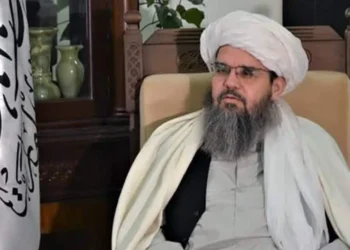
Mullah Abdul Ghani Baradar stated, “There are still problems in the banking sector, such as liquidity shortages in one or two banks. We urge bank officials to return to the country and take steps for the progress of their banks.”
The Taliban’s Deputy Prime Minister for Economic Affairs called on officials of private banks living outside Afghanistan to return to the country and ensure that their banks’ issues are addressed.
On the other hand, Hidayatullah Badri, the Taliban’s acting head for the Central Bank and one of the senior figures of the group listed in the UN Security Council sanctions list, described the purpose of holding this meeting as addressing banking issues in Afghanistan. He claimed that the Taliban regime has made significant progress in the banking sector over the past two years.
Badri asserted that under his management, the Central Bank has been able to maintain Afghanistan’s monetary stability and pull the sector out of a critical situation. He called for the establishment of Islamic banking in Afghanistan and emphasized that the entire Afghan banking sector would be aligned with “Islamic and Sharia principles.”
However, Najibullah Amiri, the CEO of the Private Bankers Association of Afghanistan, told the Hasht-e Subh Daily that currently, seven private banks are active in the country and do not have serious issues. In response to Hasht-e Subh Daily’s question about the liquidity shortage in private banks, he said, “Please inquire about this matter from the Central Bank of Afghanistan.”
The Central Bank, under Taliban control, reports an improvement in the critical situation of banks, while previously, the World Bank stated that Afghanistan remains a challenging environment for accessing reliable, transparent, and low-cost financial services. According to the World Bank, Afghanistan’s banking system currently suffers from structural vulnerabilities and severe international connectivity limitations, with international payments through banking channels greatly reduced.
The World Bank added, “Domestic banking channels are highly stressed. Liquidity constraints and withdrawal limitations continue to erode public trust in the banking system.” According to the World Bank, the brain drain after August 2021 has led to a lack of expertise and capacity in the Central Bank of Afghanistan under Taliban control, making financial regulations and supervision in the country more complicated. The World Bank stated that the absence of skilled individuals in the Central Bank of Afghanistan increases the risks of money laundering and terrorist financing in Afghanistan and leads to further isolation of Afghanistan’s financial system from international markets.
However, economic experts contend that Afghan private banks suffer from insufficient funds and, simultaneously, divert people’s deposits elsewhere, diminishing public trust in banks. They advocate for banks to allocate loans for reconstruction, agricultural development, industrial growth, and mining extraction to bolster public trust through facilitating investments and offering standardized services with a customer commitment to mitigate mistrust.
Meanwhile, Azarakhsh Hafizi, an economic analyst, told the Hasht-e Subh Daily that Afghanistan’s banking system faces numerous challenges. He states that the circulating capital of private banks does not meet societal needs, whereas modern banking systems require banks to have representation in all areas to provide financial services, receive deposits, and execute necessary loans, including repair and agricultural loans.
Mr. Hafizi adds, “In addition to insufficient circulating capital, there’s an unethical common practice where bank operators often establish various companies under different names, borrowing people’s deposits back to themselves. On the other hand, if 40% of these banks’ capital, deposited as collateral in the central bank, remains with the central bank, it does not have sufficient funds to promptly facilitate banking services for banks when that 40% is needed.
The economic expert highlights that Afghanistan trades annually with at least $10 billion in circulating capital. However, the banking system neglects lending to critical sectors like factories, mines, industries, construction, mechanized agriculture, livestock, and poultry, beyond commercial transfers. He points out that currently, due to deposit repayment failures, banks have eroded public trust, leading to reluctance to deposit money. He emphasizes that banks operate without customer commitment, utilize people’s funds at their discretion, and lack clear customer rights, while the central bank lacks adequate supervision in this matter.
Mr. Hafizi mentions that Afghanistan’s flawed banking system, once fueled by non-governmental organizations funds that alleviated liquidity issues, is now facing problems due to insufficient funds. He points out that exchange offices, providing monetary services informally, are more active and cost-effective compared to banks. According to him, banks using Western Union and MoneyGram impose unfair charges, taking up to 10% of money transfers, in addition to currency rate differences.
According to economic experts, the Central Bank of Afghanistan under Taliban control lacks any form of independence and cannot adequately supervise private banks. They believe the current crisis necessitates that this bank, as a key financial and monetary institution of the country, should be managed by competent and experienced individuals capable of crisis management and not under Taliban influence.
Recently, the White House also warned the U.S. Congress of the possibility of deeper economic collapse in Afghanistan, stating that this issue threatens the national security of the United States.