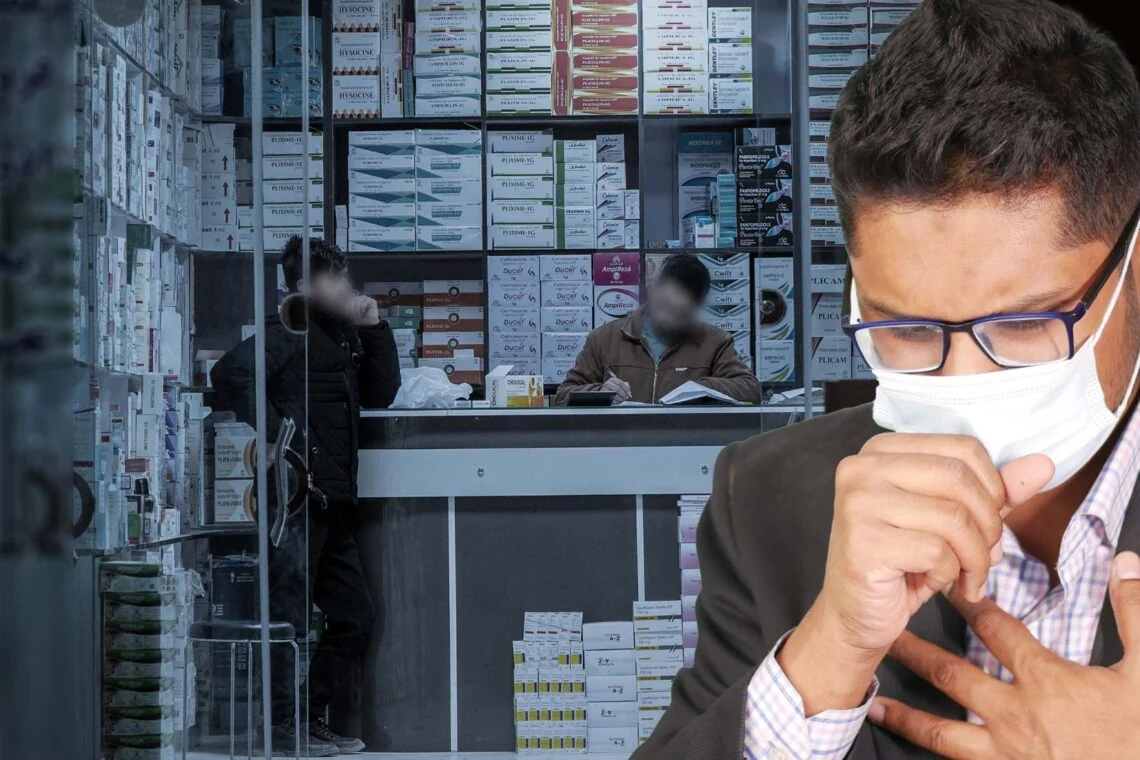
A number of Kabul residents have expressed concern over the rise in seasonal illnesses. They say that with the drop in temperature and the increase in dust and air pollution, the risk of contracting various diseases, particularly respiratory diseases, has grown. The residents add that, on the one hand, the misdiagnosis of illnesses by some doctors makes treatment more difficult for patients. On the other hand, the poor quality of some medicines available in the market not only fails to help patients recover quickly but, in some cases, makes treatment longer and more costly.
Zuhor (pseudonym), a Kabul resident, says that as the weather has turned cold and dust has increased, the rate of illness has also risen. According to him, accurately diagnosing illnesses is a problem for some doctors, and the poor quality of some medicines on the market has made patients’ treatment longer and more difficult.
The Kabul resident says: “Since the beginning of this month, my wife and children have fallen ill twice. I take them to the doctor, but it seems their illness is not being properly diagnosed, and the quality of some medicines available in the market is also low. After light rain, once the rain stops, dust rises again in the city because construction work is underway at several intersections in Kabul, and a great deal of dust is raised into the air from these sites.”
Shakiba (pseudonym), another Kabul resident, says she has been ill for more than a week and has visited a doctor three times during this period, but despite receiving medical care, she has still not recovered.
The Kabul resident says: “The doctor has prescribed injections, IV fluids, and medicine for me, and I am continuing to take them, but my health has not improved. Because of the illness, I am unable to leave the house, and I cannot even help my mother with the housework.”
Khalida, another Kabul resident, says her allergy is seasonal and worsens with changes in weather, dust, and wind. According to her, despite the continuous use of medication, the problem persists.
She says: “The effect of the medicines is very small, because I fall ill again quickly. The medicine may work for two or three days, but after that my health returns to its previous condition. The medicines are effective to some extent, but they do not bring lasting recovery. Doctors have always told me that my allergy is seasonal and have advised me to stay away from dust, smoke, and other allergens as much as possible.”
Meanwhile, Mohammad Hanif Hashemi, a specialist in internal medicine, says that with the arrival of winter, illnesses such as colds, flu, pneumonia, and other seasonal diseases increase. According to him, these illnesses are not caused by cold weather alone, but biological factors, population density, and the lack of regular vaccination also play a role in the rise of viral diseases in this season.
He adds that cold weather can be one of the main factors behind the increase in these diseases, because the body’s resistance to illness decreases in this season. He says: “Environmental factors, including air pollution, can also contribute to the rise in seasonal illnesses. Vulnerable age groups, particularly children, the elderly, and pregnant women, are more exposed to these illnesses. Therefore, regular vaccination is very important in preventing disease.
Najibullah Faizan, an internal medicine specialist, says that illnesses such as colds, flu, influenza, and pneumonia are accompanied by symptoms such as a runny nose, sneezing, fever, sore throat, pain, shortness of breath, and pressure in the chest, and affect young children more.
He says: “To prevent these illnesses, masks should be worn in public places, the mouth and nose should be covered when sneezing, and the body’s health should be protected by eating fresh vegetables and fruits, strengthening the immune system, getting enough fluids, and sleeping well.” According to him, vaccinating children against seasonal illnesses and providing them with proper nutrition can also be an effective way to prevent these diseases.
This comes as, with the arrival of autumn and the start of rainfall, a number of residents in various parts of Kabul have expressed concern about the worsening mud problem caused by the Taliban municipality’s unfinished construction and development projects. According to them, the continuation of half-finished projects, the unchecked expansion of construction, and the widespread destruction of roads and city thoroughfares have turned Kabul into a city full of dust on dry days and mud on rainy days, and have exposed residents to growing difficulties in their daily commutes.
You can read the Persian version of this report here:
سردی هوا؛ نگرانی کابلنشینان از افزایش بیماریهای فصلی و کیفیت پایین دواها