
Several people with disabilities are voicing complaints about the Taliban’s neglect of their situation and the denial of their rights. They say the absence of necessary support has forced many people with disabilities into street vending or begging just to cover their living expenses. According to them, the Taliban provide monthly salaries and special medical services to individuals who were disabled while fighting in the group’s own ranks, while other people with disabilities are excluded from such support and are told, when they approach the relevant institutions, that they do not qualify for assistance. Meanwhile, the head of the International Association of Afghan Lawyers warns that people with disabilities in Afghanistan, under Taliban rule, face widespread violations of their basic rights. According to him, the lack of effective access to health services, inclusive education, and job opportunities has left this segment of society increasingly exposed to poverty, isolation, and dependency.
Ahmad (pseudonym), a 40-year-old man who lost both legs in a Taliban suicide attack in Dehmazang, says he is now the sole provider for a family of 12 and sells goods on the street in Kabul to make ends meet. He says: “I lost both my legs in the Taliban suicide attack in Dehmazang. Since that day, life has become very difficult for me. I am the head of a family of 12, and I cover our living expenses by pushing a cart on the roadside, but my income isn’t enough, and sometimes I am forced to borrow money just to get by.” He adds that on many days his family survives on nothing but bread and tea, and he complains about the lack of support.
This man says: “As members of this society, we need government support, but we don’t receive any kind of assistance. The Taliban pay monthly salaries to those who were disabled while fighting in their own ranks and have provided special medical services for them and their families, but when we go to the relevant institutions, we are told that we don’t qualify for assistance.”
Ahad (pseudonym), 45, who became disabled in his youth while serving as a soldier during the war, says that under the republic he received a salary from the government and used that income to support his family. He says: “After the Taliban’s return to power, they first reduced my salary to the point that I could not even pay my rent. Because of this, I was forced to take up street vending, and now they have cut off my salary entirely. What we want is for our situation to be addressed. We fought for this homeland, and we became disabled in this same homeland.”
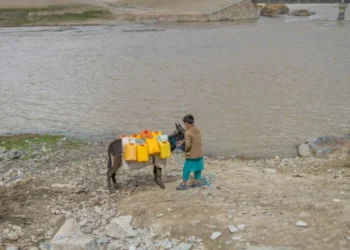
Fereydoun, another person with a disability, expresses concern about the situation of people with disabilities in Afghanistan, saying they face a shortage of job and educational opportunities, and that many are forced into street vending or begging to cover their living costs. He says: “There are no job opportunities for people with disabilities in Afghanistan. To get by, we either have to sell goods on the street or beg. Hundreds of disabled people beg throughout the city of Kabul.”
He also stresses the need to create opportunities for education and employment for people with disabilities, especially young people, adding: “There is no proper access to work or education. At the very least, training opportunities should be created for young people with disabilities so that they can become active members of society in the future, rather than ending up like us, begging or selling goods on street corners. Even getting around on sidewalks and roads is extremely difficult for us.”
Gul Agha, the father of a seven-year-old blind girl, says his daughter has been deprived of many of her basic rights due to a lack of resources and support. He says: “In all these years, I haven’t even been able to find special toys designed for blind children for my daughter, let alone anything else. The training centers for the blind are also very far away and lack sufficient resources.” According to him, the distance to the training center has caused his daughter to be unable to continue her education.
This man adds: “We have not received any kind of help or support from the government. There has also been no awareness-raising about the rights and standing of people with disabilities, and there is no proper culture of how to treat them. Many people still treat people with disabilities in a demeaning manner.”
Meanwhile, Mir Abdul Wahid Sadat, head of the International Association of Afghan Lawyers, says that alongside legal, legitimacy, and economic crises, Afghanistan is also facing a widespread wave of poverty, and that people with disabilities are among the most vulnerable segments of society. According to him, the problems facing this group have become considerably deeper in recent years.
Mr. Sadat says: “Today, people with disabilities in Afghanistan, under Taliban rule, face serious violations of their basic rights. The lack of effective access to health services, inclusive education, and job opportunities has left them increasingly exposed to poverty, isolation, and dependency. This situation runs contrary to Afghanistan’s international commitments, including the UN Convention on the Rights of Persons with Disabilities (CRPD), which emphasizes the right to equal access to education, health, employment, and social participation.” According to him, reports by the United Nations and humanitarian organizations also show that since August 2021, access to essential services for people with disabilities, particularly women and children, has become severely limited.
Gul Agha adds that to improve this situation, access to medical care and rehabilitation services should, at the very least, be guaranteed without discrimination, opportunities for inclusive education and supported employment should be expanded, and people with disabilities should be included in decision-making processes. He stresses: “The international community must strengthen humanitarian support and monitoring of the rights of people with disabilities in Afghanistan, because the rights of people with disabilities are part of human rights and must not be overlooked under any circumstances. A society that deprives people with disabilities of education, medical care, and employment damages not only their rights, but its own future as well. Today, it is our shared responsibility to be the voice of people with disabilities and to work toward the realization of their equal rights.”
This comes as Taliban suicide attacks and bombings over two decades of war, along with unexploded ordnance and the remnants of several decades of conflict in Afghanistan, have left hundreds of people disabled. Many of these individuals now say that under Taliban rule, they have been deprived even of the most basic support.
The US Embassy in Afghanistan had also previously stated that people with disabilities in Afghanistan, under Taliban rule, face extensive challenges, including limited access to health services, economic hardship, and social discrimination.
You can read the Persian version of this report here: