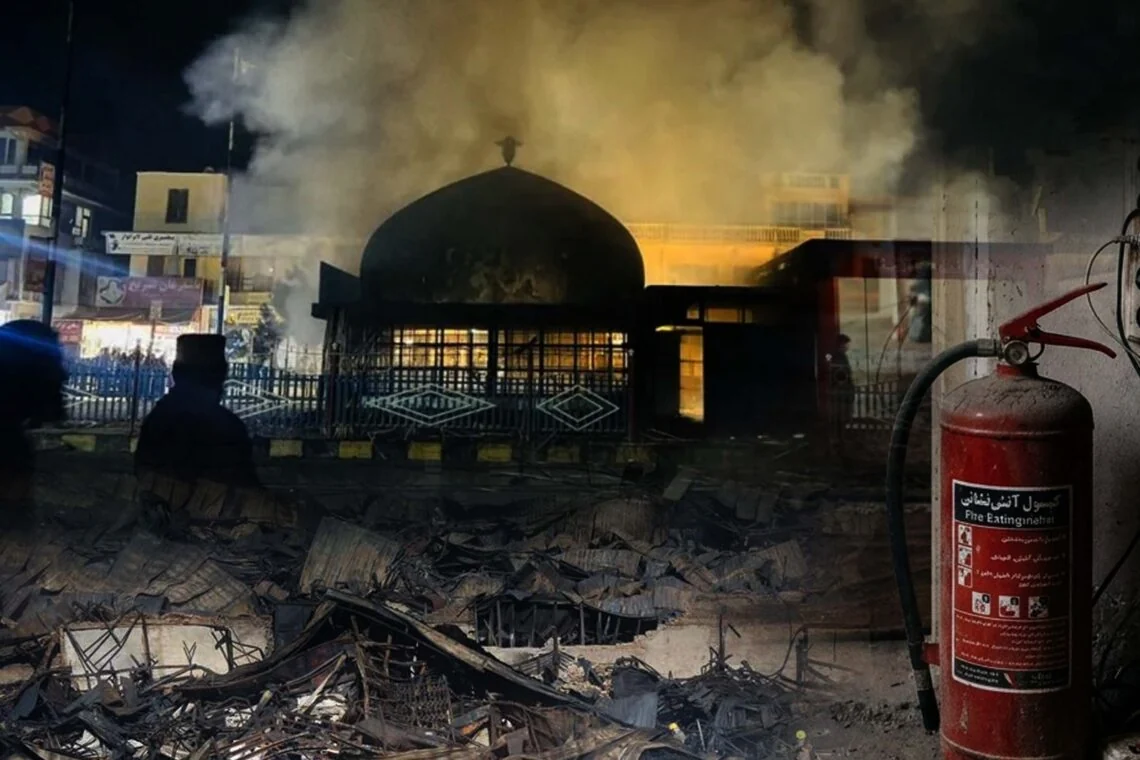
A lack of knowledge about proper firefighting methods and burn first aid can increase the human and material toll of such incidents. Many citizens say that, although fires could break out in their homes, they do not know how to use firefighting equipment or what steps to take to save the injured. According to these citizens, many of them do not even know the fire department’s phone number, and their homes have no fire extinguishers or other equipment needed to fight a fire. They stress that the lack of practical training on dealing with fires has limited families’ ability to respond properly in emergencies, and that public education on this subject could help reduce human and material losses.
Aliya, a resident of Kabul, says that she and her family members do not have sufficient knowledge about how to deal with fires and what steps to take when they occur. She adds that, despite years of schooling, she has never been taught how to bring a fire under control, how to use firefighting equipment, or what the fire department’s phone number is. According to her, people in her neighborhood usually use water to put out fires and resort to herbal substances and traditional methods to treat minor burns.
This Kabul resident says: “The truth is that I do not know what to do during a fire, and no one in our house knows anything about it either. I do not even know the fire department’s phone number. Once, our neighbor caught fire while using kerosene in a samovar, and his whole body, except his face, was burned. People wrapped him in a blanket, but the blanket stuck to his burned body, and he died after several days in the hospital. I still have not forgotten that incident. Even though we went to school, nobody taught us how to deal with a fire when it happens. In our area, people usually use water to put out fires and resort to herbal substances to treat minor burns.”
Maisam, another resident of Kabul, says: “There is no firefighting equipment in our house, and my family members do not know how such equipment is used. When a fire breaks out, they usually try to put it out with blankets and whatever is available in the house. I became familiar with how to use firefighting equipment at my workplace, but no one at home has this knowledge. In my opinion, people should be given training and awareness so that families can respond properly when a fire occurs and prevent human and material losses.”
Sayed Alam, a resident of Panjshir, says: “When a fire breaks out, you should first sound the alarm and call the fire department. You should also ask the people nearby for help to prevent the fire from spreading. In fires caused by electricity, water should never be used, because there is a risk of electric shock. It is better for people to keep special fire extinguishers at home and to learn how to use them so that they can act properly in such situations.”
Sayed Samim, a resident of Ghazni, says: “Honestly, if a fire breaks out in my home or workplace, I do not know what to do, and I would probably panic. No one has ever taught me how to use a fire extinguisher or what first aid to give in case of a burn. I believe most people are in the same situation, and until an incident happens, they do not think about preparing to deal with a fire.”
Alisina, a resident of Laghman, says: “In homes where gas cylinders are used, people should know how to shut off the gas and handle the incident when a fire breaks out. This requires training, because if people act without knowledge, they may not be able to bring the fire under control.”
Meanwhile, a number of doctors stress the importance of citizens knowing the correct first aid methods for burns, and say that timely and proper action can prevent skin damage from worsening and more serious complications from developing. According to the doctors, cooling the burned area with cold running water for 20 minutes, moving the injured person away from the source of the burn, and taking them to a medical center in time are among the most important initial steps in such situations. They warn that using substances such as toothpaste, oil, butter, and ice on the burned area not only does not help treatment but can cause further damage to the injured tissue.
Hamed Wardak, a doctor, says that the first step in the case of a burn is to move the injured person away from the source of heat and cool the damaged area with running water. According to him, this should continue for about 20 minutes, and during this time ice or traditional substances should not be used to treat the burn.
The doctor adds: “Many people, instead of using proper first aid methods, rub toothpaste, oil, butter, or other substances on the wound when they suffer a burn. These substances not only do not help the burn heal but may make the condition of the wound worse. Blisters that form at the site of the burn should also not be popped, and the damaged skin should not be peeled off.”
Mr. Wardak stresses: “If the burn is on the face, neck, hands, feet, genitals or large joints, or if the injured person has been hurt by an electrical or chemical burn, they should be taken to a medical center as soon as possible. Especially when the injured person has difficulty breathing, has inhaled smoke, or has a reduced level of consciousness, any delay can be dangerous.” He also stresses that in extensive burns, cooling the injured area should be done with caution so that the injured person’s body does not suffer a severe drop in temperature.
On the other hand, a number of electrical engineers warn that the use of substandard wires, improper installation of electrical equipment, and plugging several appliances into a single socket are among the factors that increase the risk of fires in buildings. According to them, neglecting the capacity of electrical wires and using wires thinner than required can cause the wire to overheat and its insulation to melt, ultimately leading to a short circuit and fire. Leaving appliances such as heaters and irons switched on, placing electrical equipment near flammable materials, and using substandard sockets and connections also increase the risk of fire.
One electrical engineer, who did not want his name to be included in the report, says that using substandard and weak wires in electrical installations is a common mistake among people. According to him, sometimes a wire with a cross-section of 1.5 square millimeters is used for equipment that requires a wire with a cross-section of two or four square millimeters. This reduces the wire’s capacity to carry electric current and can cause the wires to overheat.
This engineer says: “Another problem is plugging several electrical appliances into one socket. This causes an overload in the electrical system, and a current beyond the wire’s capacity passes through it. As a result, the wire heats up, its insulation is damaged, and the possibility of a short circuit and fire arises. Also, if connections and sockets are not installed properly or are loose, the chance of sparks and fire increases.”
He adds: “If the electricity has not been cut off, pouring water on equipment or on the site of the fire can create a risk of electric shock for people. People should keep away from electrical equipment, and in the event of a fire in a building, evacuate it quickly and not use the elevator. After that, they should call the fire department and ask qualified specialists to inspect the site and cut off the electricity.
Fires in buildings may occur as a result of gas leaks or explosions, short circuits in electrical wiring, faults in heating appliances, and carelessness when using cooking equipment.
You can read the Persian version of this report here:
نبود آموزشهای ایمنی؛ شهروندان در برابر آتشسوزی بیدفاع هستند