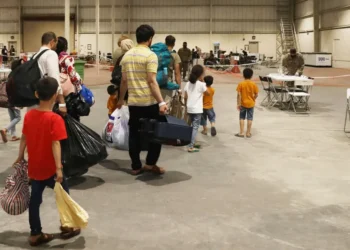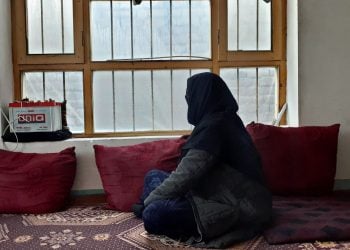

Several asylum seekers from Afghanistan in Poland have expressed concern over the harsh and inhumane conditions in the country’s immigration detention centers, stating that they face prolonged and arbitrary detention, violations of their human and health rights, denial of interpreter access, and open discrimination. They add that access to medical care, legal support, and communication with family is severely restricted, meals are inadequate and unsatisfactory, and their religious freedom and beliefs are not respected. According to them, some elderly and sick asylum seekers are held in small, overcrowded rooms, and the detention of individuals with valid documents continues, while some Iranian and Pakistani asylum seekers carrying forged Afghan documents are being released. These asylum seekers have called for the immediate release of vulnerable individuals, an investigation into unlawful detentions, and respect for their human, religious, and health rights.
Several asylum seekers from Afghanistan in Poland have expressed concern over their difficult situation in a letter sent to the Hasht-e Subh Daily. They say they are being held at the “Kętrzyn detention center” and feel they are suspended in a state of limbo, abandoned by the formal system.
These asylum seekers say they have been subjected to “legal deception” and that their arbitrary detention has been extended. They emphasize that they were transferred to this detention center following court hearings. According to them, interpreters had assured them they would be released after three months, but once that period ended, their detention was extended for another three months, and Polish authorities are now saying they may remain in detention for up to 18 months. They stress that this situation constitutes psychological torture and that they are enduring extremely difficult conditions.
Asylum seekers from Afghanistan in Poland say that many of those who enter through Belarus are not even entitled to apply for asylum and are held in detention for eight to nine months without any progress in their cases. They add that individuals who entered through Lithuania and managed to apply for asylum are systematically rejected, with their applications denied even a second or third time despite having valid documentation. They stress that many of the asylum seekers have high-risk political or military backgrounds in Afghanistan, yet Polish authorities disregard the threats to their lives.
These asylum seekers also say that two weeks ago, nine people of Afghanistan origin were deported from the “Białystok guarded center.” They emphasize that they are unaware of the precise regulations governing this action, and that it has created tremendous fear among asylum seekers from Afghanistan. They say that if deported, they fear for their lives.
The letter from these asylum seekers states that meals are very scarce and there is no guarantee that their religious concerns, such as the halal status of meat, will be respected. According to them, the management of the detention center is uncooperative and refuses to provide food at the time of iftar or suhoor. Furthermore, doctors refuse to adjust medication schedules during Ramadan, forcing individuals to take their pills at 9 a.m., which makes fasting impossible. These asylum seekers say that doctors at the detention center have told them, “Ramadan does not matter to us.”
These asylum seekers also allege that individuals with serious health conditions are deliberately kept in detention, which constitutes a violation of Polish and European Union law and can worsen the condition of others as well. They state: “Medical staff and paramedics are frequently disrespectful. For example, an epilepsy patient receives only medication, without an MRI or any necessary specialist follow-up. One compatriot from Afghanistan has been held for more than five months with epilepsy and has received no diagnostic or specialist care.”
According to them, elderly and married male migrants from Afghanistan at this center are kept separated from their children who are in Afghanistan and Iran, with no means of communicating with or supporting their families, which causes them tremendous psychological distress. These asylum seekers also allege that they face open discrimination; guards treat Ukrainians and others well, but behave inappropriately toward asylum seekers from Afghanistan, telling them, “Why did you come to Poland? Go back to your own country.”
These asylum seekers further allege that several Pakistani asylum seekers have used forged Afghan identity documents and were released after five or six months of detention. Some Iranian nationals are also reportedly using forged Afghan cards to avoid forced deportation, which has damaged those individuals’ legal credibility. In contrast, many asylum seekers from Afghanistan who entered with valid documents are held in detention for six to nine months with no hope of release. They stress that it is disheartening that Iranian and Pakistani nationals carrying forged Afghan documents are released, while those with genuine Afghan documents remain in detention.
They also express concern that there is no in-person interpreter available to assist with daily needs or legal matters, and that the living space sometimes falls to as little as two square meters per person, which falls short of internationally accepted human rights standards.
These individuals emphasize that the detention center resembles a prison environment, surrounded by high walls, barbed wire, and constant surveillance. They are held in small rooms that are often not locked at night for security reasons, and their privacy and dignity are not respected.
These asylum seekers add that more than 100 people from various countries are gathered on a single floor, which accelerates the spread of illness. Mobile phone use is prohibited, going outside is not permitted, and no Polish language classes or educational activities are provided. They say that social workers have been present at the center for more than five months, yet they have not managed to meet with their social worker even once.
These asylum seekers cite articles of Polish immigration law, stating that most provisions of that law have been violated by the government and that the rights of asylum seekers have not been upheld. They identify the illegal extension of detentions, violations of health standards, denial of the right to interpreter access, restrictions on religious freedom, and severe overcrowding as among the most significant violations of this law, and they formally object to all of these conditions.
Asylum seekers from Afghanistan in Poland say they are not criminals and that they sought refuge in this country to preserve their lives and existence, free from fear. They are calling for the immediate release of elderly individuals and patients from this center. They have also called on the Polish government to investigate the unlawful detentions and to pursue official explanations for why 18-month detentions are being imposed despite earlier promises of release within three months. The asylum seekers are demanding that serious healthcare and access to health specialists be provided with respect for their rights, and that their religious freedom and beliefs be respected.
These concerns have been raised as asylum seekers from Afghanistan continue to attempt to reach Europe by sea and land. In the most recent incident, Turkey’s Coast Guard announced on Monday of this week that at least 14 asylum seekers from Afghanistan, including six children, lost their lives after a boat capsized off the coast of Antalya.
You can read the Persian version of this report here:
از جعل هویتی تا محرومیت از حقوق؛ وضعیت پناهجویان افغانستان در بازداشتگاههای پولند