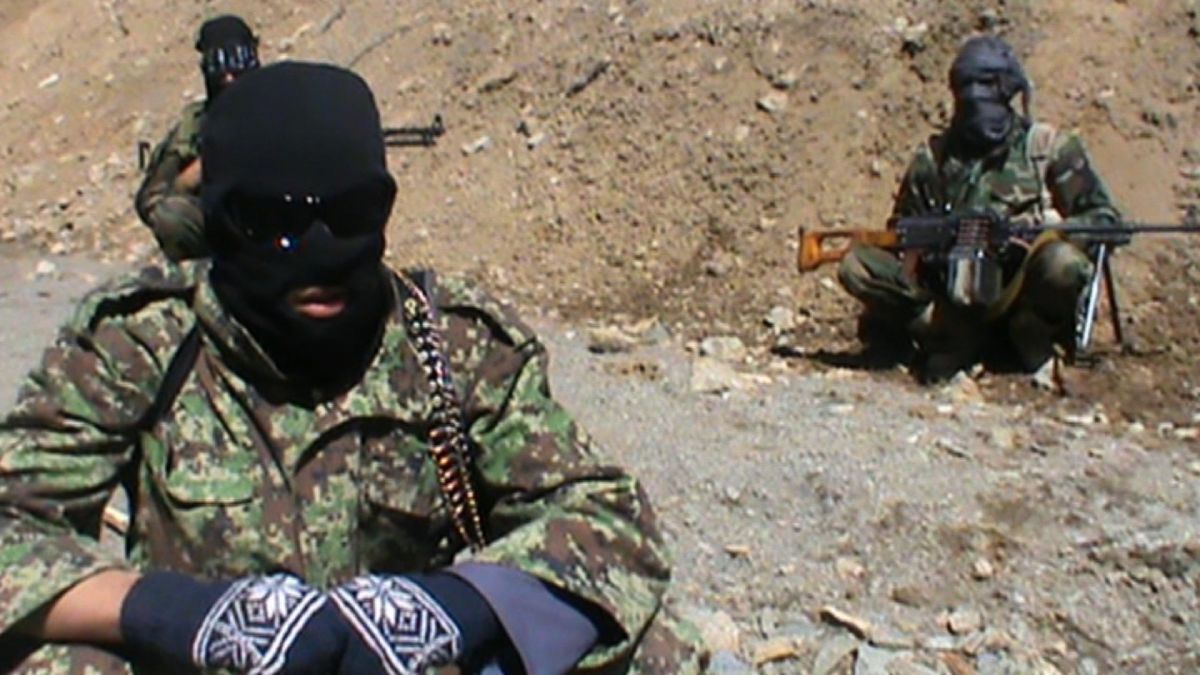
With the reinstatement of the Taliban in Afghanistan, concerns have grown about the surge in terrorist group activities, particularly those of the Islamic State-Khorasan (ISIS-K), in the northeast region of the country. Meanwhile, the Taliban claim that they are committed to fighting ISIS-K and that the group’s activities should not cause any alarm, as they are being portrayed. In his recent statements, Taliban Minister of the Interior, Sirajuddin Haqqani, downplayed the significance of ISIS, indicating that it is not a major problem. These statements are not new. During the previous government, there were occasional discussions about completely eradicating ISIS-K; however, in reality, the group’s activities expanded day by day, spreading beyond the eastern regions of Afghanistan and reaching the north and northeast. Importantly, the government that claimed to fight ISIS-K was itself accused of supporting the group, with Russia and Iran considering the Taliban a more reliable partner in the war against ISIS due to doubts about the previous Afghan government’s efforts against ISIS-K.
Now that the Taliban have taken control of Afghanistan and, like the previous government, is making exaggerated claims about fighting ISIS-K, they are also being accused of collaborating with the group. It is undeniable that some members of ISIS-K were previously associated with the Taliban, specifically Shahab Al-Muhajir, the leader of ISIS-K, who was a member of the Haqqani network and currently receives support from this network in Kabul. Reports of his death are considered baseless rumors since ISIS-K has not officially expressed an opinion on the matter, and reliable international media outlets have not yet reported his death.
However, even if we assume that the Taliban are not colluding with ISIS-K, it cannot be denied that during the years of conflict with the previous Afghan government, the Taliban, through their terrorist and subversive activities, laid the groundwork for the growth and strengthening of ISIS-K in the country. By instigating war and promoting Islamic extremism, the Taliban significantly contributed to the crisis and instability in Afghanistan, aiming to bring down the Western-backed government as quickly as possible. The attritional war waged by the Taliban, coupled with the incompetence of the ruling authorities, rampant corruption, unemployment, and increasing poverty, ultimately led to the collapse of the government. However, what the Taliban were able to gain control over has now become their own burden.
Reports indicate that unemployment and poverty have increased since the Taliban assumed power in Afghanistan. Simultaneously, corruption is rampant under the Taliban regime. The Taliban, who are now resorting to extortion from butchers, truck drivers, and daily wage workers, surpass previous governments in terms of corruption and extortion. If these factors contributed to the gradual downfall of the previous government, it raises the question of why they would not be detrimental to the Taliban Emirate as well.
In addition to the aforementioned factors, the promotion of Islamic extremism through religious schools, while assisting the Taliban in gaining and maintaining power, can also facilitate the recruitment of other Islamic extremist groups, such as ISIS-K, which is considered the Taliban’s main adversary. It is evident that the Taliban are aware of this issue and are attempting to exert control over religious schools; however, managing these institutions proves to be a challenging task with limited success. The complete regulation of religious schools is arduous because the Taliban group itself actively supports their activities and is among the foremost promoters of Islamic extremism in Afghanistan.
While religious schools serve as recruitment sources for the Taliban and its affiliated groups, they also significantly contribute to the strength of ISIS-K. In particular, Salafi schools operating under the Taliban regime are already aligned with ISIS-K. These schools are numerous, especially in the northeastern provinces of Afghanistan, with an estimated three to four Salafi schools in each district. The activities of these schools surpass those of schools that support the Taliban or were established after the Taliban came to power in Afghanistan.
The author of this article, who has visited several Salafi schools in the districts surrounding the Kokcha district of Takhar province and closely interacted with their students, has concluded that if religious schools with Salafi tendencies are not taken seriously, the threat they pose in the northeast will be far greater than that of the Taliban, eventually jeopardizing the security of Afghanistan. In these schools, Islamic extremism is propagated with such intensity that it surpasses even the Taliban in its adherence to the ideology of ISIS-K.
The curriculum in madrasas openly teaches the Taliban, among other subjects, about jihad, martyrdom (including suicide attacks), hatred towards Shias and non-Salafis in general, and the excommunication of individuals critical of radical Islamic groups, particularly ISIS-K. The students of these religious schools differ from other Muslims in their appearance and their interactions with people. Even the manner in which the Taliban students pray in these schools is distinct from others. Taliban girls, for instance, wear the full hijab outdoors, even while praying at home. Salafi mullahs have instructed them that praying in their regular home attire is not acceptable.
These girls are so radicalized that they refrain from eating meals with family members who adhere less strictly to Islamic law. The students are encouraged to propagate what they have learned, acting as preachers upon their return home. It is as if people are living in a pre-Islamic era and require an invitation to embrace Islam. These girls teach others the “proper way” to pray and adhere to the principles of hijab.
The Salafi mullahs have informed these adolescent girls that Islam provides women with numerous rights and that it is men who have deprived them of these rights. However, when one inquires about the specific rights Islam has granted to women, it comes as no surprise that the mullahs struggle to provide a satisfactory answer. The rights and privileges that the Salafis consider appropriate for women are the very same ones already granted by the Taliban. These rights and privileges are extensive, but they are cautious not to exceed the “boundaries of Islam” in order to restore peace and security to the “Islamic society.” The Salafi mullahs are discontent with the efforts of the Taliban in Afghanistan, believing that Islamic Sharia has not been implemented as it should be.
Even under the previous Western-backed government, Salafi madrasas in northeastern Afghanistan operated with considerable freedom, if not more than during the Taliban regime. On two occasions, individuals wearing suicide vests were apprehended by the former government’s national security forces from Salafi madrasas in the Yengi Qala district of Takhar Province. However, these actions did not deter them, and they continued their activities. While the Taliban have exerted significant pressure on these religious schools, their operations have not been completely halted. Consequently, the Salafist schools in the northeast are currently training the future soldiers of ISIS-K, individuals who follow the Taliban’s example of ignorance, takfir, extremism, violence, and terrorism.
This implies that if Salafi schools continue to operate, there will be no need to transport foreign terrorists to the northern and northeastern regions. These madrasas alone can sufficiently provide the combat force for ISIS-K in the coming one to two years.