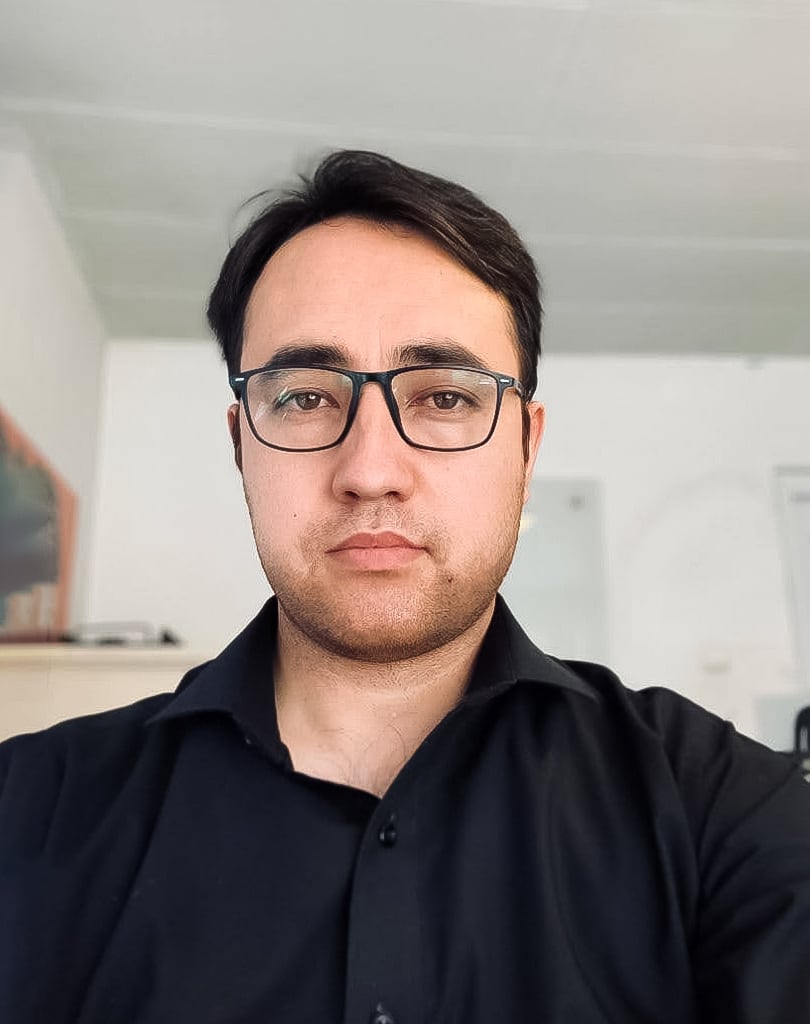

Hasht-e Subh Note: On the eve of the fifth anniversary of the collapse of the Islamic Republic of Afghanistan and the Taliban’s return to power, the Hasht-e Subh Daily is publishing a series of exclusive interviews. As part of this series, the following interview was conducted in writing with Hamed Saifi, the military commander of the Freedom and Justice Movement (FJM). The questions in this interview were raised by a number of female journalists and writers at the Hasht-e Subh Daily. The names of Hasht-e Subh journalists and writers have been given as pseudonyms due to their presence and activities inside Afghanistan.
Ilya, Hasht-e Subh Journalist
Ilya: What guarantee is there that if the fronts play a role in power, women will not once again be sidelined from leadership and political decision-making?
Saifi: Women, like men, will play a key role in all political, economic, and cultural spheres, especially in the leadership of the country. In the post-Taliban system, there will be no gender-based discrimination or distinction whatsoever.
Ilya: What difference do the anti-Taliban fronts have from past governments and monopolistic structures, and how will they prevent the repetition of past mistakes?
Saifi: By learning from the history of Afghanistan, we believe in a decentralized, elected, and justice-oriented system, a system in which all citizens feel a sense of ownership, and where major responsibilities are assigned based on individuals’ capacity and talent, not based on ethnicity, language, position, and so on.
Ilya: What specific political plan do the fronts have for the future of Afghanistan? What type of political system, elections, and power-sharing arrangement do they propose?
Saifi: The type of future system will be determined by the men and women of Afghanistan through their own vote. This time, we will see a system whose standard is not based on individuals or ethnicity, but on capacity, service, and honesty.
Ilya: If you come to power, what specific measures will you take to reopen schools and universities and bring women back to work, especially within the first 100 days?
Saifi: If the Taliban is defeated, our priority will be reopening schools and universities and bringing women back to work. We will also make every effort to compensate for the losses caused by the educational deprivations of the Taliban era. We will also ask international academic institutions to provide scholarships to once again create opportunities for capacity-building within Afghanistan’s educational institutions.
Ilya: Do women currently have a real and effective presence at the leadership and decision-making level of the fronts?
Saifi: Under current conditions, women, through their voice for justice, play a key role in exposing Taliban crimes, particularly in revealing torture, abuse, and rape in Taliban prisons. These voices, alongside those of other fronts, strengthen the morale of the armed fighters and guerrillas fighting for freedom and justice, and this is highly commendable.
Ilya: How will the rights and freedoms of political opponents be guaranteed, and are the fronts prepared to negotiate and reach a comprehensive political agreement with their opponents to end the war?
Saifi: In the future system, the rights and freedoms of all individuals will be protected, and every individual or political movement will have the right to be present on the political stage through peaceful political struggle to bring about positive change.
Ilya: If the Taliban steps aside, will the fronts hand over power to an interim government and then to an inclusive elected system, or do they consider themselves entitled to rule?
Saifi: If the Taliban steps aside, the fronts are obligated to pave the way for the establishment of an interim government and to facilitate the opportunity for holding elections, peacefully, to determine the type of system, the constitution, the flag, and other matters open to discussion.
Mina, Hasht-e Subh Journalist
Mina: Do women have a real presence in the decision-making and leadership structure of the resistance fronts? If so, at what level and with what authority?
Saifi: Yes, women have a real presence in the decision-making and leadership structure of the resistance fronts. At the leadership level, they stand shoulder to shoulder with other fighters. Just as they stand alongside other fighters today, they will hold the same position on the day of victory.
Mina: If you were a girl living in Afghanistan who had been deprived of education, work, and many of her basic rights for four years, what would you demand of yourself?
Saifi: The very thing that the proud women of Afghanistan did over these five years, that they did not remain silent and raised their voice for justice, thereby making history. Their courage has been recorded in history, and they have become a model for future generations, teaching them not to submit to any force or oppression and not to remain silent.
Khorshid, Hasht-e Subh Journalist
Khorshid: How do the anti-Taliban fronts guarantee that their armed struggle will not harm civilians, and what responsibility do they accept regarding Taliban retaliation against the people?
Saifi: To date, we have made every effort to ensure there are no civilian casualties in our guerrilla attacks. This in itself is a major achievement, and we will remain committed to this principle until the end. Regardless of whether operations are carried out against them or not, the Taliban has, from the very beginning until now, ruled the people through tyranny and oppression, and the group’s very foundation is built on oppression. Therefore, the goal of our operations is to defeat this oppressive enemy, whose injustice, discrimination, and tyranny the people are fed up with.
Khorshid: Why have the anti-Taliban fronts, despite sharing a common goal, been unable to unite so far, and what are the main obstacles to this unity?
Saifi: The fronts are fighting against the Taliban in a positive competition, not in opposition to one another. This positive competition has led to an increase in guerrilla operations in every corner of the country.
Khorshid: What guarantee is there that if the Taliban steps aside, these fronts will not enter into armed conflict with one another, and that Afghanistan will not once again fall into civil war and fragmented rule?
Saifi: The imposed wars from 1992 until the fall of Kabul to the Taliban in 1996 taught us never to enter into such a war again, a war whose cost would be paid by our people while its benefits would be seized by the enemies of the people of Afghanistan.
Khorshid: Do the fronts have a unified and specific political program and strategy to achieve their common goal with fewer casualties and greater gains?
Saifi: As long as we remain in the phase of guerrilla operations, these operations must be planned and carried out confidentially. However, once we reach the stage of offensive and front-line operations, all parties believe in coordination, and at the same time, coordination is also considered an urgent necessity for victory.
Adrina Behzad, Hasht-e Subh Journalist
Adrina: Why, despite having twenty years of opportunity, authority, and extensive domestic and international support, were the leaders of the fronts unable to prevent the Taliban’s return and the repetition of this group’s violence?
Saifi: The fronts that were formed after the fall of the Republic are made up of young people who held no significant authority or position during the era of the Republic that would have allowed them to prevent the Taliban’s return. In fact, some of these young people had even been discharged from their duties before the fall of the Republic. Nevertheless, these same young people fought with all their strength on the front lines against the enemy during the era of the Republic, and the people of Afghanistan have witnessed many examples of their sacrifices.
Adrina: Why should the women and girls of Afghanistan trust the resistance fronts today, and what is the difference between your vision and conduct and past political experiences?
Saifi: We believe that after the Taliban’s defeat, all people will be owners of Afghanistan, and everyone will be allowed to serve. We will never return to the history of imposed wars and authoritarian governments.
Adrina: What exact plan and practical action do you have for the freedom and future of the women and girls of Afghanistan?
Saifi: The goal of our struggle is to bring freedom and justice to the women and men of Afghanistan so that they can attain all the rights they deserve, including the right to live with dignity, the right to education, the right to work, and the right to reach the highest ranks based on capacity and merit, not based on ethnicity, language, position, and so on.
Adrina: What position do you envision for women in the leadership, decision-making, and political future of Afghanistan, and what guarantee do you give that their rights will not once again be sacrificed for political expediency?
Saifi: Just as women stand alongside men today in the ranks of the struggle against tyranny, they will have that very same right in determining the country’s fate on the day of victory.
Adrina: What practical and specific plan do you have to achieve the front’s goals, and when can the people expect to see its tangible results?
Saifi: We are in contact with our compatriots both inside and outside the country. The morale of the people for the defeat of the Taliban is truly commendable, and the majority of the people of Afghanistan are aligned with us in this regard. Sooner or later, we will witness the defeat of the Taliban and the victory of our own people.
Behnia, Hasht-e Subh Journalist
Behnia: What is your specific, long-term strategy for ending Taliban rule? Are the recent attacks part of a long-term plan and strategy, or merely isolated operations?
Saifi: Our specific strategy includes various types of guerrilla, offensive, infiltration, and intelligence operations. Alongside these operations, we are in contact with influential figures in the country, both inside and outside, so that after the Taliban’s defeat, we can implement the programs of a merit-based government without delay. These recent operations, of various kinds, will continue until the complete defeat of the Taliban.
Behnia: When, and based on what plan, can the people, especially women, expect fundamental change?
Saifi: We once again promise that the men and women of Afghanistan will attain all the rights they deserve, without any discrimination.
Behnia: Alongside the military struggle, what plan do you have for gaining domestic legitimacy? And do women currently have a presence in your organizational and decision-making structure? If so, what role do they play? If not, why?
Saifi: To gain legitimacy, we are making every effort to ensure that after the Taliban’s defeat, the people of Afghanistan will witness a legitimate government and system, and experience positive change in every sphere, especially the economic sphere.
Behnia: Given that we are currently witnessing the presence and various attacks of different fronts in different provinces, do you intend to act unitedly against the Taliban? In other words, is there unity in the works or not?
Saifi: As soon as we move past the phase of guerrilla attacks, which is founded on confidentiality, all fronts believe in coordination, and we are united on this matter.
Aayat, Hasht-e Subh Journalist
Aayat: What role do women play in the internal structure of the resistance fronts? Are women only presented as victims of the war and subjects of support, or do they also have a real role in decision-making and leadership?
Saifi: We are fighting for all the people of Afghanistan, both women and men, who remain captive under the Taliban. Our goal is to establish freedom and justice so that no one can discriminate against the men and women of Afghanistan. Along this path, that which is the rightful claim of the men and women of Afghanistan will be realized.
Aayat: What are the ultimate goals of the resistance fronts for Afghanistan? Is the goal merely to change the Taliban government, or is there also a plan for creating a new political system?
Saifi: We also have a specific plan and program for the post-Taliban period, a plan in which the people of Afghanistan are given their rights without regard to their ethnicity, gender, or religion.
Shamsia, Hasht-e Subh Writer
Shamsia: If the resistance fronts come to power, what practical guarantee do they give for the right to education, university, and work for women and girls, and what will they do to make up for the deprivations of the past five years?
Saifi: One of the fundamental demands of all the fronts fighting against the Taliban today is the reopening of the doors of schools and universities to girls. However, to compensate for the deprivations of the years of Taliban rule, serious measures and relentless efforts must be undertaken to fill this gap.
Shamsia: What are the reasons for the failure of the resistance fronts’ operations against the Taliban over the past five years, and what specific plan do you now have to achieve victory?
Saifi: Today we are fighting a group that has fought for twenty years using guerrilla tactics against the Republic system and its allies, and has amassed considerable experience in the weaknesses of guerrilla fighters and the tactics used to trap them. This same experience is why, in some cases, guerrilla fighters are captured, martyred, or forced to flee. But this does not mean failure; rather, every martyrdom and every sacrifice further strengthens the resolve to fight against the Taliban.
Shamsia: What guarantee is there that if the fronts are victorious, Afghanistan will not once again fall into civil war, the monopolization of power, and the mistakes of the past?
Saifi: Given what I know about the fronts and their goals, I consider such an event unlikely, and I do not believe it will be repeated.
Shamsia: What is the fronts’ practical plan for creating a secure and free Afghanistan, and if victorious, will they hand over power to the people through an inclusive political system?
Saifi: Certainly, the votes of the people will determine the country’s future. The type of system and structure that takes shape will also depend on the vote and will of the people.
Shayesta, Hasht-e Subh Writer
Shayesta: The women of Afghanistan today are deprived of even the most basic human and social rights. If political power were placed in your hands tomorrow, what specific guarantee is there that women will not once again become victims of political bargaining and power expediency? Are you willing to guarantee women’s rights as a non-negotiable red line in the future law and political structure?
Saifi: Women’s rights in Afghanistan are considered a non-negotiable red line, and their guarantee will be clearly and evidently enshrined in the future law and political structure.
Shayesta: Afghanistan cannot be built merely by the fall of one government. If the Taliban steps down from power tomorrow, what is your specific plan for creating an inclusive political system, a system in which no ethnicity, religion, language, or gender feels excluded, and how can the people hold you accountable for this plan and your performance?
Saifi: We are fighting with all our strength so that the people of Afghanistan, after the Taliban, will witness a system in which every individual feels a sense of ownership. Any form of ethnic, religious, linguistic, or gender discrimination will be considered a crime, and the standard will be service, capacity, knowledge, and ability, so that everyone can serve their people and have a share in the system.
Shayesta: If power comes into your hands tomorrow, what will be your first practical step toward reopening schools and universities and guaranteeing girls’ right to education? And if this promise is not fulfilled, who will be held accountable to the people, and how?
Saifi: We consider ourselves responsible for restoring the right to education, work, and voting to the women of Afghanistan once again.
Tamanna, Hasht-e Subh Writer
Tamanna: Why have the resistance fronts, over the past five years, been unable to gain the trust and broad support of the people beyond ethnic affiliations?
Saifi: The main reason is that the Taliban, in shaping its narrative, at times stirs up religious issues and at other times ethnic issues. Unfortunately, this approach has hurt the minds of the people of Afghanistan. I see the main reason for the lack of broad and necessary support from the people as being largely rooted in these very psychological warfare tactics of the Taliban.
Tamanna: Why have the resistance fronts failed to make effective efforts to build unity among the fronts and other Taliban opponents, and why has a joint and coordinated struggle not taken shape?
Saifi: The fronts’ struggle is currently proceeding through positive competition with a single goal, the liberation of the country and the salvation of the people, and I consider this to be in the best interest of the people of Afghanistan.
Mahtab, Hasht-e Subh Writer
Mahtab: Do the resistance fronts have a specific plan for the real and equal presence of women in the leadership, political structure, and decision-making of Afghanistan’s future?
Saifi: The women of Afghanistan, like men, will have their place in the post-Taliban system established without any gender discrimination and based on their own capacity, talent, and knowledge.
Mahtab: If the resistance fronts come to power, what practical and specific guarantee is there that the basic rights of women and girls, including education, work, freedom of choice, and political participation, will not be sacrificed to political expediency and decisions?
Saifi: All the fronts, especially the Freedom and Justice Movement (FJM), consider the realization of the basic rights of all the people of Afghanistan, especially women, to be one of the main reasons for their armed struggle. In this regard, there is no doubt that in the post-Taliban system, the people of Afghanistan will witness a better future, a future based on joining the rapidly advancing caravan of global knowledge and progress.
You can read the Persian version of this interview here:
گفتوگوی اختصاصی با حامد سیفی، مسوول نظامی نهضت آزادی و عدالت