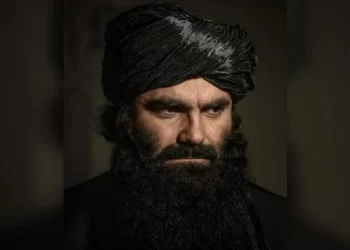
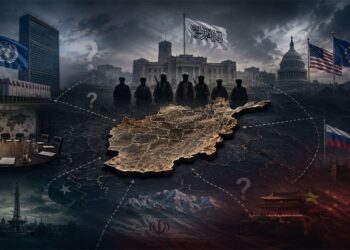
Recently, The New York Times referred to Sirajuddin Haqqani, the acting Interior Minister of the Taliban and the leader of the Haqqani Network, as the only “dissenting voice from within” the group. According to the newspaper, Haqqani supposedly opposes what Mullah Hibatullah Akhundzada, the Taliban Supreme Leader, is doing. This is not the first time some media outlets and reputable international organizations have made such claims. Over the past three years, it has been repeatedly suggested that the Taliban is not a monolithic entity and that there are various factions within the group. This narrative has led some to believe that not all of the Taliban are extremists and has cunningly divided the group into “hardliners” and “moderates,” with “The New York Times” placing Haqqani in the latter category. However, this division is not limited to the past three years but dates back to when dialogue with the Taliban (after 2008) became necessary. Concerted efforts were made to appease the so-called moderate faction of the Taliban, which resulted in nothing but the complete collapse of the republic and the Taliban’s return to power.
Regarding “The New York Times”’ claim, several points are worth considering:
1) The claim made by this newspaper lacks serious evidence to prove it over the past three years. On the contrary, what the people of Afghanistan have experienced firsthand is the strict implementation of Mullah Hibatullah’s decrees, which have caused immense suffering. It’s not just Haqqani; other Taliban officials (especially those labeled “moderate” by some countries) have also remained silent in the face of Hibatullah’s orders. From Haqqani’s speeches and actions over the past three years, there is no indication that he opposes the decisions of the Taliban leader. On the contrary, he has repeatedly emphasized unwavering obedience to Mullah Hibatullah, particularly during his speech at the introduction ceremony of Mullah Shirin, the governor of Kandahar: “Our system has strengthened through unity and absolute obedience.” Haqqani and his network hold real power within the Taliban cabinet, and if they wanted, they might be able to create problems for the Kandahar-based Mullah. Even Mullah Yaqoob Mujahid, the Taliban’s defense minister, who is also considered pragmatic by some countries and allegedly opposes Hibatullah, once told his fighters: “In obedience to the Amir al-Mu’minin, be like a corpse on a washing board.” In other words, Taliban officials and fighters must obey Hibatullah as a corpse obeys the washer. This metaphor might be the most illustrative of the relationship between the Taliban leader and all members of the group, regardless of their rank.
2) Let’s assume “The New York Times”’ claim is accurate. Even so, Haqqani is not seeking to remove his leader from power or establish democracy in Afghanistan. He only desires a modified emirate—one under his control. If the Taliban’s emirate remains in power, it doesn’t matter whether Haqqani or Hibatullah is its leader. Haqqani may have admitted his opposition to some of Hibatullah’s decrees in meetings with foreign officials for two reasons: First, the Haqqani Network is the most powerful and feared faction within the Taliban and does not want to dissolve into the group gradually but seeks to maintain relative independence. Second, Haqqani is trying to soften the terrifying image associated with him and his network, which has been ingrained in people’s minds for over 20 years. The Haqqani Network is synonymous with terror and suicide bombings, and its name will not quickly evoke thoughts of peace. The United States, too, did not place the entire Taliban on its terrorism list but specifically targeted the Haqqani Network, offering a $10 million reward for information leading to Haqqani’s whereabouts. Currently, Haqqani’s approach to softening that horrific image involves outwardly opposing Hibatullah’s decrees. This is nothing but trickery by the Haqqanis. Therefore, clinging to Haqqani cannot lead the West to its purported goal of achieving democracy and human rights in Afghanistan. Unfortunately, some Western media and institutions, ignoring the reasons behind Haqqani’s disagreement with Hibatullah, are attempting to portray the leader of a network responsible for mass killings as moderate and inevitable to engage with. Afghan citizens will only believe in Haqqani’s reformist claims when he clearly articulates his stance in the media and takes practical steps toward establishing an inclusive democratic government and curbing Hibatullah’s power—until then, they won’t.
3) “The New York Times” wrote: “Haqqani, dissatisfied with the Taliban leader’s orders, has diplomatic relations with several European countries, the Gulf region, Russia, and China.” This point is intriguing because the Taliban as a group maintains diplomatic relations with these countries, not just an individual named Haqqani. The Taliban has sent ambassadors and diplomats to several Gulf countries, China, and Russia, and those countries have reciprocated. These relations were established by the Taliban leadership, not Haqqani alone. If there are personal relations involved, it’s not just Haqqani; other prominent Taliban figures also have dealings with these countries and have been their guests multiple times. The contradiction in “The New York Times”’ claim lies in portraying Haqqani as inclined towards China and Russia, while the rulers of these two countries are often described as dictators by Western governments and media. If Haqqani is assumed to be a moderate, these two authoritarian regimes would likely prefer to work with someone like Hibatullah rather than a “moderate” Haqqani. Previously, reports suggested that the China-Russia-Iran triangle supports the Kandahar-based Taliban (the hardliners), while the West and its Arab allies back the Kabul-based Taliban (the moderates)
4) Zalmay Khalilzad, the former U.S. envoy for Afghan peace, warmly welcomed what “The New York Times” wrote, calling for U.S. engagement with Haqqani as essential. Khalilzad claimed that Haqqani holds a moderate position and seeks to establish relations with the West. He further stated, “The U.S. should not let past grievances influence its dealings with Haqqani or seek revenge.” He also labeled the Taliban’s defense minister and Mullah Abdul Ghani Baradar, the group’s deputy prime minister for economic affairs, as moderate figures, encouraging Washington to engage with them. Khalilzad urged U.S. leaders to prioritize the country’s future interests rather than seeking revenge against the Taliban.
Khalilzad’s statements amount to lobbying for the Taliban. For a long time, he has attempted to whitewash the Taliban’s image. Recently, in an interview with an Afghanistan-focused media outlet, he again emphasized Mullah Baradar’s “patriotism” and sought to portray his opponents as “rebels” and “outlaws.” Now that the Taliban holds power, Khalilzad cannot admit to the group’s unchanging nature, as it would implicate him. Despite overwhelming evidence of the Taliban’s irreformability, Khalilzad continues to influence the White House’s view of the group, and he has been quite successful in doing so. His insistence on U.S. support for Mullah Baradar and Sirajuddin Haqqani aims to maintain “balance” within the Taliban, ensuring that the Ghilzai-Durrani rivalry does not escalate and bring down the fragile Taliban regime.
5) From the above points, it can be concluded that the United States still has a long way to go to establish relations with anti-Taliban forces. Logic dictates that if the Taliban, especially its leader, is irreformable, attention should shift towards forces that claim to be democratic. Western media can play a crucial role, but they seem reluctant. On the contrary, they often introduce figures as “moderates” whose names evoke fear among Afghan citizens. This reflects the weakness of the anti-Taliban forces, who have not managed to secure lobbying efforts in the U.S. Ironically, the Taliban has a lobby in the United States, but those who deem the group as terrorists and label themselves democrats do not. For now, the U.S. government leans toward the Taliban rather than their opposition. Additionally, some U.S. media outlets are smoothing the complex path of engagement with the Taliban for the White House. Although some voices in the U.S. Congress have recently emerged in support of anti-Taliban forces, they are too faint to make a real impact unless they gain more traction.
You can read the Persian version of this analysis here: