In recent days, images and accounts from Herat have shaken many citizens of Afghanistan. Reports describe women being detained on streets and in bazaars, men being forced to sign pledges to control how the women in their families dress, and mosque imams being used to relay these orders. Beyond the immediate reactions, perhaps the real question is something else: is what is happening in Herat today merely a scattered set of restrictions, or a sign of a larger process that is conditioning society to accept the gradual erasure of women from public life?
Looking back over the past few years, restrictions on women in the city have expanded step by step. In May 2022, the Taliban limited women’s presence in certain parks and sports venues, halted activity in many women’s sports, and imposed restrictions on families visiting restaurants. In November 2025, the Taliban barred women without the burqa from entering many offices and service centers in Herat, and set separate days for women and men to access these services. Now, in 2026, reports are emerging of women being detained in streets and bazaars. Placed side by side, these events are difficult to read as a series of unconnected decisions.
At first glance, all of this may appear to be only about the hijab. The reality is broader. The real question is how far women may be present in society at all, where they may go, what they may do, and what role they may play in public life. What is happening in Herat today is not simply a dispute over dress. It is part of a process that is making women’s presence in society narrower and more tightly controlled by the day.
This process can be understood within the framework of gender apartheid: a condition in which women, because of their gender, are gradually stripped of equal rights, opportunities, and presence in public life. Such a system rarely takes shape through a single, sudden decree. It is built through the steady accumulation of restrictions, bans, and mechanisms of control.
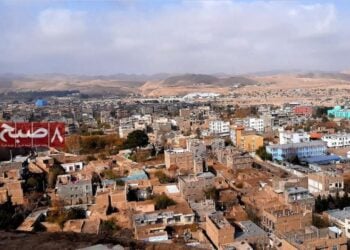
Why Herat? For the past two decades, Herat has been one of the most important centers of women’s education, cultural activity, female participation in the labor market, and the formation of civil society institutions in Afghanistan. In many areas, social change concerning women appeared in this city earlier than in other parts of the country. For this reason, Herat is not just any city to the Taliban. It is the symbol of a kind of urban and social life that stands at a distance from their vision of a desirable social order. From this perspective, what is happening in Herat today can be read as an attempt to redefine that order. Herat is less a place where policies are simply implemented than a social laboratory: a space in which the level of public resistance, the reactions of families, and the feasibility of extending these restrictions to other parts of the country can all be tested.
The central argument of this piece is that what we see in Herat today is not a handful of separate restrictions. Placed side by side, the events reveal a clear pattern. First, women are pushed out of certain public spaces. Then their presence in other spaces becomes conditional on new requirements. Next, part of the responsibility for control is shifted onto families and communities. The presence of women in the public sphere is then framed as a security matter. Finally, these forms of discrimination become a normal feature of daily life. The significance of Herat lies precisely here: it shows that the removal of women from public life does not happen all at once, but step by step, through restrictions that steadily widen.
The Removal of Women From Public Space
The first stage now visible in Herat is the gradual removal of women from certain public spaces. After the Taliban returned to power, women’s presence in some parks, sports activities, recreational venues, and several social spaces was restricted. At first glance, these measures may appear to concern only leisure, but their significance reaches much further.
Public spaces are not only places of recreation. Parks, cultural centers, sports clubs, and other public venues form part of people’s social lives. They are where people meet, build connections, take part in social activity, and develop a sense of belonging. Removing one group from these spaces is therefore not merely about denying them access to a few specific locations. It narrows their participation in social life itself.
The importance of this stage is that discrimination rarely begins with sweeping, all-at-once exclusions. In many cases, one group is first kept out of certain public spaces, and the restrictions then expand into other areas. When a group is seen less often in society, its absence also begins to feel more natural over time.
This is where the first signs of gender apartheid appear. The aim is not simply to close a few parks or stop certain sports. The goal is to gradually establish the perception that women’s presence in every public space is neither natural nor self-evident. Once their presence in one part of society is curtailed, limiting it in other parts becomes easier.
The Taliban’s initial restrictions cannot be read merely as scattered decisions about sport or leisure. They drew the first boundary between women and the public sphere, sending the message that women’s presence is no longer an obvious right but something that can be cut back.
Gender apartheid, however, does not stop at removing women from certain public spaces. The process then moves into a new phase, in which the question is no longer simply whether women are present, but how they may be present. Women may still be allowed in public, but only under conditions set by the Taliban.
From the Right to Presence to Conditional Presence
The removal of women from certain public spaces was not the end of this process. The next stage began when women were not entirely excluded, but their presence became tied to new conditions and restrictions. The question was no longer whether women could be present at all, but under what conditions they would be permitted to appear in public.
Examples can be found in the restrictions placed on restaurants, certain public services, government offices, workplaces, and even healthcare facilities. In such cases, the Taliban do not openly say that women have no right to be present. Instead, they determine the terms under which women may exercise that right. On the surface, women can still use some services and spaces, but their presence is no longer an equal right. It is tied to conditions defined by the Taliban.
The significance of this stage lies precisely in that shift. In normal circumstances, being part of society and having access to public services are among the basic rights of citizens. Once these rights become conditional, they no longer function as guaranteed rights. Women must continually adjust themselves to the standards set by the Taliban to access rights that, under ordinary conditions, should apply equally to all citizens.
This phase reveals one of the defining features of gender apartheid. The aim is not only to remove women from society, but to make their presence dependent on the will and decisions of the Taliban. Any right that becomes conditional can be narrowed or revoked at any time. Conditional presence is therefore one of the most effective tools of control. Women appear not to have been removed from society, yet they remain under constant supervision, with no assurance of how long the right will last.
If the removal of women from certain public spaces drew the first line between women and society, conditional presence deepened it. But this was not the end either. The next stage began when control over women was no longer exercised solely by official institutions, and part of that responsibility was transferred to families and to everyday social relations.
The Family as an Arm of Control
One of the most significant developments in Herat in recent days is not only the detention of women, but the pledges being extracted from men to control the behavior and dress of the women in their families. No government can be present in every street, every home, and every daily interaction. For this reason, many authoritarian systems try to transfer part of the work of monitoring and control to society itself. The family is one of the most powerful instruments for this purpose.
When a father, brother, or husband is told to take responsibility for the behavior of women in his family, control is no longer exercised only by official institutions. It is carried inside the home. In such a situation, the Taliban are not simply watching women. They turn the people closest to them into part of the control mechanism. Control over women is pulled from the street into the family.
This policy also reshapes family relationships. The family, which should be a place of support, trust, and safety, gradually becomes a space of supervision and accountability. As a result, the pressure exerted by the Taliban is not directed only at women. It draws in every member of the household.
This stage is one of the key components in the construction of gender apartheid. Control is no longer exercised only through Taliban regulations. Part of it is delegated to society itself. The more this situation spreads, the less the Taliban will need to intervene directly. The consequence is that many women and families gradually adjust their own behavior to fit existing restrictions, even when no Morality Police are present. Control then no longer comes only from outside. It is reproduced within society.
Yet even this is not the final stage. If earlier phases narrowed women’s presence and transferred part of the responsibility for control to families, the next phase turns the very presence of women in society into a security issue.
The Securitization of Women’s Presence
The detention of women in Herat’s streets and bazaars marks a new stage in this process. If earlier phases restricted women’s presence in certain spaces, made their access to services and facilities conditional, and shifted part of the responsibility for control onto families, the very presence of women in society has now become a security matter.
Securitization means that women no longer face only administrative or social restrictions. Simply being in a public space may now expose them to detention, interrogation, or confrontation with Taliban forces. The issue is not only how they dress. The presence of women in streets, bazaars, and other public spaces has itself become a matter open to control and intervention.
This matters because the street is the most public space in social life. Parks, sports clubs, or certain offices can be closed, but the street is the symbol of the right to be in the city. When even being on the street can lead to a woman’s detention, the message is that women’s presence in the public sphere is no longer treated as ordinary or self-evident.
In such conditions, fear becomes one of the most powerful tools of control. Every trip outside the home can carry the worry of being stopped, questioned, humiliated, or detained. As a result, many women reduce their presence in society without ever directly encountering the Taliban. A portion of the control is exercised through fear and self-restriction.
Securitization, moreover, does not stop with women. After reports of women’s detentions spread, several residents of the Jibrail district gathered in protest, only to be met with Taliban gunfire that wounded several people. The episode shows that the issue is no longer only the control of women. When protests against the detention of women are themselves met with a security response, the reach of control extends beyond women to those who defend their rights. Even this is not the end. The next stage arrives when these restrictions become so normal that they no longer surprise anyone.
The Normalization of Discrimination: The Endpoint of Gender Apartheid
The most dangerous stage of any system of discrimination usually begins when discrimination no longer feels strange or unusual. Gender apartheid is not entrenched merely by the issuance of orders or the imposition of restrictions. It is entrenched when those restrictions become a routine part of daily life.
In such conditions, society slowly grows accustomed to the absence of women from various spaces. Fewer women in the streets, parks, universities, workplaces, and other social arenas no longer draw attention. What once seemed unacceptable gradually becomes an ordinary feature of daily reality.
This normalization does not happen overnight. At first, every new restriction is met with debate, protest, and pushback. But as restrictions follow one after another, the sensitivity of society slowly fades. What was shocking yesterday feels ordinary today, and what has become ordinary today may not even be a subject of discussion tomorrow.
At that point, discrimination no longer lives only in the law. It seeps quietly into culture and social relations. People adjust to the new conditions, lower their expectations, and grow used to seeing fewer women across different fields. Over time, the removal of women is no longer merely the result of a few political orders. It becomes part of the accepted reality of social life.
The significance of recent events in Herat lies precisely here. What has happened in the city is not just a few detentions or a few new orders. If the removal of women from certain public spaces, the conditioning of their presence, the use of families for control, and the securitization of their presence are the earlier links in this chain, the normalization of this situation may be its final link.
Conclusion
The central concern of this piece is not only Herat, but also women. It is the future of society in Afghanistan. Every society is defined, in part, by how it treats its most vulnerable groups. When half of society is gradually pushed out of public life, what is lost is not only women’s rights. Part of the capacity, dynamism, and diversity of society itself is lost with them.
This is perhaps why the importance of Herat lies not only in what is happening there today. The significance of recent events in the city is that they offer a glimpse of a possible future that may gradually extend to other parts of society. If Herat is treated as a social laboratory, the central question is what the result of this experiment will be.
Gender apartheid is not complete when the last restriction is imposed. It is complete when the removal of women is no longer news. The most dangerous moment is precisely that one: when society is no longer surprised by the absence of half of itself.
You can read the Persian version of this analysis here:
وقتی حذف زنان دیگر خبر نیست؛ هرات و فرایند ساختهشدن آپارتاید جنسیتی