• 8AM.MEDIA
  • ویب‌سایت فارسی
  • پښتو ویب‌پاڼه
  • اۉزبېکچه ویب‌سایت
  • Podcast
Wednesday, October 14, 2026
Hasht-e Subh
  • Home
  • News
    • Afghanistan News
    • World News
  • Opinion
    • Editorial
    • Analysis
  • Reports
    • Daily Reports
    • Investigative Reports
  • Society
    • The story of people
  • Women’s Word
  • Columns
    • Three Years After Afghanistan’s Fall: The Taliban’s Resurgence
    • Towards Equality
    • The Resurgence of the Taliban: Two Years Since Afghanistan’s Fall
    • Hebatullah Report Special Edition
    • Resistance for Education Special Edition
    • Special Column on Taliban’s Education Curriculum
    • Nawroz
  • Interviews
  • Contact Us
    • About Us
    • 8AM MEDIA Annual Awards
    • Submit an Article to Hasht-e-Subh
  • 8am.mediaBack
Subscribe
No Result
View All Result
  • Home
  • News
    • Afghanistan News
    • World News
  • Opinion
    • Editorial
    • Analysis
  • Reports
    • Daily Reports
    • Investigative Reports
  • Society
    • The story of people
  • Women’s Word
  • Columns
    • Three Years After Afghanistan’s Fall: The Taliban’s Resurgence
    • Towards Equality
    • The Resurgence of the Taliban: Two Years Since Afghanistan’s Fall
    • Hebatullah Report Special Edition
    • Resistance for Education Special Edition
    • Special Column on Taliban’s Education Curriculum
    • Nawroz
  • Interviews
  • Contact Us
    • About Us
    • 8AM MEDIA Annual Awards
    • Submit an Article to Hasht-e-Subh
  • 8am.mediaBack
No Result
View All Result
Hasht-e Subh
No Result
View All Result

India-Taliban Relations: Can Economic Cooperation Overcome Political and Security Challenges?

Translated by Farhad Farhaad | Originally written in Persian by Fayazuddin Ghiasi

Mohammad Farhaad Mohammad Farhaad
20 July 2026 - Solar Hijri Date: 1405/04/29 [t_time:1784568932]
Afghanistan's acting Foreign Minister Amir Khan Muttaqi shakes hands with India's External Affairs Minister S. Jaishankar as the two countries explore closer economic ties. (Photo credit: economictimes.indiatimes)

economictimes.indiatimes

The recent agreement between India and the Taliban to form a joint working group in the agriculture and livestock sector could, from an economic perspective, create opportunities for technical cooperation between the two sides. However, the fundamental question is whether economic development in Afghanistan is possible without resolving the crisis of political legitimacy, the widespread violation of human rights, and the absence of an accountable government. The experience of the past four years suggests that the answer to this question is not particularly encouraging.

Afghanistan is a country where more than 60 percent of the population depends on agriculture and livestock farming, and this sector undoubtedly needs investment, modern technology, water resource management, and improved seeds. India also has considerable experience and capacity in this field. But the fundamental problem facing Afghanistan today is not merely a shortage of technology or capital; rather, it is a political structure that has seriously challenged the effective use of these capacities.

Over the past four years, the Taliban have consistently spoken of economic development, self-sufficiency, and attracting foreign investment, yet at the same time they have pursued policies that contradict the requirements of sustainable development. The ban on girls’ education, the exclusion of women from a large portion of the labor market, extensive restrictions on the media, the suppression of civil society, and the absence of political participation are not merely human rights issues; they also directly affect the country’s economic development capacity. How can a country that deprives half of its human capital of education and economic activity speak of sustainable development?

Under such circumstances, economic cooperation with the Taliban also carries the risk of normalizing a regime that still lacks domestic and international legitimacy. India has not yet formally recognized the Taliban, but expanding economic relations could be interpreted by the Taliban as a sign of the gradual acceptance of their regime at the regional level. This is happening even as much of the Taliban’s international isolation is the result of their own policies, particularly regarding women’s rights, civil liberties, and their failure to form an inclusive political system.

On the other hand, the investment environment in Afghanistan continues to face widespread uncertainty. The absence of the rule of law, the lack of an independent judiciary, the absence of transparency in contracts, restricted access to the international banking system, and the lack of accountability mechanisms are among the most significant factors that increase the risk of any foreign investment. Even if India brings substantial technology and capital into Afghanistan, there is no guarantee that these investments, in the absence of independent institutions and an accountable administrative system, will ultimately benefit the people of Afghanistan.

Another major challenge is security. Although the Taliban claim to provide security, the reality is that Afghanistan continues to face threats from armed groups, border tensions, the activity of terrorist networks, and political instability. In addition, growing disputes between the Taliban and Pakistan, along with increasingly complex regional rivalries, have heightened the sense of uncertainty surrounding any economic project. Economic development in an environment of fragile political stability will always risk stalling or failing.

From an economic standpoint, the question also arises as to whether the benefits of such cooperation will genuinely reach the people of Afghanistan or will mostly serve to consolidate the Taliban’s power structure. The experience of many countries under authoritarian rule has shown that in the absence of transparency, public oversight, and a free press, economic projects do not necessarily lead to poverty reduction and improved living standards; instead, they sometimes become tools for reinforcing the ruling political structures.

India, meanwhile, faces a serious dilemma of its own. On one hand, New Delhi views Afghanistan as part of the important geopolitical equations of South Asia and wishes to preserve its influence there. On the other hand, India has consistently presented itself as the world’s largest democracy, emphasizing values such as human rights, the rule of law, and democratic governance. Expanding cooperation with the Taliban without demanding political reforms and respect for citizens’ fundamental rights could seriously call these claims into question.

The reality is that economic development and political development cannot be separated from one another. Afghanistan’s agriculture will not grow without water, technology, and capital, but it will also not achieve sustainable development without freedom, education, political participation, accountable governance, and the rule of law. The experience of various countries shows that investment leads to economic growth only when it is accompanied by efficient institutions, a transparent legal system, and public trust.

More than anything, the people of Afghanistan need a government that is accountable to its citizens, that recognizes the fundamental rights of all citizens, particularly women and girls, and that creates the conditions for the genuine participation of all ethnic groups and political currents in governing the country. Without such transformations, economic agreements, however capable they may be of setting certain projects in motion in the short term, will not be able to resolve Afghanistan’s deep political and social crisis.

Therefore, India’s cooperation with the Taliban should not be evaluated solely through the lens of economic interests. This cooperation is a test for India’s foreign policy and, at the same time, a test for the Taliban as well. If these relations serve only to strengthen the Taliban’s political standing without bringing about any change in the group’s behavior and policies, they will not only fail to contribute to Afghanistan’s development but will also increase the risk of legitimizing a structure that is itself responsible for much of the country’s current crisis. Afghanistan’s real development does not begin on the farm; it begins with good governance, respect for citizens’ rights, and the participation of all the people in determining the country’s future.


You can read the Persian version of this analysis article here:

روابط هند و طالبان؛ آیا همکاری‌های اقتصادی می‌تواند بر چالش‌های سیاسی و امنیتی غلبه کند؟


ShareTweetSendSendShare

Related Posts

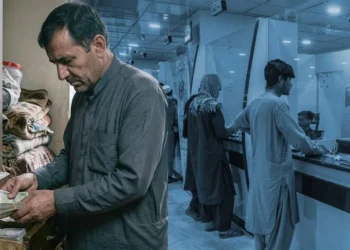
A man counts banknotes at home while customers stand at bank counters, as distrust in the banking system pushes citizens to keep cash at home. (Photo credit: AFP + AI)
Daily Reports

Distrust in Banking System Pushes Many Citizens to Keep Their Money at Home

14 October 2026 [t_time:1791999073]
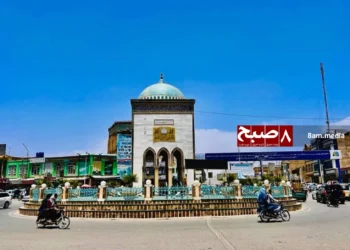
A view of the city
Afghanistan News

Two People Killed in Clashes with Taliban in Kandahar

14 October 2026 [t_time:1791999055]
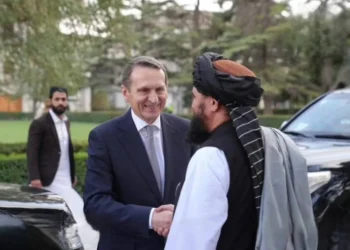
Sergey Naryshkin - Director of Russia’s Foreign Intelligence Service shaking hands with Abdul Haq Wasiq - the Taliban’s intelligence chief, upon his arrival in Kabul (Photo: @bnadari1)
Afghanistan News

Russian Foreign Intelligence Chief Arrives in Kabul

14 October 2026 [t_time:1791997492]

Latest

Loading latest news...

Popular stories

  • An aerial view shows collapsed buildings and widespread damage following an earthquake in Panama (Photo: Reuters)

    More Than 200 Aftershocks Recorded in Panama Since Friday’s Earthquake

    Share
    Share Tweet
  • Axios: Trump Expects Ukraine Not to Attack Russian Oil Refineries

    Share
    Share Tweet
  • UN Report Reveals Shifts in Family Attitudes and Rise in Domestic Violence in Afghanistan

    Share
    Share Tweet
  • The Politics We Inherited: Rethinking Afghanistan’s Political Culture

    Share
    Share Tweet
  • Mujahid: Pakistan Should Address Its Internal Problems Instead of Making Accusations

    Share
    Share Tweet

Podcast

Insights
Insights

Join Lynne O’Donnell for 8AM’s podcast series, Insights.
Lynne talks with generals, diplomats, soldiers, journalists, politicians, activists, people who have front row seats for conflicts around the world, and citizens with a story to tell, happy or sad. For this first series, Afghanistan is the focus. Lynne and her guests talk about the collapse of the republic in August, 2021, and the impact since — for the people of Afghanistan, for the security of the region, for the safety of the world. It’s important, interesting and insightful.

Insights/22: Controlling the Narrative with Mina Sharif
byinsights8am

Controlling the Narrative

Lynne O’Donnell talks with Mina Sharif, author, activist, women’s rights campaigner, educator and mentor. They discuss who controls the narrative and who speaks for Afghanistan’s people when the Taliban appear to have seized control not only of the country but of the message, too.

Have a listen

Insights/22: Controlling the Narrative with Mina Sharif
Episode play icon
Insights/22: Controlling the Narrative with Mina Sharif
Episode Description
Episode play icon
Insights/21: Media Meltdown with Zahra Joya
Episode Description
Episode play icon
Insights/20: Terror Inc with Scott Richards
Episode Description
Episode play icon
Insights/19: Busting Stereotypes with Bushra Gohar
Episode Description
Episode play icon
Insights/18: Media Matters with Waliullah Rahmani
Episode Description
Episode play icon
Insights/17: What Goes Around Comes Around with Sima Samar
Episode Description
Search Results placeholder
Hasht-e Subh

8AM Media, also known as Hasht-e-Subh Daily, stands as Afghanistan's premier independent and non-profit newspaper, resonating as a beacon of journalistic integrity since its establishment in June 2007 by esteemed Afghan journalists and human rights advocates. With a steadfast commitment to citizen journalism and civic education, Hasht-e-Subh Daily has earned its place as the most esteemed publication in the nation.

Publisher: Sanjar Sohail
Email: [email protected]
Executive Director: Parwiz Kawa
Email: [email protected]

Read More

Ala al-Din Jahansuz: A King Fond of Poetry and Music

Saudi Arabia Versus the Houthis: A Test of Reliance on America

International Day of the Girl: Stories of Victims Cut Off from the World

Distrust in Banking System Pushes Many Citizens to Keep Their Money at Home

Two People Killed in Clashes with Taliban in Kandahar

Editor’s Choice

Every Saturday morning, 8AM MEDIA English Services Department will guide you through the week’s biggest stories from Afghanistan and the international community.

Subscribe

© 2026 - ©Hasht-e Subh Daily

No Result
View All Result
8am.Media
پښتو ویب‌پاڼه
ویب‌سایت فارسی
اۉزبېکچه ویب‌سایت
  • Home
  • News
    • Afghanistan News
    • World News
  • Opinion
    • Editorial
    • Analysis
  • Reports
    • Daily Reports
    • Investigative Reports
  • Society
    • The story of people
  • Women’s Word
  • Columns
    • Three Years After Afghanistan’s Fall: The Taliban’s Resurgence
    • Towards Equality
    • The Resurgence of the Taliban: Two Years Since Afghanistan’s Fall
    • Hebatullah Report Special Edition
    • Resistance for Education Special Edition
    • Special Column on Taliban’s Education Curriculum
    • Nawroz
  • Interviews
  • Contact Us
    • About Us
    • 8AM MEDIA Annual Awards
    • Submit an Article to Hasht-e-Subh
  • 8am.media

© 2026 - ©Hasht-e Subh Daily