Note: Fereshta Abbasi is a researcher with Human Rights Watch’s Asia Division, focusing on ongoing human rights abuses in Afghanistan. Over the past ten years, she has documented human rights violations in Afghanistan with various organizations, including Human Rights Watch. Previously, she worked as a legal advisor with the International Development Law Organization (IDLO), where she focused on capacity-building, legal education, and developing professional skills for Afghanistan’s judicial staff. Abbasi holds a master’s degree in International Law and Strategic Studies from the University of Aberdeen.
In this interview, Fereshta Abbasi says that the situation in Afghanistan under Taliban rule is far worse than what is reflected in the media. According to her, women, journalists, ethnic and religious minorities, and all those who do not share the Taliban’s ideology are living under deeply repressive and dire conditions. She emphasizes that many cases of human rights violations never reach the media, and what is reported represents only the tip of the iceberg, while the full scale of the tragedy is far broader and more alarming.
Abbasi says that the adoption of the UN resolution to establish an independent mechanism for investigating and documenting crimes against humanity in Afghanistan is a major step forward. According to her, the International Criminal Court’s life imprisonment ruling for the Taliban Supreme Leader and the group’s Chief Justice is unprecedented, and she hopes that one day these individuals will be held accountable before an international court and answer to the women of Afghanistan.
The Hasht-e Subh Daily: You have been working in the field of human rights in Afghanistan for several years. What is the main focus of your current research?
Abbasi: I am currently a researcher on Afghanistan at Human Rights Watch, responsible for documentation and research related to the country. Our present focus is primarily on human rights violations committed by the Taliban inside Afghanistan. Human Rights Watch did not begin its work in Afghanistan after August 2021; rather, since the 1990s, it has published highly valuable reports on Afghanistan that are significant both historically and for ensuring that the voices of victims are heard.
However, unfortunately, the current situation in Afghanistan is extremely grave, and our focus now is mainly on the crimes committed by the Taliban. These days, I am working on a report about the state of media freedom in Afghanistan, examining how local media outlets operate inside the country and to what extent journalists can uphold the right of the people of Afghanistan to access information.
The Hasht-e Subh Daily: How did you first begin working with Human Rights Watch?
Abbasi: I started working with Human Rights Watch years ago, when I was still living in Kabul and traveling to various provinces across Afghanistan. I hold a bachelor’s degree in law from Herat University. After that, I worked mainly in the field of criminal law with domestic institutions in Afghanistan. My last position there was as a legal advisor with the International Development Law Organization (IDLO), where I worked mostly with prosecutors and was responsible for providing legal training to them, both in Kabul and in several other provinces.
There was quite a gap between my bachelor’s and master’s degrees. When you complete a general law program, it takes some time to figure out which specific branch of law you are most interested in. My experience was largely in criminal law, as there were more opportunities in that area in Afghanistan. I often worked with the Attorney General’s Office, the Supreme Court, the Criminal Investigation Department of the Ministry of Interior, and the Ministry of Justice.
After some time, I was offered the opportunity to collaborate with Human Rights Watch on a report. It was then that I realized how different their approach was. I came to see that working within the framework of international human rights law was not only professionally engaging but also closely aligned with the values I believe in. That is why I decided to pursue my master’s degree in international law, and in fact, my collaboration with Human Rights Watch began with that report.
The Hasht-e Subh Daily: What motivated you to pursue this path, and why did you feel that this was the right place for you to make an impact?
Abbasi: I don’t want to sound overly theoretical about my motivation for entering the field of human rights or simply say that my goal was to serve the people of Afghanistan. My parents fled the civil wars in Afghanistan, and I was born in Iran. I always felt a deep need to understand my country and to contribute to it in some meaningful way. When I returned to Afghanistan, I had no memories or images from my childhood there. That sense of detachment made me feel even more strongly that I had to work in a place where I could truly make a difference.
I still believe that Afghanistan is the one place that genuinely needs me, where I can have the greatest impact. It is the place where I can fulfill my human and moral responsibilities in the truest sense.
The Hasht-e Subh Daily: How many investigations has Human Rights Watch published on Afghanistan in the past four years? And what challenges or limitations have you faced during these investigations?
Abbasi: Over the past four years, Human Rights Watch has published multiple reports, both on crimes committed by the Taliban inside Afghanistan and on human rights violations perpetrated by the Islamic State (ISIS). Conducting these investigations has not been easy for various reasons.
For me, this type of work was completely new. Before August 2021, I lived in Afghanistan, traveled freely, and could visit different provinces to speak directly with people. However, documenting human rights violations is not merely about gathering information. You must speak to victims and survivors, look them in the eye, earn their trust, and ensure the proper protection of the information you collect. Each of these elements is a crucial part of the process. It is not simply a matter of collecting data and writing a report; these aspects profoundly influence the quality of documentation.
It was a completely new experience for me to work from outside Afghanistan. True, I maintained a network of contacts inside the country and could communicate with people in both Persian Dari and Pashto, but being physically absent from Afghanistan, especially when interviewing victims, made the work far more difficult.
When people recount the most horrific and painful moments of their lives, you cannot make eye contact, show empathy, or offer comfort from afar. It’s very hard, doing that kind of work remotely was emotionally taxing for me. Moreover, access to information inside Afghanistan has become extremely restricted. The Taliban are tightening control over information every day, which makes documenting abuses increasingly difficult.
If there are no independent media outlets inside Afghanistan to report on human rights violations, then undoubtedly, the work of organizations operating from outside the country becomes much more challenging.
Alongside all of this, I feel that we all share a fresh pain; a new wound. Every time I worked on a report, I felt unwell for days afterward, and that remains true even now. Some people ask me how I manage this situation. My answer is always the same: I don’t manage it. Many times, I cry while writing reports. Many times, I feel unwell for days. The stress and tension stay with me. These are all parts of the job. We often speak about professional challenges, but we rarely talk about the trauma we experience or the personal pain we carry. In fact, this has been one of the challenges and limitations we have faced over the past four years. Without a doubt, the greatest obstacles have been those created by the Taliban; their restrictions on access to information, people’s fear of speaking with the media or those outside the country, and the impossibility of being physically present in Afghanistan have all posed serious difficulties for us.
Hasht-e Subh Daily: To what extent have the recommendations and proposals by Human Rights Watch been accepted by various countries, particularly by the United Nations? What practical results have these efforts achieved?
Abbasi: Over the past four years, I have engaged in advocacy on various issues concerning Afghanistan. For example, today, as the people of Afghanistan face the threat of hunger, I believe that the countries that were present in Afghanistan over the past two decades have a moral responsibility not to abandon them. They must ensure that humanitarian aid enters Afghanistan and truly reaches those in need. These are among the issues where we have urged governments to hold the Taliban accountable for their human rights violations.
Most recently, we called on the UN Human Rights Council to establish a mechanism that not only investigates crimes committed by Taliban leaders but also examines the conduct of local commanders, provincial governors, and other regional heads of the group; individuals responsible for enforcing Taliban laws at the local level.
The International Criminal Court has already issued arrest warrants for the Taliban Supreme Leader and the group’s Chief Justice. However, beyond them, there are local actors in the provinces who torture civilians, carry out extrajudicial killings, particularly of former government employees; harass and abuse protesting women, and enforce the so-called “Law for the Propagation of Virtue and Prevention of Vice.” All these individuals bear individual criminal responsibility. That is why we called on the UN Human Rights Council to establish a mechanism to ensure such cases are also investigated and prosecuted. In addition to addressing the current situation, the voices of victims of decades of war in Afghanistan must also be heard.
This mechanism should not only investigate Taliban crimes but also cover violations committed by ISIS-affiliated individuals, compile criminal case files, and examine the actions of international forces that committed human rights abuses or crimes in Afghanistan. It must also include former government officials who were involved in human rights violations or crimes. Since the 1990s, there have been numerous reports documenting these cases. Unfortunately, a culture of impunity has always existed in Afghanistan. Therefore, one of the key proposals jointly made by Human Rights Watch and Afghan civil society in designing this mechanism was to end that culture of impunity.
It is important to note that this idea was not initiated by Human Rights Watch; rather, it was first proposed before 2021 by the former Afghanistan Independent Human Rights Commission (AIHRC). Alongside Afghan civil society and other human rights organizations, we have supported this mechanism.
The adoption of this resolution is good news. The European Union was the proposer of this mechanism. It represents a historic step for the people and victims of Afghanistan and sends a strong message to those who commit grave international crimes. It also delivers a clear warning to Taliban provincial governors and local heads that their leadership can no longer protect them; each of them will be held individually accountable.
Additionally, we have urged governments to recognize gender apartheid as a distinct international crime, and efforts in this area are ongoing. Since 2021, we have called on countries to hold the Taliban accountable for violating the Convention on the Elimination of All Forms of Discrimination Against Women (CEDAW). Most recently, in September 2024, Germany, Australia, the Netherlands, and Canada issued a joint declaration formally initiating this process. These are among the initiatives that Human Rights Watch, in close coordination with Afghan civil society, has pursued, and some have already yielded tangible results.
Hasht-e Subh Daily: From your perspective, what is the most severe human rights crisis in Afghanistan today?
Abbasi: The gravest human rights crisis in Afghanistan is the situation of women. While Afghanistan is enduring one of the world’s most profound human rights crises, within that, women face the worst of it. In 2025, there is no other country in the world where women are banned from education beyond grade six, forbidden to work, denied freedom of movement, and even deprived of the right to choose what they wear. Tragically, these widespread human rights violations coincide with an acute humanitarian crisis. More than 22 million people in Afghanistan are facing the threat of hunger, and another harsh winter is approaching.
Hasht-e Subh Daily: You have worked on numerous cases. Has there been any report that personally affected you the most?
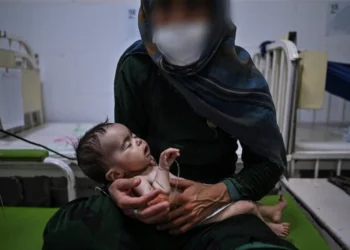
Abbasi: Most of the reports I’ve worked on have stayed with me for a long time. After 2021, I worked on a report about the economic situation of the people of Afghanistan. During that time, I interviewed a father from Ghor province who had lost his four- or five-year-old child due to malnutrition. Speaking with him was a horrifying and deeply emotional experience, because in that moment, there was absolutely nothing I could do to help him.
For that report, I gathered multiple cases and testimonies to illustrate what the economic crisis truly meant for the people of Afghanistan. But for a long time afterward, I struggled to continue writing it. I kept thinking: at least I have food to eat and a roof over my head, yet I am speaking with people who tell me they’ve lost their children to starvation. Those moments still haunt me, and every time I recall them, I feel the same weight again.
One report that deeply affected me and remains closest to my heart was about the Law on the Elimination of Violence Against Women. That report was completed before 2021, and I worked on it for nearly two years. At that time, I was a master’s student in the United Kingdom, researching while studying, and I continued working on it after returning to Afghanistan. I followed lengthy legal cases, spoke with women living in shelters, and tracked their proceedings in court. These cases included domestic violence, running away from home, and even sexual assault. I personally knew some of these women because I had followed their cases. For that report, we prepared a set of recommendations to identify gaps and weaknesses in the law and to suggest ways it could be strengthened for better protection of women.
That report was published only two weeks before the fall of Kabul. The reason I always say it is so close to my heart is precisely that, because I had worked so hard on it and had so much hope. But just two weeks after its release, there was no longer any such law in Afghanistan, and the ruling power had no belief in it whatsoever.
Hasht-e Subh Daily: How has the situation of women, journalists, and minorities changed specifically? Which groups are most at risk?
Abbasi: Women in Afghanistan have no normal life whatsoever. Almost all of their fundamental human rights have been violated. A woman in Afghanistan is not only barred from going to school or working, but she also faces a set of deeply discriminatory laws. Beyond these practical restrictions, what is far more serious is the profound insult to women’s human dignity. The fact that the ruling authorities can tell women, “Your voice should not be heard outside the home,” regardless of how strictly this is enforced, is in itself a blatant insult to the humanity of women. The Taliban’s laws are arrogant and demeaning at a level that only Afghan women are forced to endure.
Alongside the widespread repression of women, discrimination against minorities, particularly the Hazaras, is extremely severe. The situation of the Hazaras is alarming, with extensive documentation of violations against minorities. The incidents occurring in the north of the country, including war crimes in Panjshir Province and the discrimination faced by Uzbeks in these regions, reflect a dangerous and entrenched pattern of ethnic violence and discrimination.
The Taliban adhere to a single, rigid interpretation of Islam and reject any understanding other than their own. For example, teaching Ja’fari jurisprudence has been banned, and the Shia Ulema Council has been marginalized, even though Shias constitute a large portion of Afghanistan’s population. Similarly, in Badakhshan, the Taliban have pressured followers of the Ismaili sect to convert to the Hanafi school of thought. These actions clearly show that the Taliban do not tolerate anyone outside their own ideology.
The situation of minorities is undeniably alarming, the situation of women is dire, and the condition of journalists is extremely difficult. Today, anyone who criticizes the Taliban is at risk. I am still in contact with several journalists I worked with before the fall of Afghanistan. Sadly, there is no longer a single free or independent media outlet operating inside the country. No media organization in Afghanistan today can function freely or report on reality without censorship.
Over the past four years, numerous cases of the arbitrary arrest, torture, and beating of journalists have been reported, with no clarity on what charges they face, why they were detained, or any access to lawyers or even their families. Freedom of expression in Afghanistan has been entirely silenced; there is no longer anything that can be called free speech. The same is true for women, whose most basic human rights have been stripped away and whose voices have been completely erased from public life.
The Law for the Propagation of Virtue and Prevention of Vice represents the Taliban’s latest assault on the human rights of the citizens of Afghanistan, particularly women. Under this law, a woman cannot even freely use public transportation. A taxi driver, who has no legal or judicial authority, decides whether a woman is “properly veiled,” whether she has a “male guardian,” or whether she is “mature and sane” enough to travel alone. This is an extremely concerning situation.
The Taliban’s ideology is profoundly dangerous. Our latest report on the condition of women shows that what is unfolding in Afghanistan amounts to systematic and widespread gender-based discrimination.
Based on available evidence and investigations, the International Criminal Court (ICC) has issued arrest warrants for the Taliban Supreme Leader and the Chief Justice. Meanwhile, women in Afghanistan describe their situation as a form of gender apartheid. Together, these realities paint an extremely dark and troubling picture of Afghanistan today.
The situation of LGBTQ+ individuals in Afghanistan is also extremely dire, particularly after the enforcement of the Law for the Propagation of Virtue and Prevention of Vice by the Taliban, which effectively criminalizes their very existence and identity. Over the past four years, there have been numerous reports of arrests, torture, and severe mistreatment of members of this community. Although conditions for LGBTQ+ people were already difficult before the fall of the previous government, their current situation is catastrophic; they are among the most vulnerable and defenseless groups in society, constantly subjected to threats, violence, and severe denial of their human rights.
Anyone who opposes the Taliban or challenges their ideology and policies is at risk. In particular, women, journalists, civil society activists, human rights defenders, and religious and ethnic minorities have no safety or protection in Afghanistan today.
Hasht-e Subh Daily: You have repeatedly called for the establishment of an international mechanism to ensure accountability for the Taliban. What specific features should such a mechanism have in practice?
Abbasi: A few key principles were crucial for us: the proposed mechanism must be impartial, independent, and comprehensive. By “comprehensive,” I mean that it must be capable of addressing crimes currently occurring in Afghanistan, as well as those committed in the past, and even potential crimes in the future. In other words, this mechanism should have no temporal or jurisdictional limitations. This was one of our red lines. Any mechanism must be established to ensure accountability for perpetrators of international crimes, be genuinely independent and comprehensive, avoiding any form of double standards.
The mechanism should be able to investigate human rights violations in Afghanistan, collect evidence and documentation, prepare criminal cases, and identify perpetrators. This is extremely important, as no institution within Afghanistan has ever been able to carry out this full range of actions effectively.
Identifying the perpetrators was a particularly important point. For instance, when you speak to protesting women, most of them talk about being tortured in Taliban prisons, but no one knows who exactly carried out the torture. Similarly, when journalists are interviewed, they say they were detained and tortured by Taliban intelligence, but who are the individuals committing these horrific acts? Who bears responsibility for policies that so blatantly violate human rights and international law? Identifying those responsible is essential.
This level of precision is crucial. When you enter the field of international criminal law, you can no longer make general statements such as “the Taliban are responsible for these policies over the past four years.” You must identify specific individuals within the Taliban, build criminal cases, and assign individual criminal accountability.
We hope that this mechanism can prepare criminal cases not only against Taliban leaders such as Hibatullah Akhundzada and Khalid Hanafi, but also against provincial officials who either implement or fail to prevent these abusive policies. For example, a provincial intelligence chief may not personally carry out torture, but if his subordinates do so, he bears criminal responsibility. These were the kind of precise and carefully defined elements we envisioned for this mechanism.
Hasht-e Subh Daily: Why do you think the international community has not yet taken serious action in response to the widespread human rights violations in Afghanistan?
Abbasi: The lack of practical action by the international community has several reasons. First, Afghanistan is no longer a top priority on the international agenda. After the war in Ukraine began, Afghanistan disappeared from global headlines, and then the Gaza crisis followed. When one global crisis succeeds another, earlier crises are often overlooked and forgotten. For example, how much is currently said about Iraq, Sudan, or Myanmar? These issues have largely fallen out of focus.
Afghanistan is no longer a priority, and at the same time, the Taliban have made working in Afghanistan extremely difficult. They have proven inflexible, dismissive of human rights, and entirely unaccountable for their actions.
At least over the past year, transparency and accountability efforts by the international community regarding Afghanistan have not been insignificant. The issuance of arrest warrants for the Taliban Supreme Leader and the group’s chief justice by the International Criminal Court (ICC) was a major step forward, particularly for the women of Afghanistan and all those seeking justice. Australia, Canada, the Netherlands, and Germany have declared that they will hold the Taliban accountable for violations of the Convention on the Elimination of All Forms of Discrimination Against Women. Meanwhile, the UN Human Rights Council has established a comprehensive mechanism for Afghanistan.
However, these international mechanisms are still insufficient. I believe there is no unified global will to respond decisively to the widespread human rights violations in Afghanistan. Unfortunately, the international community lacks coordination in determining how best to help the people of Afghanistan.
Hasht-e Subh Daily: Is there any hope for the prosecution of Taliban leaders in international courts?
Abbasi: Without a doubt, the International Criminal Court is investigating Afghanistan, and the International Court of Justice (ICJ) also exists as an avenue for accountability. The declaration issued by the four countries I mentioned earlier is currently in the negotiation stage. Typically, such processes involve bilateral negotiations; if those fail, the issue is referred to arbitration, and if arbitration also fails, the case can be brought before the ICJ. Thus, there are two international courts capable of prosecuting Taliban leaders, which makes these developments especially important.
The ICC has already issued arrest warrants for Taliban leaders, and those warrants remain valid for as long as they live. I hope that one day these Taliban leaders will stand before the court in The Hague and be held accountable for every human rights violation they have committed. I also hope that the long-standing demand of the women of Afghanistan for justice will one day be fulfilled.
Hasht-e Subh Daily: Many people in Afghanistan say they are tired of international statements and declarations, arguing that such responses do nothing to alleviate their suffering. Even some human rights activists have lost faith in the effectiveness of the international community. Why do you think this distrust and hopelessness have emerged?
Abbasi: I agree. This distrust exists because the people of Afghanistan are exhausted by empty words. They no longer want statements; they expect concrete action. There are steps that the international community could have taken, but did not. The Taliban’s violations of women’s rights are not merely a domestic issue; they are a direct assault on international human rights and should not be ignored.
We are witnessing a situation that has become “normalized,” where girls in Afghanistan are denied education beyond the sixth grade. But if this happened anywhere else in the world, the reaction would be entirely different. Unfortunately, because it is Afghanistan, the world has grown accustomed to hearing such news and treats it as normal.
I understand why activists and the people of Afghanistan feel hopeless and distrustful. While sympathy is important, empathy alone is not enough. We need tangible action. Each of these countries has tools of leverage over the Taliban, and if they truly wished to, they could use those tools to ease the suffering of the people of Afghanistan.
Hasht-e Subh Daily: The 60th session of the Human Rights Council is currently underway. Compared to previous sessions, what differences do you observe in the tone and actions of countries toward the Taliban, the situation of women, and the broader human rights crisis in Afghanistan? Has there been any progress?
Abbasi: The most recent session of the Human Rights Council was markedly different. This time, action went beyond mere statements. The establishment of an investigative mechanism into human rights violations was approved. At least the European Union changed its stance, listened to the voices of Afghanistan’s civil society, and proposed this mechanism, which is a major and significant step forward.
Hasht-e Subh Daily: How difficult is it to document human rights violations in such an oppressive environment? What challenges do you face?
Abbasi: Documenting human rights violations in Afghanistan has become extremely difficult. It is no longer possible to move freely within the country to collect reports, and people are too afraid of the Taliban to speak. Often, we simply do not know what is happening on the ground, and the reports we produce reflect only a small fraction of the reality. The Taliban do not allow documentation or reporting. The actual situation is far worse than what we hear or read in the media. I can say with certainty that while we can outline the overall picture, we truly do not know the full extent of what is happening in Afghanistan. The reality is far more horrifying than anyone can imagine.
Hasht-e Subh Daily: How do you assess the role of Afghanistan’s civil society in exile? Do you think their voices are being heard sufficiently?
Abbasi: I deeply admire the role of Afghanistan’s civil society. It is a remarkably resilient, courageous, and principled network. Over the past year, I’ve had the honor of working closely with them and have seen firsthand how tirelessly, selflessly, and with great dedication they work. They spend countless hours and days volunteering, with no expectation of reward, documenting abuses, advocating for justice, and defending the rights of the people.
Afghanistan’s civil society in exile is a relatively new phenomenon. For four years now, all of us have lived with pain, suffering, and grief; we have been displaced from our homeland and can no longer return. Our families, our friends, and much of our lives remain there. Life in exile is far from normal.
Although the voices of Afghanistan’s civil society are not heard as much as they should be, they have never stopped striving or lost hope. They have not only worked toward establishing an investigative mechanism on human rights violations in Afghanistan but have also seriously advocated for the recognition of gender apartheid. Furthermore, civil society organizations from Afghanistan have consistently resisted the normalization of the Taliban and continue to fight against any move toward granting them legitimacy.
Hasht-e Subh Daily: Over the past four years, women’s protests and movements have emerged in Afghanistan. What role have these protests played in shaping international decisions, statements, and human rights positions? Where do these voices stand today, and how are they being heard internationally?
Abbasi: Over the past four years, the protesting women of Afghanistan have at least succeeded in preventing the Taliban from gaining formal recognition. The women of Afghanistan are truly courageous. When I observe them from afar, I see how extraordinary it is that such bravery and self-sacrifice coexist, women who, despite pain, pressure, and danger, remain standing and continue to resist.
Many protesting women are still present in Afghanistan. Despite being stripped of almost all their fundamental human rights, they have not lost hope, and that in itself is inspiring. Perhaps their voices have not been fully heard, but they certainly cannot be ignored. The voices of Afghanistan’s women are powerful and impossible to silence. Inside the country, every time something happens, even when the Taliban prohibit them from taking to the streets, they find creative ways to protest.
They wear the veil, they sing, they cover their faces, they dance; these acts of protest are beautiful, meaningful, and inspiring. Such voices can’t go unheard.
In most cases, countries of the world, when making decisions about Afghanistan, prioritize their own national interests. It’s a bitter reality, but an undeniable one. Even so, Afghanistan’s women have done something immensely powerful: they have influenced global policies toward Afghanistan in significant ways.
Hasht-e Subh Daily: What are your expectations from the international community? What short-term actions could be effective?
Abbasi: I expect the countries that were present in Afghanistan over the past twenty years not to abandon their people and to continue standing beside them. Beyond expressions of sympathy, they must use international mechanisms to hold the Taliban accountable, whether through international courts, global accountability frameworks, or through concrete policy changes in how they engage with the Taliban inside Afghanistan.
Those who negotiate with the Taliban, whether in Doha or Kabul, must define the boundaries of their engagement. They should be clear about what they are willing to discuss with the Taliban and in which areas they choose to show flexibility. For instance, over the past four years, what concessions have these negotiations granted the Taliban, and what tangible changes have they produced that justify continuing this approach?
This is a crucial moment for the international community to pause and reassess its Afghanistan policy. They must also listen to the voices of Afghanistan’s people. The mistakes made over the past twenty years, the failures born of a poor understanding of the country and its people that ultimately led to the government’s collapse, should be acknowledged and critically examined.
For me, the fall of Afghanistan did not begin in August 2021 but rather in February 2020, when the United States signed a peace deal directly with the Taliban, completely sidelining the government of Afghanistan. Every actor involved in that process bears responsibility for Afghanistan’s collapse and, therefore, must also be held accountable to its people.
Hasht-e Subh Daily: If only one story from today’s Afghanistan could reach the world, what would you want it to be?
Abbasi: I would want the story of the brave women still inside Afghanistan, those who have refused to surrender, to be heard. I want the story of that 12- or 13-year-old girl in a village in Helmand, who still attends an underground school and strives to learn so she can build a better future for Afghanistan, to be told. Or the story of that teenage girl in Kabul, Panjshir, or Daikundi who continues to protest against the Taliban’s misogynistic policies by recording and sharing videos online.
Every mother inside Afghanistan is telling her daughter a different story from the one the Taliban are trying to impose, a story that builds hope. If one story is to be told, I want it to be the story of women’s resistance in Afghanistan. If I were to define Afghanistan through something, I would define it through the resilience of its women.
Hasht-e Subh Daily: Finally, what message would you like to give to the women and youth still living under Taliban rule in Afghanistan?
Abbasi: Every woman and young person still living in Afghanistan is an inspiration. Their voices inside the country give strength to those of us outside. As someone who works in an organization responsible for documenting human rights violations, I feel a duty to keep working for Afghanistan because their courage and perseverance give me energy. I hope they continue to believe in a better Afghanistan and take pride in themselves. They are the country’s future, and if we are to speak of an Afghanistan beyond the Taliban, it will be built upon the resilience and steadfastness of these women’s voices.
You can read the Persian version of this interview here:
گفتوگو با فرشته عباسی؛ جنایتهای طالبان و چشمانتظاری عدالت جهانی در افغانستان