• 8AM.MEDIA
  • ویب‌سایت فارسی
  • پښتو ویب‌پاڼه
  • اۉزبېکچه ویب‌سایت
  • Podcast
Thursday, September 17, 2026
Hasht-e Subh
  • Home
  • News
    • Afghanistan News
    • World News
  • Opinion
    • Editorial
    • Analysis
  • Reports
    • Daily Reports
    • Investigative Reports
  • Society
    • The story of people
  • Women’s Word
  • Columns
    • Three Years After Afghanistan’s Fall: The Taliban’s Resurgence
    • Towards Equality
    • The Resurgence of the Taliban: Two Years Since Afghanistan’s Fall
    • Hebatullah Report Special Edition
    • Resistance for Education Special Edition
    • Special Column on Taliban’s Education Curriculum
    • Nawroz
  • Interviews
  • Contact Us
    • About Us
    • 8AM MEDIA Annual Awards
    • Submit an Article to Hasht-e-Subh
  • 8am.mediaBack
Subscribe
No Result
View All Result
  • Home
  • News
    • Afghanistan News
    • World News
  • Opinion
    • Editorial
    • Analysis
  • Reports
    • Daily Reports
    • Investigative Reports
  • Society
    • The story of people
  • Women’s Word
  • Columns
    • Three Years After Afghanistan’s Fall: The Taliban’s Resurgence
    • Towards Equality
    • The Resurgence of the Taliban: Two Years Since Afghanistan’s Fall
    • Hebatullah Report Special Edition
    • Resistance for Education Special Edition
    • Special Column on Taliban’s Education Curriculum
    • Nawroz
  • Interviews
  • Contact Us
    • About Us
    • 8AM MEDIA Annual Awards
    • Submit an Article to Hasht-e-Subh
  • 8am.mediaBack
No Result
View All Result
Hasht-e Subh
No Result
View All Result

On the Margins of Society: The Hard Life of Badakhshan’s Jogis

Translated by Farhad Farhaad | Originally reported in Persian by Babak Faramarz

Mohammad Farhaad Mohammad Farhaad
31 August 2026 - Solar Hijri Date: 1405/06/09 [t_time:1788201110]
A young Jogi boy plays with a puppy near a tent settlement outside Faizabad in Badakhshan province. (Photo credit: 8am.media)

8am.media

Several Jogi families in Badakhshan province, members of a semi-nomadic minority community, say they face economic hardship and lack access to healthcare and education. They also say people treat them in discriminatory ways. Most Jogis live in tents, and because they lack a fixed identity and follow a nomadic lifestyle, they periodically move from one city to another and from one province to another.

Sahib Jan, an elder of the Jogi community in Badakhshan, says: “We want to live like everyone else, with jobs and with our children in school.”

Gul Mohammad (pseudonym) lives with his family near Faizabad city. He says the lack of an identity card has kept him from finding steady work. He adds that without identity documents, he has also been unable to formally purchase land.
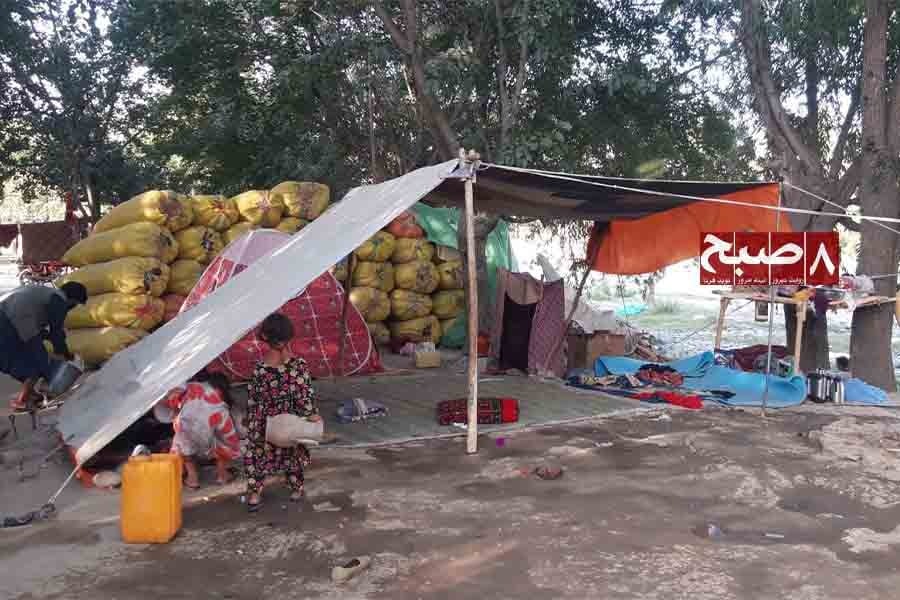
Children gather under a makeshift tent shelter at a Jogi family camp in Badakhshan province. (Photo credit: 8am.media)

Sher Mohammad (pseudonym) says: “I wanted to enroll two of my children in school, but I could not, because they had no tazkira.” His greatest wish, he says, has been for his children to attend school so they would not be forced to live as he has.

He adds: “We consider ourselves people of Afghanistan, but many look at us as outsiders. Our blood was shed here from birth, and we have lived on this land’s water, air and soil; we belong to it.” He complains that Jogis often face taunts and insults in the city and in public places. “We don’t like living off others or begging,” he says, “but we have no farmland, no steady job and no fixed home. That is why we move from place to place and turn to charity and begging to survive.”

How the Jogis Make a Living

Sher Agha (pseudonym), a 20-year-old Jogi man, married two years ago and now has one child. Describing his work, he says: “This year I went to Raghistan district and worked at a gold mine for 300 Afghanis a day, but the work stopped, and I had to go home. Now I have neither work nor money to buy food. There’s no work in the city either, and even when work is available, they won’t hire us. They think local workers are better than Jogi workers.”
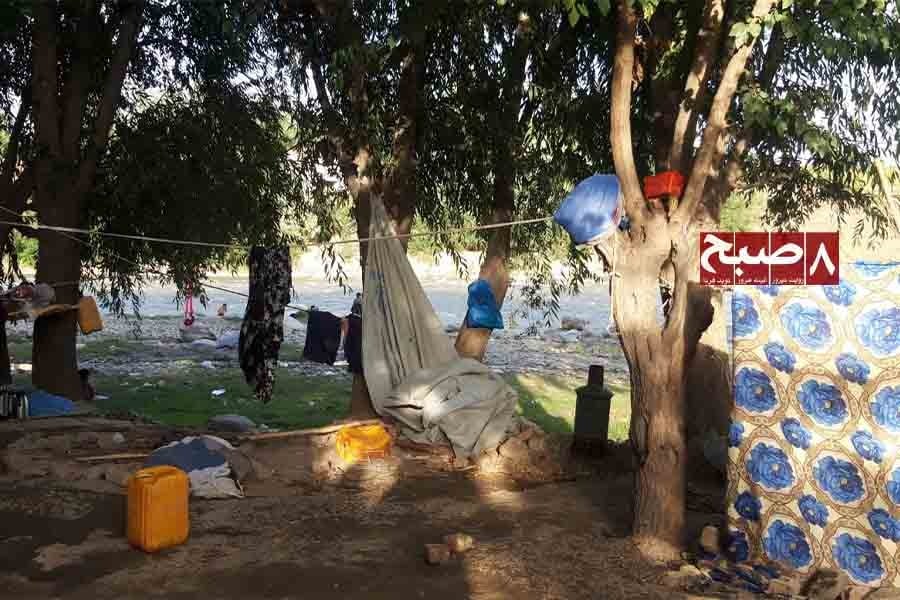
A makeshift camp with hanging bedding and water containers sits along a riverbank near a Jogi settlement. (Photo credit: 8am.media)

Bibi Gul (pseudonym) is one of the women in the community who earns a living through begging and fortune-telling, work she has done since she was 15. “My husband has died, and I have five children,” she says. “Every day I collect rice, flour,r and other food from people’s homes. Sometimes I read fortunes for women, and they give me 50 or 100 Afghanis, which we live on.”

Another Jogi woman reads palms and tells fortunes on the streets and in people’s homes, typically earning 20 to 100 Afghanis in return. She says that since the Taliban returned to power, its forces have cracked down on fortune-telling and palm-reading, and the trade is now in decline.

Limited Social Ties

Despite generations of life in Afghanistan, Jogis say their social ties with other ethnic and social groups remain limited. They attribute this partly to marriage largely within the community, a distinct way of life, and limited family ties beyond it. But some families also blame discrimination and rejection by parts of the wider society.
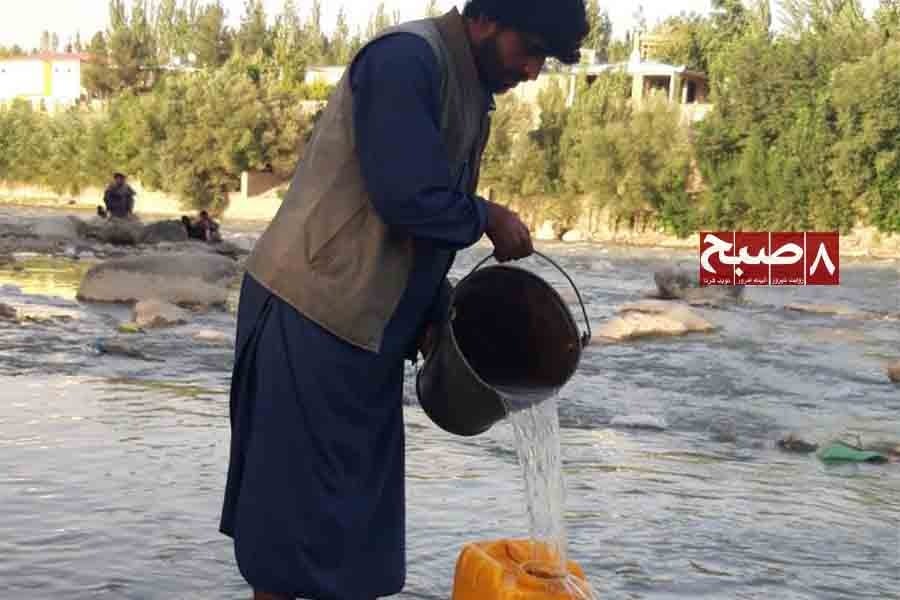
A Jogi man fills a container with river water near a settlement in Badakhshan. (Photo credit: 8am.media)

Farkhunda (pseudonym) says marriage between Jogis and outsiders is rare. “No one outside marries us,” she says, “because we have no name, no wealth and no education.”

Agha Shirin, 54, an elder among the Jogis in Faizabad, has lived in several Afghan provinces and has seen firsthand how limited these social ties can be. “We want close relations with other people, but their view of us has not changed,” he says. “They won’t eat our food, and they won’t form family ties with us.” He says Jogis want closer relationships with others, but discrimination stands in the way.
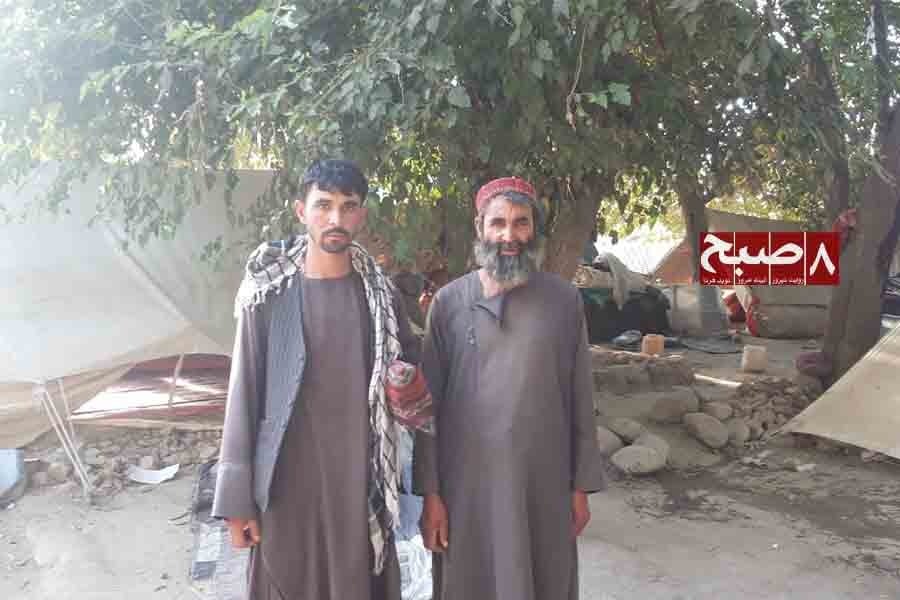
Two Jogi men stand near their tent settlement in Badakhshan province. (Photo credit: 8am.media)

The Jogis live in a village called Kari near Faizabad, the provincial capital of Badakhshan. Several families reportedly live under tents on vacant land owned by someone else. They say summer, with its warmer weather, is easier than winter, when rain, snow and cold make life under canvas far harder.

The United Nations High Commissioner for Refugees (UNHCR) previously listed the Jogis, in its 2024-2027 protection and solutions strategy for Afghanistan, among groups at risk of statelessness and of difficulty obtaining identity documents. The agency said the absence of identity cards across generations, combined with a nomadic lifestyle, is among the barriers preventing these groups from securing identification and confirming their citizenship.


You can read the Persian version of this report here:
در حاشیه جامعه؛ زنده‌گی دشوار جوگی‌ها در بدخشان

ShareTweetSendSendShare

Related Posts

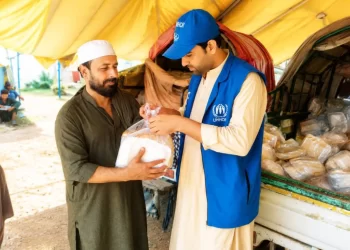
An UNHCR worker hands a hot meal to an elderly Afghan returnee at the Torkham border crossing (Photo: UNHCR)
Afghanistan News

UNHCR Distributes Up to 2,000 Hot Meal Packages Daily in Torkham

16 September 2026 [t_time:1789545068]
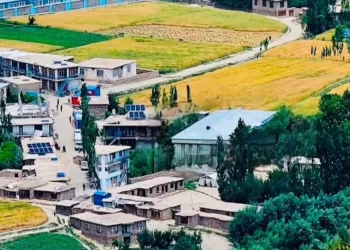
A view of homes and farmland in Darwaz-e-Bala district, Badakhshan province, where residents face long journeys for basic health services. (Photo credit: Exclusive)
Afghanistan News

Maimay’s 20-Bed Hospital Still Non-Operational After Eight Years

15 September 2026 [t_time:1789498676]
A view of the construction site where residents are funding the construction of a secondary school in Yawan, Badakhshan. (Photo credit: Exclusive)
Afghanistan News

Residents Fund Construction of Secondary School in Badakhshan’s Yawan

15 September 2026 [t_time:1789485902]

Latest

Loading latest news...

Popular stories

  • Hamza bin Laden - the son of Osama bin Laden (Photo: Social Media)

    Al-Qaeda Releases Hamza bin Laden Message on 9/11 Anniversary

    Share
    Share Tweet
  • Sajjad Haider Khan: Those with Valid Visas Will Continue Their Studies in Pakistan

    Share
    Share Tweet
  • UN Report Reveals Shifts in Family Attitudes and Rise in Domestic Violence in Afghanistan

    Share
    Share Tweet
  • Taliban Shoot Young Man from Herat After Torturing Him with Hands Tied

    Share
    Share Tweet
  • German Politician Calls for Faster Deportation of Undocumented Afghan Migrants

    Share
    Share Tweet

Podcast

Insights
Insights

Join Lynne O’Donnell for 8AM’s podcast series, Insights.
Lynne talks with generals, diplomats, soldiers, journalists, politicians, activists, people who have front row seats for conflicts around the world, and citizens with a story to tell, happy or sad. For this first series, Afghanistan is the focus. Lynne and her guests talk about the collapse of the republic in August, 2021, and the impact since — for the people of Afghanistan, for the security of the region, for the safety of the world. It’s important, interesting and insightful.

Insights/22: Controlling the Narrative with Mina Sharif
byinsights8am

Controlling the Narrative

Lynne O’Donnell talks with Mina Sharif, author, activist, women’s rights campaigner, educator and mentor. They discuss who controls the narrative and who speaks for Afghanistan’s people when the Taliban appear to have seized control not only of the country but of the message, too.

Have a listen

Insights/22: Controlling the Narrative with Mina Sharif
Episode play icon
Insights/22: Controlling the Narrative with Mina Sharif
Episode Description
Episode play icon
Insights/21: Media Meltdown with Zahra Joya
Episode Description
Episode play icon
Insights/20: Terror Inc with Scott Richards
Episode Description
Episode play icon
Insights/19: Busting Stereotypes with Bushra Gohar
Episode Description
Episode play icon
Insights/18: Media Matters with Waliullah Rahmani
Episode Description
Episode play icon
Insights/17: What Goes Around Comes Around with Sima Samar
Episode Description
Search Results placeholder
Hasht-e Subh

8AM Media, also known as Hasht-e-Subh Daily, stands as Afghanistan's premier independent and non-profit newspaper, resonating as a beacon of journalistic integrity since its establishment in June 2007 by esteemed Afghan journalists and human rights advocates. With a steadfast commitment to citizen journalism and civic education, Hasht-e-Subh Daily has earned its place as the most esteemed publication in the nation.

Publisher: Sanjar Sohail
Email: [email protected]
Executive Director: Parwiz Kawa
Email: [email protected]

Read More

The Rise of Germany’s Far-Right Party and What It Means for Afghanistan’s Asylum Seekers

UN Report: Taliban Continue Human Rights Violations and Restrictions Against Afghanistan Citizens

Travel Agency Fraud: Even the Companies Themselves Fall Victim to Forged Offers

The BRICS Summit: Where Does Afghanistan Stand on the Map of a Changing Global Economy?

Turkish and Qatari Intelligence Delegations in Kabul; Possible Meeting with Hibatullah in Kandahar

Editor’s Choice

Every Saturday morning, 8AM MEDIA English Services Department will guide you through the week’s biggest stories from Afghanistan and the international community.

Subscribe

© 2026 - ©Hasht-e Subh Daily

No Result
View All Result
8am.Media
پښتو ویب‌پاڼه
ویب‌سایت فارسی
اۉزبېکچه ویب‌سایت
  • Home
  • News
    • Afghanistan News
    • World News
  • Opinion
    • Editorial
    • Analysis
  • Reports
    • Daily Reports
    • Investigative Reports
  • Society
    • The story of people
  • Women’s Word
  • Columns
    • Three Years After Afghanistan’s Fall: The Taliban’s Resurgence
    • Towards Equality
    • The Resurgence of the Taliban: Two Years Since Afghanistan’s Fall
    • Hebatullah Report Special Edition
    • Resistance for Education Special Edition
    • Special Column on Taliban’s Education Curriculum
    • Nawroz
  • Interviews
  • Contact Us
    • About Us
    • 8AM MEDIA Annual Awards
    • Submit an Article to Hasht-e-Subh
  • 8am.media

© 2026 - ©Hasht-e Subh Daily