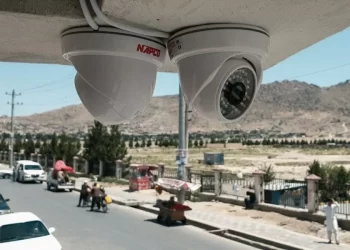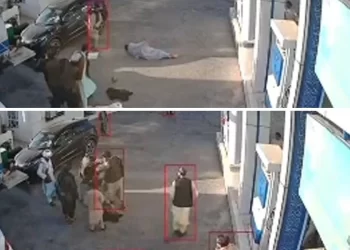

Several Kabul residents have complained about a surge in street and home burglaries across various parts of the city. They say the rise in such incidents has forced them to fall back on traditional, rudimentary security measures to keep intruders out, including placing glass shards, the sharp jagged fragments of broken glass, along the tops of yard walls, as well as reinforcing windows. In recent days, they add, daytime theft of personal belongings has also climbed alongside the already prevalent nighttime burglaries. Residents say the incidents continue despite security cameras installed across many neighborhoods and nightly Taliban patrols, none of which have brought theft under control.
Kabul residents stress that thieves are not limiting themselves to stealing property. In some cases, they are also physically harming people inside their homes. Residents accuse the Taliban of failing to maintain security and say that feelings of insecurity have grown across several city neighborhoods. Some residents claim that certain Taliban members are directly involved in the thefts.
The theft of mobile phones, motorcycles, and other personal belongings has added to the alarm, particularly because victims are increasingly being assaulted during robberies. Residents say the situation has made many families afraid to go out even in the evening hours.
Hassan, a Kabul resident, says burglaries and theft of personal property have been climbing in the city. He claims that some Taliban members, burdened by low pay and economic hardship, have turned to crime to support their families. He adds that a number of these individuals have ties to criminal networks and are involved in other illegal activities beyond theft.
“Theft has increased a great deal in recent days,” Hassan said. “I think it was lower during the Eid holidays. People had already obtained money for the festivities by then, but now that Eid is over, it has gone up again. Ordinary people do not usually do such things, but there are individuals within the Taliban who have ties to various groups and are involved in smuggling and other dealings. These people are trying to secure their futures because they believe they may not remain in power and need to build a livelihood for themselves.”
Hassan added, “If a thief wants to break into a house, he will find a way in regardless. Glass shard security and barbed wire on their own are not enough. It is truly alarming because, beyond theft, killings are also happening. We can only hope these incidents decrease.”
Shekab, another Kabul resident, says theft cases in his neighborhood have also risen in recent days, unsettling the local community. He adds that the growing frequency of such incidents has caused serious concern among families, with many people voicing complaints about the security situation.
“Theft cases have increased in our area, too,” Shekab said. “We keep hearing from family members and acquaintances, near and far, that their homes have been broken into, their phones have been stolen, or their belongings have been taken. This is a serious problem that demands a real solution. People have many grievances, and we share their worry about where this is heading.”
Sultanbeg, another Kabul resident, acknowledges that theft in Afghanistan is not a new problem and has persisted for years, but says the recent spike has brought fresh and heightened concern. He adds that no meaningful action has been taken to address the issue at its root.
“Theft has always been present in Afghanistan, sometimes more, sometimes less, but in recent days it has increased noticeably and made life harder for many people,” Sultanbeg said. Despite years of living with this problem, no effective or lasting measures have been taken to bring it under control. In my view, security cannot be reduced to patrols and checkpoints. Real security only exists when people genuinely feel safe.”
Aminullah, another Kabul resident, points to poverty, unemployment, and dwindling access to education as the main drivers behind the rise in theft. He argues that as unemployment and deprivation deepen, so too do the conditions that enable crime to spread.
“When a country has high levels of poverty and unemployment, and access to education declines, it is natural for social problems to multiply,” Aminullah said. “In many areas where people have limited access to education and few job opportunities, the conditions for such incidents are more pronounced. Some people turn to theft out of poverty and desperation, while others do so out of ignorance.”
These concerns come as the Taliban have announced in recent weeks the arrest of dozens of people on criminal charges in Kabul.
Since retaking control of Afghanistan in August 2021, Taliban officials have repeatedly claimed that nationwide security has been restored and that crime rates have dropped.
Despite those claims, numerous reports of theft, murder, kidnapping, and other criminal incidents in cities across Afghanistan, particularly Kabul, have continued to surface, fueling deep concern among the country’s citizens.
You can read the Persian version of this report here:
افزایش دزدیها در کابل؛ مردم به نصب شیشههای شکسته روی دیوارهای خانههایشان روی آوردهاند