
Several Kabul residents have complained about the improper and unprofessional treatment they’ve received from doctors and health workers at some state-run hospitals. Economic hardship, they say, leaves them unable to afford private hospital care, so they turn to the public system instead, only to encounter poor treatment and inattention from medical staff there.
According to these residents, some doctors and health workers withhold necessary care from patients and their caregivers until they receive so-called “sweetener” payments. This practice, they say, has complicated treatment in some cases and raised serious concerns about patient welfare. Speaking to the Hasht-e Subh Daily, residents said doctors tend to give more attention to patients with personal connections, while those without connections face delays and neglect.
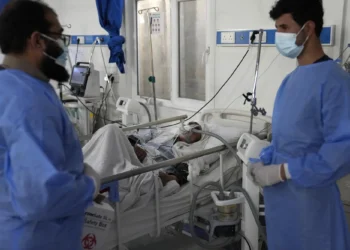
Residents also cited a shortage of nurses at state-run hospitals. In the absence of adequate nursing staff, they said, caregivers are often left to look after patients themselves, despite lacking the skills needed, particularly in emergencies.
Shahram, a Kabul resident, said many low-income families turn to state-run hospitals because they cannot afford private care, only to face poor treatment from some doctors and health workers. Staff, he said, often ignore patients’ and caregivers’ needs and treat them harshly. He added that this negligence has, in some cases, worsened patients’ conditions to the point of bringing them close to death.
Describing his own experience at a state-run hospital, he said: “My father had prostate surgery at Jumhuriat Hospital. His condition grew serious that night, and we asked repeatedly for a doctor to come, but none did. We went up and down four floors, and still no doctor came to his bedside. There weren’t enough nurses either, and the one who was there lacked experience. I was terrified. In the end, I shouted at a doctor that my patient was dying. My father nearly died. Patients without connections were even worse off than we were.”
Karim, another Kabul resident, said some doctors at state-run hospitals focus more on treatment costs than on patients’ actual conditions, on top of treating patients and caregivers poorly. Patients with connections, he said, receive better service and an easier path through the system. Beyond the shortage of beds and overcrowding, he added, caregivers are sometimes forced to pay service staff just to see a doctor or visit their patient. In some cases, he said, caregivers who don’t pay are denied access altogether.
He recounted: “Two months ago, we took my uncle’s daughter to Sehat-e-Tifl Hospital for surgery. A patient is supposed to have a room to themselves, but they put three or four patients in one room. The real trouble starts after surgery: you have to pay for medicine and supplies. Nurses, health workers, even cleaners, they’re all after sweeteners, each one asking the caregiver for money in some way.”
Sakina, another Kabul resident with a similar experience, called on the Ministry of Public Health under Taliban control to more closely monitor how hospital staff treat patients and caregivers. Patients traveling from the provinces to Kabul for treatment, she said, often encounter unexpectedly poor treatment. The problem, she added, isn’t confined to one department; it spans regular staff, nurses, and both night and day shift workers.
“Even when patients do get some attention,” she said, “the way staff treat patients and caregivers is often harsh, ugly, and far from basic human decency. This kind of behavior shows up at every level, from regular staff to nurses to night and day shift workers. Many people who travel from the provinces for treatment are met with care that falls well short of what they expected.”
Patients, she argued, have the right to receive health services without discrimination and with their dignity intact. Limited resources and heavy workloads, she said, are no excuse for mistreatment. “Every patient deserves to be treated with respect, fairness, and accountability. Upholding medical ethics, responding appropriately, and preserving patients’ dignity are core responsibilities of health workers, and they must be upheld under any circumstances.”
This comes as demand at state-run hospitals rises, driven by the growing return of Afghan migrants and the high cost of private treatment.
State-run hospitals in Kabul serve as a primary source of care for low-income families and patients arriving from across the country. Overcrowding, staff shortages, and limited equipment are among the challenges straining these facilities. Alongside these issues, patients have also criticized how staff treat them and the lack of any meaningful response to their complaints.
Some international organizations, in reports on Afghanistan’s health system, have noted that a number of the country’s hospitals face shortages of specialist doctors, medical equipment, and funding.
The World Health Organization (WHO) has said that roughly 150 health centers across Afghanistan have closed or suspended operations since the start of 2026 due to funding shortfalls. In a post on X, the organization said the closures have reduced access to healthcare for millions of people across the country.
You can read the Persian version of this report here:
برخورد نامناسب و کمبود پرستار؛ شکایت بیماران از شفاخانههای دولتی کابل