• 8AM.MEDIA
  • ویب‌سایت فارسی
  • پښتو ویب‌پاڼه
  • اۉزبېکچه ویب‌سایت
  • Podcast
Tuesday, October 20, 2026
Hasht-e Subh
  • Home
  • News
    • Afghanistan News
    • World News
  • Opinion
    • Editorial
    • Analysis
  • Reports
    • Daily Reports
    • Investigative Reports
  • Society
    • The story of people
  • Women’s Word
  • Columns
    • Three Years After Afghanistan’s Fall: The Taliban’s Resurgence
    • Towards Equality
    • The Resurgence of the Taliban: Two Years Since Afghanistan’s Fall
    • Hebatullah Report Special Edition
    • Resistance for Education Special Edition
    • Special Column on Taliban’s Education Curriculum
    • Nawroz
  • Interviews
  • Contact Us
    • About Us
    • 8AM MEDIA Annual Awards
    • Submit an Article to Hasht-e-Subh
  • 8am.mediaBack
Subscribe
No Result
View All Result
  • Home
  • News
    • Afghanistan News
    • World News
  • Opinion
    • Editorial
    • Analysis
  • Reports
    • Daily Reports
    • Investigative Reports
  • Society
    • The story of people
  • Women’s Word
  • Columns
    • Three Years After Afghanistan’s Fall: The Taliban’s Resurgence
    • Towards Equality
    • The Resurgence of the Taliban: Two Years Since Afghanistan’s Fall
    • Hebatullah Report Special Edition
    • Resistance for Education Special Edition
    • Special Column on Taliban’s Education Curriculum
    • Nawroz
  • Interviews
  • Contact Us
    • About Us
    • 8AM MEDIA Annual Awards
    • Submit an Article to Hasht-e-Subh
  • 8am.mediaBack
No Result
View All Result
Hasht-e Subh
No Result
View All Result

Kabul University’s Chemistry Faculty Loses Its Lab Technicians, and Practical Education Pays the Price

Translated by Farhad Farhaad | Originally reported in Persian by Ilya

Mohammad Farhaad Mohammad Farhaad
3 May 2026 - Solar Hijri Date: 1405/02/13 [t_time:1777811031]
Laboratory shelves stocked with chemical materials and equipment sit unused at Kabul University's Faculty of Chemistry, as the absence of qualified technicians has brought practical training to a near standstill. (Photo Credit: Exclusive)

Exclusive

Several students at the Faculty of Chemistry at Kabul University have raised complaints about the absence of professional laboratory technicians at their faculty. They say that before the Taliban takeover, all laboratory technicians at this faculty were women, but following the Taliban’s rise to power, those women were dismissed from their positions, and the faculty is now facing a severe shortage of qualified laboratory staff. The students add that in the absence of professional laboratory technicians, practical lessons are either not taught at all or are delivered at a very low quality. According to them, these challenges have prevented students from receiving proper and standardized practical training, a situation that has cast a shadow of concern over their academic futures. In their view, some scientific subjects cannot be understood without hands-on laboratory work, and this situation has seriously disrupted the learning process.

Speaking to the Hasht-e Subh Daily, these students emphasized that the absence of professional laboratory technicians has significantly reduced the quality of instruction in practical components. They believe that if this situation continues, it will lower the practical knowledge of graduates from this faculty and place them at a disadvantage in academic and professional competitions. They further noted that this situation has caused students to fail to properly acquire even basic laboratory skills.

The students are calling on university officials to act as soon as possible to resolve this problem and to create the conditions necessary for hiring qualified and experienced laboratory technicians.

Ali, one of the students at the Faculty of Chemistry, considers the absence of professional laboratory technicians in the faculty’s laboratories to be deeply troubling. He says that the suspension of women from working at the university has caused this problem, and the individuals currently working in these departments do not possess the required expertise. According to him, laboratory materials and equipment are currently available, but there is no qualified person to conduct experiments or demonstrate chemical processes. He adds that in the past, female laboratory technicians worked in these departments, and practical training was carried out in a regular and standardized manner.

This student says: “At present, the materials in the laboratories are not being properly demonstrated to us. While chemical experiments must be carried out practically, this is simply not possible. All the laboratory technicians were women, but after they were dismissed and women’s work in this department was halted, there is now no one to demonstrate these materials and experiments to students. Chemistry is a completely experimental field and must be taught practically, not limited to textbook lessons alone. Currently, instruction remains largely theoretical, and unqualified individuals are working in the laboratories, which is a matter of serious concern.”

This student emphasizes that chemistry lessons have been confined to textbook content, and the opportunity for hands-on laboratory work has become extremely limited or has nearly disappeared entirely, a situation that he believes could severely reduce the skill level of graduates. He stresses that they have raised this problem with university officials on numerous occasions, but no effective action has been taken so far.

Ali further adds: “When a student graduates without practical training, they will face serious deficiencies in the job market and even in continuing their education. We have complained about this situation many times, but so far it has gone unaddressed. Despite the fact that equipment and materials are available, there is no qualified person to provide practical instruction. The goal of students is not merely to obtain a diploma, but to acquire real and applicable knowledge so that they can be useful to society in the future.”

Sattar (pseudonym), another student at this faculty, says that the majority of students are not even familiar with basic laboratory concepts and chemical materials. He adds that if this situation continues, students will face serious challenges in the job market. According to him, if a chemistry student is not familiar with laboratory materials and chemical compounds, they cannot work effectively in their field.

This student says: “The chemistry disciplines, including organic, physical, inorganic, and analytical chemistry, are in strong need of practical laboratory work. Experiments must be conducted hands-on, because dry and purely theoretical instruction yields no meaningful outcome for students. For instance, one must observe how colors change through chemical reactions, or how cations and anions can be identified. Even in the simplest cases, such as identifying carbon and hydrogen in organic compounds, practical work is required. Without these experiences, a student cannot understand how concepts are applied in practice.”

This student emphasizes that a professional laboratory technician must be hired at this faculty as soon as possible, and the course structure must be reformed. He adds, “Identifying materials and knowing how to use them, including acids, bases, and salts, is critically important, yet these topics are not being demonstrated to students practically. Students should be taught how to use these materials correctly and safely. In addition, equipment such as distillation apparatus and centrifuges is available, but many students are not even familiar with them and have no basic awareness of laboratory work, because these items are not being practically demonstrated to them.”

The Department of Chemistry was established in 1942 as part of the Faculty of Science at Kabul University and was elevated to the Institute of Chemistry in 1971. The institution was recognized as an independent faculty in 2016 and currently encompasses departments of organic, inorganic, analytical, and physical chemistry.

Following the fall of the previous government and the Taliban’s takeover, hundreds of professional university professors left Afghanistan. At the same time, with the suspension of women from working, a large number of female academic staff were barred from continuing their activities at universities, a situation that has now resulted in a widespread shortage of teaching personnel at public higher education institutions. Students are urging university officials to act promptly to resolve this problem and, by recruiting qualified professionals, to create the conditions necessary for standardized practical education.

You can read the Persian version of this report here:

دانشکده کیمیا دانشگاه کابل؛ حذف لابرانت‌ها و سقوط کیفیت آموزش عملی 

ShareTweetSendSendShare

Related Posts

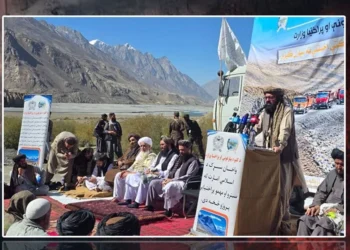
A Taliban official speaks at a podium as men sit on carpets during the inauguration of the Wakhan road in Badakhshan, with snow-capped mountains in the background. (Photo credit: FitratHamd)
Analysis

Wakhan Road: Taliban Hype, Chinese Silence

19 October 2026 [t_time:1792435670]
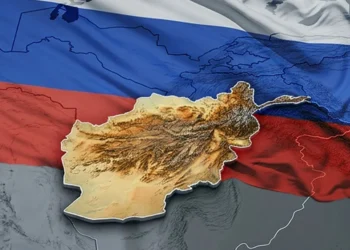
A relief map of Afghanistan is superimposed on the Russian flag, illustrating Afghanistan’s place in Moscow’s geopolitical calculations. (Photo credit: Magnific)
Analysis

Afghanistan in Russia’s Geopolitical Calculations

19 October 2026 [t_time:1792435291]
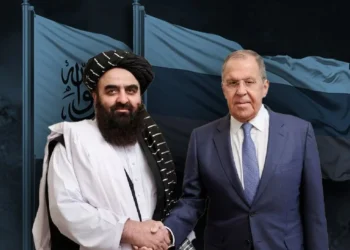
Taliban Foreign Minister Amir Khan Muttaqi shakes hands with Russian Foreign Minister Sergei Lavrov in front of flags, amid growing ties between Moscow and the Taliban. (Photo credit: Social Media)
Analysis

Russia and the Taliban: From Security Pragmatism to Geopolitical Calculation

19 October 2026 [t_time:1792430020]

Latest

Loading latest news...

Popular stories

  • Donald Trump – U.S. President with Benjamin Netanyahu – Israeli Prime Minister in a gathering of people (Photo: Getty Images) Donald Trump – U.S. President with Benjamin Netanyahu – Israeli Prime Minister in a gathering of people (Photo: Getty Images)

    US Senator Criticizes Netanyahu’s Remarks Justifying War Against Iran

    Share
    Share Tweet
  • Trump Again Says War with Iran Will End “Very Soon”

    Share
    Share Tweet
  • US Defense Secretary Warns Iran of “Destruction”

    Share
    Share Tweet
  • UN Report Reveals Shifts in Family Attitudes and Rise in Domestic Violence in Afghanistan

    Share
    Share Tweet
  • Russian Foreign Intelligence Chief Arrives in Kabul

    Share
    Share Tweet

Podcast

Insights
Insights

Join Lynne O’Donnell for 8AM’s podcast series, Insights.
Lynne talks with generals, diplomats, soldiers, journalists, politicians, activists, people who have front row seats for conflicts around the world, and citizens with a story to tell, happy or sad. For this first series, Afghanistan is the focus. Lynne and her guests talk about the collapse of the republic in August, 2021, and the impact since — for the people of Afghanistan, for the security of the region, for the safety of the world. It’s important, interesting and insightful.

Insights/22: Controlling the Narrative with Mina Sharif
byinsights8am

Controlling the Narrative

Lynne O’Donnell talks with Mina Sharif, author, activist, women’s rights campaigner, educator and mentor. They discuss who controls the narrative and who speaks for Afghanistan’s people when the Taliban appear to have seized control not only of the country but of the message, too.

Have a listen

Insights/22: Controlling the Narrative with Mina Sharif
Episode play icon
Insights/22: Controlling the Narrative with Mina Sharif
Episode Description
Episode play icon
Insights/21: Media Meltdown with Zahra Joya
Episode Description
Episode play icon
Insights/20: Terror Inc with Scott Richards
Episode Description
Episode play icon
Insights/19: Busting Stereotypes with Bushra Gohar
Episode Description
Episode play icon
Insights/18: Media Matters with Waliullah Rahmani
Episode Description
Episode play icon
Insights/17: What Goes Around Comes Around with Sima Samar
Episode Description
Search Results placeholder
Hasht-e Subh

8AM Media, also known as Hasht-e-Subh Daily, stands as Afghanistan's premier independent and non-profit newspaper, resonating as a beacon of journalistic integrity since its establishment in June 2007 by esteemed Afghan journalists and human rights advocates. With a steadfast commitment to citizen journalism and civic education, Hasht-e-Subh Daily has earned its place as the most esteemed publication in the nation.

Publisher: Sanjar Sohail
Email: [email protected]
Executive Director: Parwiz Kawa
Email: [email protected]

Read More

Wakhan Road: Taliban Hype, Chinese Silence

Afghanistan in Russia’s Geopolitical Calculations

Abortions Rise in Kabul Amid Worsening Economic Hardship

Russia and the Taliban: From Security Pragmatism to Geopolitical Calculation

Infrastructure Dependence Threatens Economic Sovereignty in the Region

Editor’s Choice

Every Saturday morning, 8AM MEDIA English Services Department will guide you through the week’s biggest stories from Afghanistan and the international community.

Subscribe

© 2026 - ©Hasht-e Subh Daily

No Result
View All Result
8am.Media
پښتو ویب‌پاڼه
ویب‌سایت فارسی
اۉزبېکچه ویب‌سایت
  • Home
  • News
    • Afghanistan News
    • World News
  • Opinion
    • Editorial
    • Analysis
  • Reports
    • Daily Reports
    • Investigative Reports
  • Society
    • The story of people
  • Women’s Word
  • Columns
    • Three Years After Afghanistan’s Fall: The Taliban’s Resurgence
    • Towards Equality
    • The Resurgence of the Taliban: Two Years Since Afghanistan’s Fall
    • Hebatullah Report Special Edition
    • Resistance for Education Special Edition
    • Special Column on Taliban’s Education Curriculum
    • Nawroz
  • Interviews
  • Contact Us
    • About Us
    • 8AM MEDIA Annual Awards
    • Submit an Article to Hasht-e-Subh
  • 8am.media

© 2026 - ©Hasht-e Subh Daily