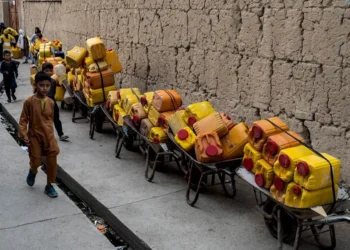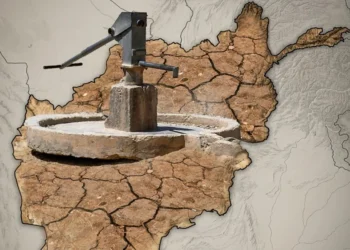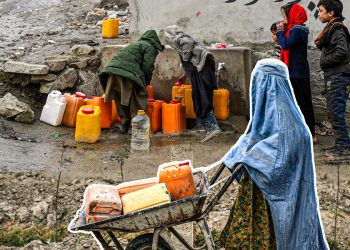

Several Kabul residents are complaining about water shortages, saying they face serious difficulties in securing access to water. According to them, due to the interruption and reduction of the municipal water supply, they are forced to travel long distances every day to purchase water and wait in line for hours. Kabul residents add that with each passing day, finding clean water becomes more difficult, and many families are compelled to obtain the water they need from tankers at high prices. This situation is particularly difficult and concerning for low-income families. Meanwhile, several environmental experts say that climate change and uncontrolled population growth are among the key factors behind Kabul’s water shortage. In their view, reduced rainfall and shifting weather patterns on one hand, and rapid population growth and excessive water consumption on the other, have placed severe pressure on the city’s water resources.
Mohammad Ajmir, a resident of the Kote Sangi area of Kabul, is complaining about the absence of water and says that due to his well drying up and the municipal water supply being cut off, he has been forced to purchase water. Having to stand in line for hours to obtain water, he says, “I have only a cart to make a living with. Both at work and at home, I face the problem of water scarcity. I travel from far distances to bring water. Our well has dried up, and the city water supply is also cut off. We are forced to buy water, but even that water is not always available.”
Safiullah, another Kabul resident, is also complaining about the water shortage. He says that water supply companies, which had installed piping systems in exchange for payments from homeowners, cut off the water flow after a short period, and residents are now forced to travel long distances every day to obtain water.
This Kabul resident adds: “I have come from Qala-e-Wahid all the way to Kote Sangi to get water. We are facing serious water shortages. The companies that were responsible for supplying water to homes either abandoned their work midway or cut off the water after a short time. Every day, large numbers of people come here to get water, and people face tremendous difficulties in accessing it.”
Zamiruddin, a resident of Paghman who has come to Kote Sangi in Kabul to purchase water, is complaining about the lack of water and says he is struggling to find it. He adds, “We are facing a serious water shortage. In the area where we live, there is no water, and we are forced to bring it from far away. The municipal water comes only once every 24 hours, and even then, only for one or two hours. Because of this, we spend the whole day searching for water.”
Roya, a resident of Jangalak in Kabul, is also complaining about the water shortage. She says that water wells are drying up one by one. Roya, who is herself the breadwinner of her family, adds that this situation is very difficult and worrying for low-income families.
She says: “We, the residents of Kabul, have been struggling with the water shortage problem for years. With each passing day, finding clean water becomes harder for us. Many of us are forced to stand in line for hours or purchase water from tankers at high prices. This situation is very difficult and concerning for families with low incomes. Water wells are drying up one by one. In the past, water was readily available, but now we are struggling even to meet our basic daily needs. Our children are suffering from the water shortage, and sometimes they get sick from using contaminated water.”
Meanwhile, Hematullah Shirazi, an environmental expert, says: “Water scarcity, or the depletion of water resources, has two main causes. The first is climate change. In Afghanistan, there is no effective management of water resources, and the country’s soil has also lost its sufficient capacity to absorb rainwater and snowmelt. As a result, instead of seeping into the ground, water runs off as floods, which causes a reduction in both surface and groundwater and ultimately leads to water scarcity.”
Mr. Shirazi adds, “The second reason is human factors. Kabul had the natural resource capacity to support around two million people, but now more than eight million people live there. When there is no proper water management, the population increases, rainfall decreases, and water consumption rises; water resources become severely depleted. On the other hand, the activities of industrial facilities and the agricultural sector have also led to greater consumption of Kabul’s surface water, further intensifying the water crisis.”
This environmental expert says: “Responsible authorities must enact clear and effective regulations for the management of both surface water and groundwater, alongside widespread public awareness campaigns. It is also necessary to allocate a specific budget for water resource management and to construct water reservoirs to prevent water loss. In addition, expanding green spaces and utilizing advanced irrigation systems are important. The unregulated drilling of wells must also be stopped to prevent further depletion of underground water resources.”
Previously, the United Nations Children’s Fund in Afghanistan, UNICEF, had also warned that the city of Kabul would face a severe water shortage by the year 2030.
You can read the Persian version of this report here: