• 8AM.MEDIA
  • ویب‌سایت فارسی
  • پښتو ویب‌پاڼه
  • اۉزبېکچه ویب‌سایت
  • Podcast
Monday, September 28, 2026
Hasht-e Subh
  • Home
  • News
    • Afghanistan News
    • World News
  • Opinion
    • Editorial
    • Analysis
  • Reports
    • Daily Reports
    • Investigative Reports
  • Society
    • The story of people
  • Women’s Word
  • Columns
    • Three Years After Afghanistan’s Fall: The Taliban’s Resurgence
    • Towards Equality
    • The Resurgence of the Taliban: Two Years Since Afghanistan’s Fall
    • Hebatullah Report Special Edition
    • Resistance for Education Special Edition
    • Special Column on Taliban’s Education Curriculum
    • Nawroz
  • Interviews
  • Contact Us
    • About Us
    • 8AM MEDIA Annual Awards
    • Submit an Article to Hasht-e-Subh
  • 8am.mediaBack
Subscribe
No Result
View All Result
  • Home
  • News
    • Afghanistan News
    • World News
  • Opinion
    • Editorial
    • Analysis
  • Reports
    • Daily Reports
    • Investigative Reports
  • Society
    • The story of people
  • Women’s Word
  • Columns
    • Three Years After Afghanistan’s Fall: The Taliban’s Resurgence
    • Towards Equality
    • The Resurgence of the Taliban: Two Years Since Afghanistan’s Fall
    • Hebatullah Report Special Edition
    • Resistance for Education Special Edition
    • Special Column on Taliban’s Education Curriculum
    • Nawroz
  • Interviews
  • Contact Us
    • About Us
    • 8AM MEDIA Annual Awards
    • Submit an Article to Hasht-e-Subh
  • 8am.mediaBack
No Result
View All Result
Hasht-e Subh
No Result
View All Result

Kabul’s Daily Battle for Water: A Capital Gasping with Thirst

Elina Qalam Elina Qalam
18 June 2025 - Solar Hijri Date: 1404/03/28 [t_time:1750235348]
A resident fills a container with water from a scarce tap in Kabul, highlighting the ongoing water crisis. (Photo Credit: 8am.media)

Residents of various areas in Kabul say they are facing significant difficulties in securing water due to the escalating water shortage. They note that they rely on water tankers that supply different parts of the city to meet their needs. According to these residents, they spend between 400 and 500 Afghanis weekly to purchase water, but this amount is insufficient for their daily requirements. They warn that water resources are depleting daily, making access to potable water increasingly challenging.

Several Kabul residents, in interviews with the Hasht-e Subh Daily, expressed concerns about the water scarcity in their areas, stating they are forced to bear high costs every week to buy water due to the lack of reliable water sources. They add that in some areas, people must wait in long queues to obtain a few barrels of water, enough for only a week. According to these residents, some have even abandoned their homes due to the water shortage. They urge the Taliban to take immediate action to address the water crisis in the capital.

Kawoosh (pseudonym), a resident of Kabul’s fourth district, says he purchases 80 liters of mineral water every two days to meet his family’s basic needs. He notes that household water pipes do not provide a consistent supply, and well water is either dry or of very poor quality.

He adds, “We live in Kabul’s fourth district. The water level in wells here has dropped significantly and is no longer usable. Our well is 120 meters deep, but its water is neither sufficient in quantity nor suitable in quality. It cannot even be used for cooking. We buy 80 liters of water every two days, but in the hot summer days, this amount is not enough for our household needs.”
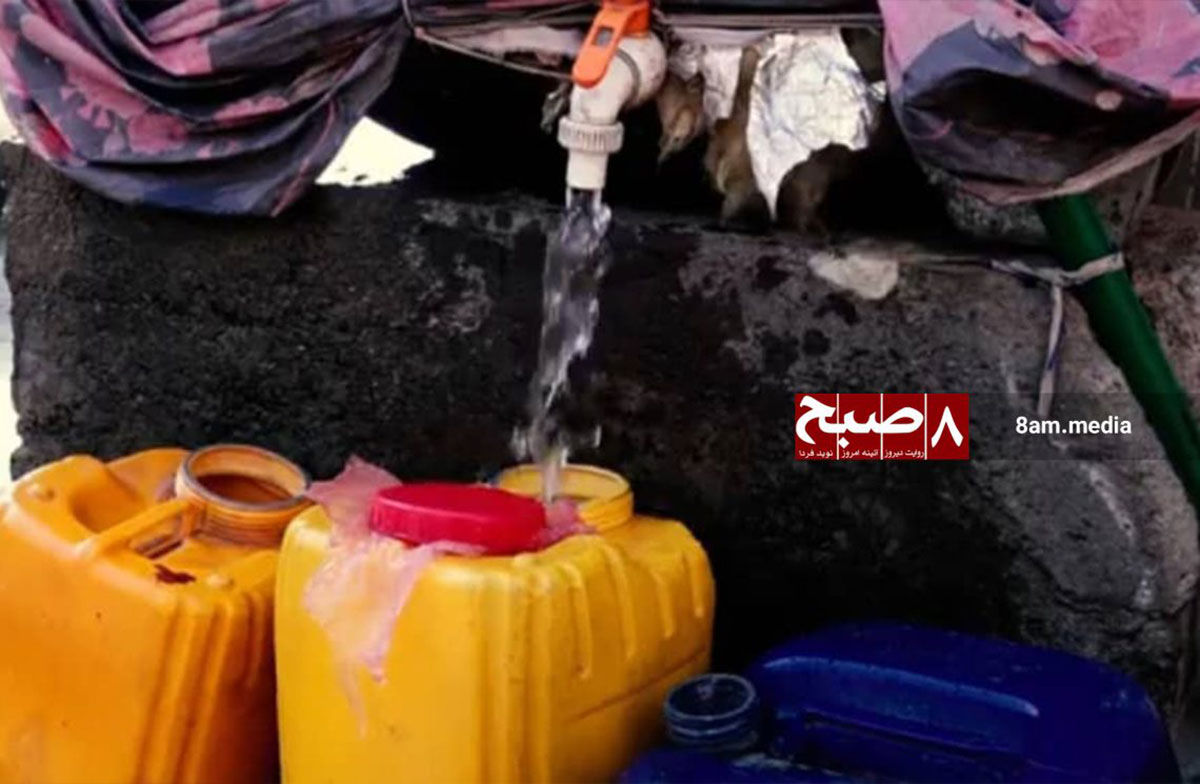
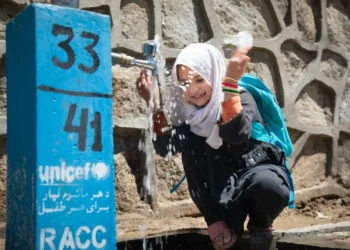
Residents collect water from a limited tap into containers in Kabul, underscoring the severe water scarcity.

Ubaid (pseudonym), another resident of the fourth district, says accessing water has become a daily struggle for him and many others. He warns that if the Taliban do not address this crisis seriously, residents of many parts of the capital will soon face even greater challenges.

“The situation is such that clean water is unavailable in any part of Kabul. This is the second time we’ve had to relocate due to a lack of water. Unfortunately, the new area also lacks usable water, which is entirely unsuitable for drinking. As a result, we rely on mineral water, priced at one Afghani per liter. Our household consumes between 20 and 30 liters of water daily.” Ubaid explains.

The water shortage in western Kabul has also become a daily challenge for residents, with many repeatedly complaining about inadequate access to water.

Sitayish (pseudonym), a resident of Kabul’s thirteenth district, says her family uses well water for washing dishes and mineral water for drinking, noting that the lack of clean drinking water has become a serious issue for them. She highlights the high cost of water, adding that securing potable water places a heavy financial burden on families.

“We are currently facing a severe water shortage. While people are grappling with poverty and economic crises, we are forced to buy every 10 liters of water for 10 Afghanis. How can families, who are struggling even for a single Afghan, afford these costs?” She believes the persistent lack of sufficient water access remains a constant challenge for Kabul residents. She says.

Sodaba (pseudonym), a resident of Kabul’s seventeenth district, says the Taliban’s neglect of the capital’s water needs could lead to widespread migration and exacerbate people’s hardships. She notes that Kabul’s groundwater has become contaminated due to unregulated sewage well digging and is no longer usable.

She adds, “Kabul’s residents have become very negligent. The modern sewage wells they’ve dug have polluted the groundwater. Now, the water is unusable, and some families have been forced to migrate. Yet, the Taliban shows no concern for this situation and fails to see how much people are suffering.”
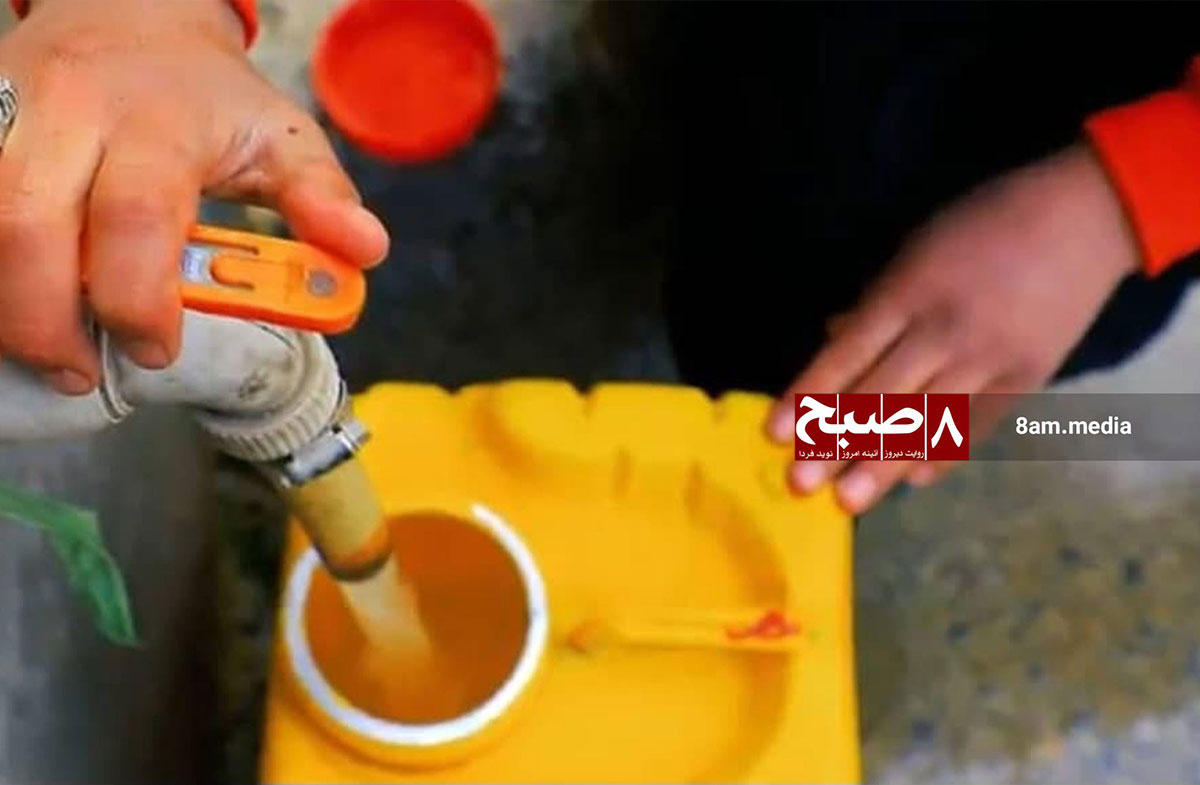
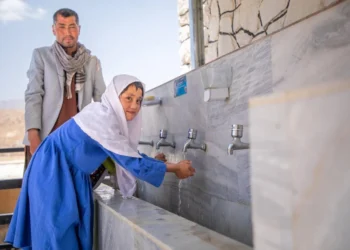
A child operates a tap to fill a container with water in Kabul, reflecting the daily struggle for water access.

Khairkhana, Dasht-e Barchi, Deh Khodaidad in Kabul’s sixteenth district, Kart-e Naw, and other areas of Kabul are among the regions where residents struggle to access potable water.

Meanwhile, the International Organization for Migration (IOM) has released a new report on the vulnerability of Afghanistan’s citizens to climate change. According to the report, published on Monday, June 16, 2025, nearly five million people were affected by environmental disasters in the first three months of 2025.

The report states that Afghanistan saw approximately 175,000 cases of internal displacement during this period, with 79 percent of these individuals forced to leave their homes due to environmental disasters.

The report further notes that climate-related events and natural disasters have directly caused displacement due to livelihood challenges. In total, nearly 396,000 people in Afghanistan were forced to abandon their homes during this period, with 171,926 migrating abroad.

Previously, the non-governmental organization Mercy Corps reported that Kabul’s groundwater levels have dropped by up to 30 meters over the past decade due to rapid urbanization and climate-related water crises, with nearly half of the city’s wells, the primary source of drinking water for residents, now dry.

According to the report, water extraction currently exceeds the natural replenishment of groundwater by 44 million cubic meters annually.

The Japan Times, in a report titled “‘Serious problem’: Afghan capital losing race against water shortages,” stated that the situation in Afghanistan’s capital is visibly worsening. Citing data and expert opinions, the report warned that without action to address Kabul’s groundwater, the city could have no groundwater left by 2030.

The report added that population growth has outpaced urban planning, and climate change has reduced rainfall, severely impacting Kabul’s groundwater reserves.

You can read the Persian version of this report here:

نبرد روزانه برای آب در کابل؛ پایتختی که با تشنه‌گی نفس می‌کشد 

ShareTweetSendSendShare

Related Posts

A dry riverbed and low water flow are seen along the Tarinkot River in Uruzgan province, as residents await construction of the Aghajan Dam. (Photo credit: 8am.media)
Daily Reports

Uruzgan Residents: Two Years After Groundbreaking, Aghajan Dam Construction Still Not Started

27 September 2026 [t_time:1790532173]
A loudspeaker used by a cart vendor sits among stacked bottles at a roadside stall in Kabul amid rising complaints of noise pollution. (Photo credit: 8am.media)
Daily Reports

Kabul Residents: Noise Pollution Disrupting People’s Peace and Sleep

27 September 2026 [t_time:1790517220]
A freshly dug well and withered, uprooted fig branches reflect the deepening water crisis facing orchards in Kandahar province. (Photo credit: 8am.media)
Daily Reports

Kandahar Drought: 30 Percent of Orchards at Risk of Drying Up

22 September 2026 [t_time:1790084129]

Latest

Loading latest news...

Popular stories

  • Surveillance footage shows Taliban fighters surrounding and shooting a bound man in Herat. (Photo credit: Social Media)

    Taliban Shoot Young Man from Herat After Torturing Him with Hands Tied

    Share
    Share Tweet
  • Al-Qaeda Releases Hamza bin Laden Message on 9/11 Anniversary

    Share
    Share Tweet
  • UN Report Reveals Shifts in Family Attitudes and Rise in Domestic Violence in Afghanistan

    Share
    Share Tweet
  • Pakistani Army Says Five Killed Over Alleged Links to Terrorism

    Share
    Share Tweet
  • Afghanistan: A New Battlefield as Iran and America Redraw the Taliban’s Role in Regional Power

    Share
    Share Tweet

Podcast

Insights
Insights

Join Lynne O’Donnell for 8AM’s podcast series, Insights.
Lynne talks with generals, diplomats, soldiers, journalists, politicians, activists, people who have front row seats for conflicts around the world, and citizens with a story to tell, happy or sad. For this first series, Afghanistan is the focus. Lynne and her guests talk about the collapse of the republic in August, 2021, and the impact since — for the people of Afghanistan, for the security of the region, for the safety of the world. It’s important, interesting and insightful.

Insights/22: Controlling the Narrative with Mina Sharif
byinsights8am

Controlling the Narrative

Lynne O’Donnell talks with Mina Sharif, author, activist, women’s rights campaigner, educator and mentor. They discuss who controls the narrative and who speaks for Afghanistan’s people when the Taliban appear to have seized control not only of the country but of the message, too.

Have a listen

Insights/22: Controlling the Narrative with Mina Sharif
Episode play icon
Insights/22: Controlling the Narrative with Mina Sharif
Episode Description
Episode play icon
Insights/21: Media Meltdown with Zahra Joya
Episode Description
Episode play icon
Insights/20: Terror Inc with Scott Richards
Episode Description
Episode play icon
Insights/19: Busting Stereotypes with Bushra Gohar
Episode Description
Episode play icon
Insights/18: Media Matters with Waliullah Rahmani
Episode Description
Episode play icon
Insights/17: What Goes Around Comes Around with Sima Samar
Episode Description
Search Results placeholder
Hasht-e Subh

8AM Media, also known as Hasht-e-Subh Daily, stands as Afghanistan's premier independent and non-profit newspaper, resonating as a beacon of journalistic integrity since its establishment in June 2007 by esteemed Afghan journalists and human rights advocates. With a steadfast commitment to citizen journalism and civic education, Hasht-e-Subh Daily has earned its place as the most esteemed publication in the nation.

Publisher: Sanjar Sohail
Email: [email protected]
Executive Director: Parwiz Kawa
Email: [email protected]

Read More

Taliban Say Over 18 Million People in Afghanistan Have Received Electronic ID Cards

Who Gets to Tell the Story of Afghanistan’s Collapse?

Why Did Pakistan Strike After Mediation?

Kabul Youth Struggle to Exercise Amid Shortage of Sports Facilities and High Fees

From Unemployment to Religious Gatherings: Is the Tablighi Jamaat Filling Society’s Void With Spectacle?

Editor’s Choice

Every Saturday morning, 8AM MEDIA English Services Department will guide you through the week’s biggest stories from Afghanistan and the international community.

Subscribe

© 2026 - ©Hasht-e Subh Daily

No Result
View All Result
8am.Media
پښتو ویب‌پاڼه
ویب‌سایت فارسی
اۉزبېکچه ویب‌سایت
  • Home
  • News
    • Afghanistan News
    • World News
  • Opinion
    • Editorial
    • Analysis
  • Reports
    • Daily Reports
    • Investigative Reports
  • Society
    • The story of people
  • Women’s Word
  • Columns
    • Three Years After Afghanistan’s Fall: The Taliban’s Resurgence
    • Towards Equality
    • The Resurgence of the Taliban: Two Years Since Afghanistan’s Fall
    • Hebatullah Report Special Edition
    • Resistance for Education Special Edition
    • Special Column on Taliban’s Education Curriculum
    • Nawroz
  • Interviews
  • Contact Us
    • About Us
    • 8AM MEDIA Annual Awards
    • Submit an Article to Hasht-e-Subh
  • 8am.media

© 2026 - ©Hasht-e Subh Daily