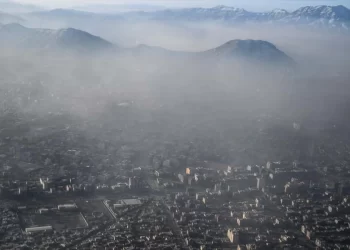
Many residents of Kabul now speak with growing anxiety about the spread of non-standard high-rise buildings across the city. They say builders have ignored Kabul’s limited capacity, and as a result, daily life has become harder and environmental damage more severe. At a time when the city already struggles with water shortages, heavy air pollution, and weak urban services, residents warn that continued high-rise construction will only deepen these crises. They argue that the Taliban should stop the city’s irresponsible expansion instead of issuing permits and collecting money from builders.
Several residents told the Hasht-e Subh Daily that Kabul was once a livable city, back when its population was smaller, and its agricultural land and water resources were still intact. Over the past three decades, however, waves of people moving in from rural areas and the return of migrants from neighboring countries have pushed the city far beyond its natural limits. Green spaces and farmland have steadily disappeared, replaced by housing and industrial zones, while underground water reserves have sharply declined. In the words of these residents, Kabul has reached an environmental breaking point and is now gasping for its last breaths.
Jamila, a Kabul resident, voices deep concern about the unchecked rise of high-rise buildings. She says the city can no longer absorb more people, and each new building puts extra strain on already scarce water resources, worsening the water crisis.
She explains, “Across Kabul, individuals and companies receive permits from district offices and build high-rise buildings everywhere. This has made the situation worse than before and must be stopped. Many neighborhoods already lack water, the city is heavily polluted, and public transport cannot handle the current population. If this continues, conditions will deteriorate further and demand serious attention.” Jamila believes this path will lead Kabul into even deeper crises.
Shahir, another resident, says most buildings in Kabul rise without proper standards and offer no green spaces or parking. He says this neglect has intensified traffic congestion and increased environmental pollution. In his view, authorities should stop concentrating construction in the city center and instead build homes and markets on the outskirts. Such a shift, he believes, would draw people away from central Kabul and reduce pressure on the city.
He adds, “Today, ten-story buildings go up in Kabul without any standards. They have no green areas and no parking. Dozens of cars line up behind each building, making traffic even worse. Instead of building more high-rises, factories and shops should be created so people can find work and stop flooding into the city.”
Ekramuddin, another resident, says builders ignore urban planning principles entirely, while the Taliban remain indifferent. He adds that Kabul’s population grows every day beyond what the city can handle. While capitals everywhere are crowded, he says, other countries still provide basic services like water, electricity, gas, public transport, and environmental protection. In Kabul, he argues, no real oversight exists. People build whatever they want, and each day brings another new building, without any concern for the city’s limits or its people.
Ahmad Zubair, also a Kabul resident, says high-rise buildings may seem efficient because they take up less land, but they place enormous pressure on essential infrastructure. He notes that other countries face similar challenges, but they manage them better because they have stronger institutions, better facilities, and effective population planning systems.
He explains that the history of urban planning shows a clear pattern. When land and resources become scarce, and populations concentrate, cities grow upward. While vertical construction saves space, it packs more families into one area. This density increases demand for water, electricity, and social services, directly reducing access to safe drinking water.
Environmental experts agree that the people of Afghanistan need reconstruction and development, but they warn that building at any cost threatens the environment. They say many current projects in Kabul ignore the basic requirements of sustainable living.
Sayed Mohammad Sulaimankhail, an environmental expert, says decades of war have left people hungry for rebuilding, but haste should never replace careful planning. He stresses that construction should not overlook environmental protection, sewage systems, water management, and other foundations of sustainable life. He argues that every project should include green spaces, responsible use of groundwater, and proper waste management to secure a livable city and country for future generations.
Despite public calls to stop multi-story construction, the Taliban have already permitted buildings of up to ten stories. Residents say these structures have added to existing problems such as water shortages, air pollution, and other urban challenges, making life in the city increasingly difficult.
Mercy Corps has warned that nearly six million people in Kabul face a life-threatening water shortage. The organization reports that almost half of the city’s deep wells have dried up and warns that if current trends continue, Kabul could face complete water depletion by 2030.
The organization also notes that groundwater levels in Kabul have fallen by about 30 percent over the past decade. Rapid urban growth combined with climate pressures has played a major role in worsening the capital’s water crisis.
The Guardian has reported that Kabul withdraws around 44 million cubic meters more water each year than its groundwater can naturally replenish. According to the report, if this pattern continues, all underground water sources in Kabul could dry up within less than five years.
You can read the Persian version of this report here: