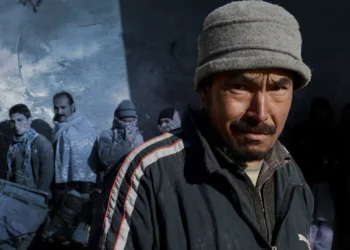
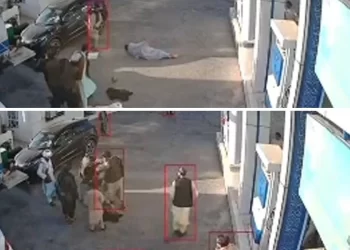
The recent earthquake in Kunar has caused immense human and material losses for the residents of the province. What is most disturbing, however, is the Taliban’s failure and inability to rescue survivors and provide relief in the aftermath of the disaster. When the Taliban lack even the most basic familiarity with modern governance and run state affairs solely according to the whims of their leader, Hibatullah Akhundzada, how can one expect them to manage a crisis in the public interest? Akhundzada, well-known for issuing decrees that restrict citizens’ freedoms, has so far remained silent, issuing neither a statement nor a message regarding the Kunar earthquake. This silence reflects nothing but the Taliban’s indifference toward the fate of the victims.
Emergencies require skills and techniques that go far beyond routine governance skills, which the Taliban neither understand nor respect. Their inability to grasp the fundamentals of crisis management only deepens the disaster. Instead of being contained, the aftermath of such crises often brings further devastation: more lives lost, more homes destroyed. The Taliban’s financial resources are indeed limited, leaving them ill-equipped to cope with large-scale disasters such as floods and earthquakes. Yet, with effective and competent management, even scarce resources can be deployed far more efficiently to stabilize conditions during an emergency.
On top of this incapacity, the Taliban’s restrictions on daily life have produced deadly consequences in the wake of the earthquake. Reports indicate that several injured women and girls died because there were no female doctors available at local hospitals, a direct result of the Taliban’s misogynistic policies. Under Taliban rules, male doctors are prohibited from treating female patients, even when no women doctors are present. Most women physicians, facing Taliban-imposed restrictions, have resigned or been forced into house arrest. It is worth recalling that even during the years of the Republic, provinces like Kunar received little attention when it came to women’s education, and the number of female doctors in the region and its neighboring provinces was already limited. But with the Taliban’s return to power, even that faint light of progress has been extinguished.
International sanctions and Afghanistan’s isolation only deepen the country’s suffering during emergencies. Because the Taliban regime lacks international legitimacy, most governments have limited themselves to offering condolences rather than mobilizing meaningful assistance. Yet immediate aid deliveries and the dispatch of rescue teams from near and far could help contain the disaster’s fallout. Ongoing sanctions and the reluctance of most states to engage formally with the Taliban have constrained relief efforts, raising the toll in both lives and property. Several governments fear their contributions will be siphoned off by the Taliban instead of reaching those in need. Britain’s Foreign Office, for example, has stated that its assistance will be delivered in ways that prevent Taliban misuse. While this approach is understandable, in urgent circumstances it risks arriving too late to matter. Compounding the problem, the Taliban have not formally appealed to the world for immediate relief, or perhaps lack the diplomatic capacity to persuade states to step in during emergencies.
The reality is that in moments of crisis, the international community is far more inclined to support a country that is strong and governed by a legitimate state. Weak states, even in emergencies, are easily forgotten; few governments will take their plight seriously. This reflects the nature of the international order, where power and legitimacy dictate attention. A country facing catastrophic natural disasters must either wield influence or possess an active diplomatic apparatus, two things the Taliban utterly lack, leaving the Afghan people to bear the consequences.
Grassroots solidarity and the mobilization of independent charities remain crucial in moments of disaster. Yet the Taliban’s style of governance has made civic space so restrictive and suffocating that even in extraordinary circumstances, Afghans often struggle to rally around one another. Worse still, the Taliban rarely welcome popular initiatives, dampening citizens’ willingness to step forward and help one another in times of dire need.
You can read the Persian version of this analysis here: