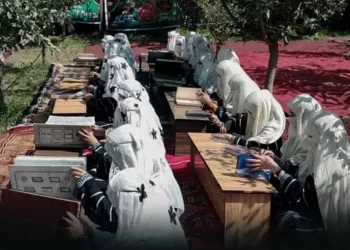
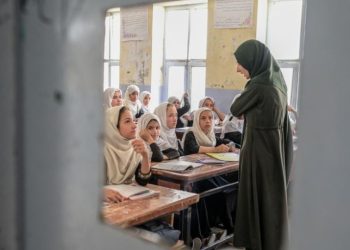
As soon as the Taliban regained power in Afghanistan, they initiated controversial measures, including a gradual, step-by-step exclusion of girls from education. They embarked on extensive Madrassa construction and attempted to change the curriculum of schools and universities to align with their ideology, transforming these institutions into platforms for promoting their group policies and purging them of any teachers not fully compliant with Taliban edicts. Recently, the Taliban’s Minister of Higher Education announced that they had prepared a new curriculum for schools and universities, mentioning the elimination of certain subjects and introducing “good innovations.” It remains unclear what exact changes have been made to the curriculum, but some reports indicate that the Taliban have increased the number of religious subjects overall while reducing both the number and the hours of secular subjects.
The Taliban believe that public distrust towards them stems from cultural invasion and Western media propaganda. Therefore, their experts seek ways to neutralize this influence and propaganda. The group assumes that Westerners, by designing curriculums to their liking, have brainwashed people against the Taliban’s emirate system. The Taliban never admit their mistakes, considering the actions of their top leaders and decision-makers to be fully compliant with Islamic standards. Consequently, any criticism of the group and its leaders is perceived as an attack on Islam, rooted in foreign conspiracies. The three-year performance of the Taliban has revealed that their main focus is on whitewashing their image, using the educational content of schools and universities as a tool in this effort. They are unconcerned with how their curriculum aligns with modern, global standards; instead, they worry about the neutrality and critical nature of the educational content. They expect schools and universities to be mouthpieces for the Taliban’s cultural, economic, political, and social policies, ruthlessly suppressing any deviation from this path.
The ideological and political approach of the Taliban to the academic curriculum of schools and universities will undoubtedly have long-term consequences, posing risks to the country for many years. Some of these consequences are outlined below:
1. After the collapse of the Republic, a significant portion of the efficient young workforce emigrated. Coupled with Afghanistan’s longstanding human capacity issues due to wars and prolonged turmoil, the country often relies on external forces to manage affairs. Given these two factors, the curriculum of schools and universities should be designed to meet the country’s needs and produce a generation capable of addressing challenges competently. However, the Taliban’s stubborn insistence on incorporating their political and group views into the curriculum degrades the quality of education, resulting in generations unable to cope with the complexities of the modern world. Instead, their minds are filled with empty, ideological, and partisan slogans. Unfortunately, the Taliban do not consider the fate of individuals; their priority is maintaining their single-group rule, leading the country to nothing but disaster and ruin.
2. Even during the Republic, the curriculum of Afghan schools and universities was not devoid of extremist religious views. However, it was gradually improving, albeit slowly. The Taliban’s return has nullified all those efforts. With the Taliban’s changes, the public perception is that the curriculum is now entirely in service of religious extremism.
The Taliban are unaware of modern perspectives on curriculum development, believing that promoting their extremist religious and political views is paramount. Unfamiliar with modern governance, they think that those in power own the lives, properties, and dignity of the people, with the right to make any decision regarding them. In the Taliban’s view, controlling how people think is within their jurisdiction, using education as a tool to brainwash and reshape minds to serve their purposes. They see the curriculum as the best means to subdue the populace, relentlessly pushing their agenda.
3. The theories of Taliban ideologues, whether written, audio, or visual, are now widely accessible. A common theme is the denial of cultural diversity and religious pluralism. The Taliban is incompatible with any form of diversity, labeling, and suppressing dissenters. Changing the curriculum inevitably adjusts it against other Islamic sects and groups, institutionalizing uniformity and singularity. Afghanistan has historically suffered from oppressive, unity-seeking ideologies, but the Taliban’s resurgence has exacerbated religious despotism and the imposition of beliefs on others.
The Taliban aims to reduce multiple religious interpretations to a single reading through curriculum changes, cultivating students to be intolerant and dismissive of others’ beliefs and opinions. While the short- to mid-term effect may strengthen the Taliban’s power base, it acts like a deadly poison for Afghan society, potentially leading to bloody and fatal outcomes.
4. One consequence of the curriculum changes will be the spread of misogyny. Abdul Hakim Haqqani, the Taliban’s Supreme Court Chief, clearly stated in a book published early in the Taliban’s rule that women in the Taliban emirate lack human dignity, with their roles confined to childbirth and serving their husbands. Haqqani explicitly said that men are superior to women in every aspect and that women are intellectually deficient, leaving the house contrary to religious values and Afghan traditions. When Taliban officials hold such degrading views on women, their curriculum changes will inevitably reflect these misogynistic views, indoctrinating millions of students with them. This development will escalate the spread of misogynistic thinking in society, further exacerbating the severe challenges women already face. The Taliban’s global notoriety for misogyny means they will seek to align the rest of society with their views to comfortably implement their anti-women policies.
While Afghans need religious education, this can be effectively provided by families, communities, and mosques. Given this, schools and universities should prioritize modern, contemporary education. Facing daily challenges in the modern world requires creative, up-to-date learning. Afghanistan needs specialists in various fields to progress, achievable only by taking contemporary education seriously in schools and universities. Ideologizing education produces individuals who demand from the world, spreading hatred and prejudice, opposing both East and West, and promoting discrimination and inequality, yet relying on others’ achievements in human knowledge and technology. The Taliban’s narrow-minded policies towards education not only fail to advance these institutions but lead to a serious, horrific regression with long-lasting consequences.
You can read the Persian version of this analysis here: