March 8, International Women’s Day, arrives at a time when women in Afghanistan have been deprived of their most basic human rights by the Taliban. This group, through the issuance of dozens of decrees, has completely excluded women and girls from all aspects of public life, pushing them to the margins of society. The Taliban’s repressive actions have been described by civil society organizations and human rights groups as crimes against humanity, gender apartheid, and gender discrimination. Currently, girls are completely deprived of the rights to education, employment, recreation, sports, gender equality, access to parks and public baths, travel, driving, and participation in power and politics.
On the occasion of March 8, dozens of women’s protest movements, human rights activists, civil society organizations, and members of political groups have issued statements condemning the Taliban’s policies toward Afghan citizens, particularly women and girls. The United Nations Secretary-General, in a recent report, expressed concern over the widespread violation of women’s rights by the Taliban, stating that over the past three months, the group has imposed even more severe restrictions on women and girls in Afghanistan.
March 8 arrives as millions of women and girls in Afghanistan have been erased from society by the Taliban and stripped of their most fundamental rights. Currently, several million women and girls are confined to their homes, banned from participating in social life. Over the past three years, the Taliban have aggressively suppressed and marginalized women and girls.
Under the policies imposed by the Taliban, women are prohibited from receiving education, working, traveling, engaging in sports, driving, and participating in various aspects of public life. Their voices are deemed “awrah” (immodest and inappropriate for public expression). During this period, domestic violence, sexual assaults, forced marriages, and child marriages have increased. The Taliban have attempted to ban secular schools and establish religious schools to attract girls and women, aiming to use them for future recruitment. The Hasht-e Subh Daily has previously published multiple reports on this issue.
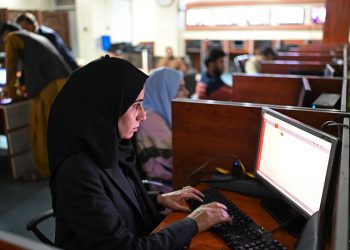
Alongside other extensive bans on women and girls, the Taliban have also prohibited the broadcasting of female voices on radio stations in several provinces. Currently, only a few women work in visual media, and those who do are forced to wear mandatory hijabs and face masks. Women’s workplaces are also segregated from men, and their presence in offices alongside male colleagues is forbidden. Previously, a Taliban official in Herat had demanded that television stations prevent women and girls from appearing on screen to avoid “provoking” men.
Taliban’s Law for the Propagation of Virtue and Prevention of Vice and Increased Pressure on Women
The Taliban’s so-called Law for the Propagation of Virtue and Prevention of Vice serves as one of the main sources of widespread restrictions against women in Afghanistan. According to this law, a woman’s voice is considered “awrah,” and her presence in society without necessity is forbidden. Under this law, women must cover all parts of their bodies, including their faces and hands. Even listening to women recite religious poetry or the Quran is deemed impermissible.
Article 13 of this law states: “Covering the entire body of a woman is mandatory. Hiding a woman’s face is necessary to prevent temptation. A woman’s voice (singing, reciting even religious poetry, or Quranic recitation in public) is considered awrah.” Another clause of this article states: “If a mature woman must leave her house for a necessary reason, she is obliged to cover her voice, face, and body.”
This law grants Taliban morality police the authority to stop and punish any woman who does not cover her face. Furthermore, it empowers them to prevent drivers from transporting unveiled women or those traveling without a male guardian.
The Taliban’s Law for the Propagation of Virtue and Prevention of Vice has been condemned internationally, including by the United Nations Security Council. The majority of Security Council members strongly condemned this law and called for its immediate repeal. Only China, Russia, and Algeria refrained from signing the statement.
Richard Bennett, the UN Special Rapporteur for the Situation of Human Rights in Afghanistan, stated in a recent report presented at the 58th session of the Human Rights Council that no one is safe from the Taliban’s Law for the Propagation of Virtue and Prevention of Vice.
Women’s Protest Movements React to March 8
On the occasion of March 8, dozens of women’s protest movements inside and outside Afghanistan have once again raised their voices against the Taliban’s policies. These movements, through separate statements and recorded videos, have described the situation of women in Afghanistan as catastrophic and have called for gender apartheid to be recognized as a crime against humanity.
Afghanistan women protesters, in their statements, have emphasized that they will continue their struggle until the establishment of a democratic and inclusive government. They have declared that they will stand firm to liberate the country from Taliban control and will not cease their civil resistance against the group’s oppressive policies.
Women’s protest movements, through videos and public statements, have expressed concerns over sexual harassment, torture, and rape in Taliban detention centers, gender apartheid, threats, and widespread poverty among women. Every statement highlights the crisis facing Afghanistan women, including rising poverty, increasing suicides, forced and underage marriages, and the coercion of young girls into marriages with Taliban officials and fighters.
Meanwhile, the Spontaneous Movement of Protesting Women in Afghanistan has called for the overthrow of the Taliban regime. According to this movement, the only way to secure women’s rights is to eliminate the Taliban regime, and they will not beg for rights from any oppressive force. The movement has asserted that the Taliban lack legitimacy, have taken Afghanistan hostage, and have enslaved all women and citizens of the country.
At the same time, Parwana Ebrahimkhil Najrabi, one of the protesting women, told the Hasht-e Subh Daily that while International Women’s Day is celebrated worldwide, approximately 20 million women in Afghanistan are deprived of their basic rights and are confined to their homes. She urged Afghanistan women not to give up their struggle for rights and to stand firm in their demands.
Meanwhile, in violation of the United Nations Charter, the Taliban have not only banned women from working in non-governmental organizations but have also prohibited them from employment in UN agencies. Despite widespread international reactions, this decision remains unchanged, and Afghanistan women are currently barred from physically working within the UN.
In the latest development, the UN Secretary-General stated in his report that the Taliban have imposed new restrictions on women’s access to health education and continue to strictly enforce the Law for the Propagation of Virtue and Prevention of Vice. He noted that these actions have caused significant concern among the Afghan population, particularly women, regarding their negative impact on their lives and livelihoods.
You can read the Persian version of this daily report here:
۸ مارچ؛ زنان افغانستان خواهان سرنگونی رژیم طالبان و پایان اسارت هستند | روزنامه ۸صبح