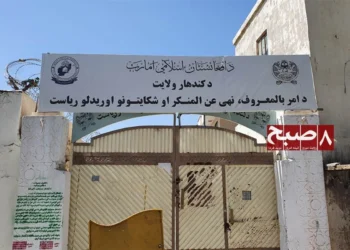
Since the decree on the “Propagation of Virtue and the Prevention of Vice” law by Mullah Hibatullah, the Taliban Supreme Leader, which explicitly states that filming living beings is not permissible, the Taliban authorities have gradually sought to impose restrictions on visual media. In this context, state television in the provinces of Kandahar and Takhar was shut down. In a more recent instance, the Taliban’s Minister of Higher Education did not allow journalists in southern Afghanistan to film a government ceremony and only permitted them to record audio. According to a news source, Yousuf Ahmadi, head of the national radio and television under Taliban control, recently told his subordinates in a meeting that Mullah Hibatullah has decided to suspend the national television’s operations in Kabul. Mullah Hibatullah seems like someone who has just emerged from Plato’s cave, viewing everything through the lens of primitive human standards and wanting to return the country to that same era. Will he be able to achieve this?
The Taliban usually cite religious motivations for their opposition to images of living beings. They refer to certain narrations that claim that mimicking God’s creation is wrong, forbidden, and fraught with the risk of disbelief and idolatry. During their first rule, the group opposed all forms of imagery, both motion and still images, confiscating and burning people’s televisions. However, this time, the Taliban’s actions seem somewhat different. Before regaining power, the group effectively used visual content to spread propaganda against the former regime and made full use of modern technology, the internet, and social media to attract supporters. Over the past three years, the Taliban utilized all the facilities of national television to promote their narrative and worldview. Now that the Taliban Supreme Leader has decided to limit and prohibit visual media, it has surprised many observers.
The Taliban always try to find a religious justification for every action they take, portraying themselves as “unconditional executors of God’s commands,” with no personal desires involved. Regarding the filming of living beings, they again reference specific religious narrations. This indicates that the group’s religious and intellectual leaders are trapped in centuries-old beliefs, lacking awareness of modern interpretations of religious texts and viewing the world through the lens of ancient times. If the Taliban clerics used a bit of reasoning, they would realize that modern filming devices did not exist during the time of the Prophet or the Rightly Guided Caliphs, so applying these religious narrations to modern inventions is unjustified. The Taliban are deeply trapped in primitive and simplistic interpretations of religion, showing minimal awareness of modern religious discourse. Not only are they ignorant of such discussions, but they also take a strong stance against them and punish those who promote them.
Another critical point to mention is that, despite the Taliban fabricating religious excuses to impose restrictions on visual media, the real issue stems from elsewhere. The truth is that the Taliban are terrified of the objective realities of Afghanistan under their control being reflected in the media. They are making every effort to prevent the public from becoming aware of the group’s failures, incompetence, and governance shortcomings. This is why the Taliban are hostile to independent media, only allowing them to operate under strict obedience to their directives. The group fears citizen journalists, which is why, in many cases, they have confiscated citizens’ smartphones or, at best, deleted images taken on these devices. Over the past three years, in certain provinces like Panjsher, owning a smartphone has at times resulted in lengthy investigations by Taliban fighters, with many citizens being imprisoned or horrifically tortured for it. Due to their extreme fear of independent media, the Taliban have criminalized any collaboration with Afghanistan International TV and the Hasht-e Subh Daily, actively hunting down individuals cooperating with these outlets. Both Afghanistan International and Hasht-e Subh Daily are prominent opposition media organizations operating outside the country and have played a significant role in exposing the true nature of the Taliban.
Over the past three years of their renewed rule, the Taliban have used every possible means to suppress freedom of expression and the media. Ideologically, the group does not believe in freedom of speech, considering it part of the West’s cultural invasion. Moreover, the Taliban have realized a crucial fact: the unrestrained freedom of expression that existed during the Republic was one of the factors that weakened its foundation and even turned the media into platforms for armed opposition. The Taliban have fully understood that if they repeat the mistakes of the Republic regarding media freedom, they could face the same fate. Therefore, the Taliban expect the media to only highlight their unaccomplished services and nonexistent achievements, avoiding any coverage of challenges or issues. If you watch news broadcasts on Afghanistan’s internal television stations, you might sometimes think they are not private networks but state television controlled by the Taliban.
What is more significant is that, in an environment of free speech and media, diverse and differing viewpoints have the opportunity to be expressed, allowing for a two-way dialogue. In such a setting, anyone or any group can express their opinions on any issue, criticize the government, hold officials accountable, and highlight their incompetence or oppression. However, the Taliban consider their rule to be an Islamic government, viewing it as the manifestation of God’s will, and they do not grant anyone the right to question or criticize it. A hallmark of theocratic regimes is their belief that they represent God on earth, imposing a particular interpretation of religion on the people. As a result, it is inconceivable to them that anyone could criticize their governance or point out their flaws. In such a regime, talk of freedom of expression and the press is meaningless and futile.
Optimists believed that the Taliban would eventually come to understand the realities of society and the times, abandoning their exclusivism and dogmatism, gradually adhering to the requirements of modern governance, and respecting citizens’ rights. Now, three years have passed since the group returned to power, and not only have they not abandoned their stubbornness, prejudice, and rigidity, but they have intensified their social and cultural restrictions, increasingly ignoring citizens’ freedoms, and doubling down on their incorrect interpretations of religion. Even the most hopeful individuals must now feel disillusioned, recognizing that the Taliban have no intention of reforming their actions over time.
You can read the Persian version of this analysis here:
تلاش ملا هبتالله برای برگرداندن افغانستان به عصر غارنشینی | روزنامه ۸صبح