Roza Otunbayeva, who for three years headed the United Nations Assistance Mission in Afghanistan (UNAMA), recently completed her tenure and left Kabul for an undisclosed destination. She joins the ranks of high-profile figures who have led and directed UNAMA. When she first arrived in Kabul three years ago, her presence rekindled hope in the hearts and minds of Afghan women and girls: hope that, as a defender of women’s rights and in contrast to her predecessors, she would better understand the realities on the ground and work seriously, effectively, and in coordination with others to change the prevailing conditions. That expectation, however, proved mistaken far too quickly. Otunbayeva not only failed to live up to it but, more than her predecessors, sought to whitewash the Taliban’s image and smooth the path for global engagement with the group.
Otunbayeva consistently emphasized engagement with the Taliban, portraying this approach as useful and constructive for Afghanistan, without ever being sure of a real change in the Taliban’s behavior or even considering it wise, in certain instances, to exert pressure on the group to moderate its actions. She was a staunch supporter of the “Doha Process,” which to date has convened three major international conferences but excluded Afghan women representatives. The fact that Otunbayeva, a figure celebrated as a women’s rights activist, played a leading role in organizing such a process while Afghan women were denied participation, reveals the depth of her inclination toward the Taliban. In recent months, she also announced work on a plan to bring Afghanistan out of crisis, a plan that met fierce resistance from Afghan political forces and, had it been implemented, would have served only the Taliban’s interests. Now that she has left, it is unclear whether she has taken her plan with her or passed it on to her successor.
Although Otunbayeva is a women’s rights activist, she maintained little to no engagement with Afghan women activists, almost as if she considered association with them beneath her. Instead, she eagerly devoted most of her time to repeated meetings with Taliban officials. Not once did she organize a formal or informal meeting outside Afghanistan simply to hear Afghan women’s voices, not necessarily to perform miracles, but at least to listen. Even in UNAMA’s reports under her leadership, the appalling situation of Afghan women and girls was not reflected as it should have been. Instead, she carefully attempted to soften the Taliban’s image with gentle words rather than use a firm and responsible voice to criticize them in international forums. This minimalist criticism made clear where her sympathies leaned: toward the Taliban rather than Afghanistan’s other forces.
Otunbayeva not only failed to engage with political and military opponents of the Taliban but at times spoke of them as if they were adversaries of UNAMA itself. Whenever she discussed the military activities of anti-Taliban fronts, her displeasure was clearly visible in both her language and demeanor. On those occasions when she did acknowledge rising armed resistance against the Taliban, she slyly sought to place ISIS and the National Resistance and Freedom Fronts in the same category. Nor did she ever speak seriously about the necessity of establishing an inclusive government in Afghanistan despite her deep knowledge of Afghan society and her clear awareness that only such a government could genuinely represent it.
At one point, a report surfaced in the media claiming that the United States and several European countries were dissatisfied with Otunbayeva’s performance, citing her perceived alignment with Russia as the reason they withheld support for UNAMA’s initiatives under her leadership. Indeed, throughout Otunbayeva’s tenure, Washington gave little weight to UNAMA, offering no clear backing for its proposals. Even the Doha Process, led by the United Nations itself, was met with only a lukewarm reception from the U.S. The latest plan released by the organization was likewise greeted with silence from both Washington and European capitals. In reality, UN initiatives can only be implemented when they enjoy serious support from the United States and subsequently Europe. The fact that Otunbayeva, with her diplomatic language, consistently sought to soften the Taliban’s image underscored her alignment with regional powers’ positions on Afghanistan, especially Russia’s. That she hails from Kyrgyzstan, where she previously served as both president and foreign minister, only reinforced such perceptions. For now, it remains unclear who her successor will be, or what political leanings they may bring.
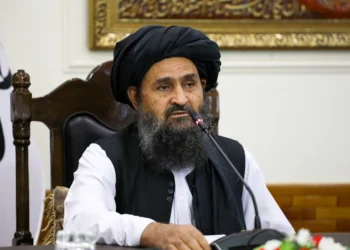
It should not be forgotten that, despite its shortcomings and deficiencies, the United Nations remains a trusted actor among the international community, including Afghanistan. This reality demands that UNAMA be led by someone deeply committed to the principle of neutrality. If the organization were to act impartially rather than in line with the agenda of specific states, in pursuing a resolution to Afghanistan’s conflict, it would be both more effective and less politically sensitive. Afghan political forces also tend to place more trust in the United Nations than in individual countries. Otunbayeva, for her part, failed to properly harness the UN’s potential, and her conduct left her accused of siding with the Taliban. Nothing illustrates her affinity toward the group more starkly than the praise offered by Mawlawi Abdul Kabir, the Taliban’s minister for refugees, who commended her three-year record during a formal meeting. By contrast, Afghan political forces and women’s rights activists have deemed her tenure murky and indefensible. More astonishing still was the Taliban’s open celebration of the mission of a foreign woman ostensibly tasked with defending Afghan women against ongoing abuses, honoring her in a public gathering and wishing her further success.
You can read the Persian version of this analysis here: