
Seven days have passed since the start of the war between the Taliban and Pakistan. The Taliban’s Ministry of Defense announced yesterday that 25 clashes with Pakistan occurred within a single 24-hour period. The group reported that 110 civilians have been killed and 123 others wounded as a result of Pakistani strikes, and warned that if the attacks continue, Pakistan’s embassy in Kabul will be closed. Additionally, in the early hours of Tuesday, residents of Panjshir, Kabul, Badakhshan, and Kapisa provinces reported hearing aircraft flying overhead, explosions, and ground-to-air gunfire. The Taliban and Pakistani officials are simultaneously blaming each other for the escalation of hostilities, with both sides reporting heavy casualties and damage, while international organizations, including UNICEF and the United Nations Office for the Coordination of Humanitarian Affairs, have warned about the humanitarian consequences and the displacement of tens of thousands of people.
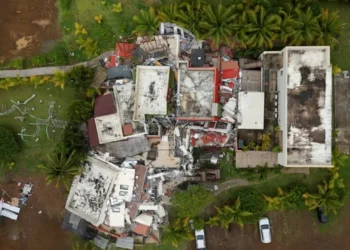
Hamdullah Fitrat, the Taliban’s deputy spokesperson, wrote on his X account that as a result of Pakistani airstrikes and mortar fire, 110 civilians have been killed to date in the provinces of Nangarhar, Kunar, Paktika, Khost, Paktia, and Kandahar, more than 65 of whom were women and children, while 123 others, the majority of whom are also women and children, have been wounded. According to him, 37 homes have been destroyed and 316 others partially damaged in these attacks, 12 shops demolished, 19 mosques partially destroyed, one clinic and one school damaged, and approximately 8,400 families displaced. He added that the Taliban strongly condemn the targeting of civilians and is calling on international human rights organizations and the United Nations to condemn these attacks and the resulting civilian casualties.
The Taliban’s deputy spokesperson also condemned the continuation of Pakistani strikes on various cities of Afghanistan at a press conference held yesterday in Kabul, stating that if the attacks persist, Pakistan’s embassy in Kabul will be closed. Responding to a question about closing Pakistan’s embassy in Kabul, he said that conflict was not the group’s first choice, and that war had been imposed upon them. He added, “The closure of consulates or embassies is a temporary measure.” Fitrat further emphasized that Pakistani strikes in the provinces of Kabul, Laghman, Kandahar, Kunar, Khost, Paktika, and Nangarhar have damaged public infrastructure, mosques, residential homes, and refugee camps.
The Taliban spokesperson accused Pakistan of launching a project to destabilize the region. He claimed that instead of choosing diplomacy and dialogue, Pakistan had opted for war to achieve its objectives. According to Fitrat’s claims, Pakistan has targeted three returnee refugee camps in Kandahar, Kunar, and Torkham since the start of the attacks. At Tuesday’s press conference, Fitrat stated that Russia, China, the European Union, and the United Kingdom had contacted the group in an effort to end the war. He warned that as long as Pakistan’s attacks on Afghan soil continue, the group’s own attacks will also continue. He described Pakistan as the “aggressor” and said that “war was not the Taliban’s choice; it was Pakistan that initiated the aggression.” He called on regional countries to pressure Pakistan to bring the war to an end.
Continuing the statements made by Taliban spokespersons, Inayatullah Khwarazmi, the spokesperson for the group’s Ministry of Defense, claimed at Tuesday’s press conference that the Taliban can prevent Pakistani aerial operations. He claimed that Pakistan “cannot launch a powerful attack against us.” Khwarazmi also claimed that since the beginning of the conflict with Pakistan, the Taliban have shot down a total of five drones.
Also in connection with the ongoing clashes between the Taliban and Pakistan, Mustaghfir Garbez, the spokesperson for the Taliban’s governor in Khost, announced yesterday that four people, including a woman and a child, were killed and 16 others wounded. He added that dozens of homes were destroyed and a large number of livestock lost as a result of Pakistani attacks.
The Taliban continue to prohibit filming of sites and areas targeted by Pakistani bombardment and airstrikes, even by media outlets under their own control, having imposed severe restrictions and censorship. According to sources, no precise figures are available regarding civilian casualties or Taliban fighter losses. On the other hand, the Taliban have called for anti-Pakistan demonstrations in some provinces, and mosque imams in several eastern provinces had previously declared jihad against Pakistan.
Over the past seven days, Pakistan has announced that through its aerial and ground attacks on Afghanistan, it has been inflicting heavy daily casualties and damage on the Taliban, targeting the group’s positions across various areas of Afghanistan.
Attaullah Tarar, Pakistan’s Minister of Information and Broadcasting, announced that in Operation “Ghazab-ul-Haq,” by Tuesday, March 3, a total of 464 Taliban members had been killed and more than 665 others wounded. In a post on the social media platform X, he claimed that 188 checkpoints had been destroyed and 31 others captured. According to Pakistan’s information minister, 192 tanks, armored vehicles, and artillery pieces had been destroyed, and 56 positions across Afghanistan had been targeted through airstrikes.
The Dawn newspaper also reported, citing a senior security official, that Pakistan is in no hurry to end Operation “Ghazab-ul-Haq” and will continue its strikes against militant hideouts inside Afghan territory. According to the report, Pakistan’s attacks will continue until the Taliban provide credible guarantees to prevent the activities of TTP and Baloch militants inside Afghanistan. The outlet quoted the Pakistani security official as saying, “Now is the time for the supporters and accomplices of terrorism to be hit and to suffer.”
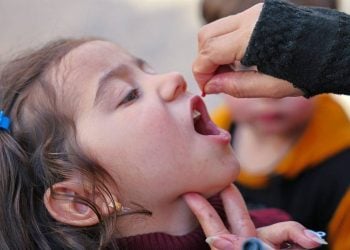
Meanwhile, Sanjay Wijesekera, the Regional Director of the United Nations Children’s Fund (UNICEF), issued a statement expressing concern over civilian casualties, particularly among children, amid the ongoing clashes between the Taliban and Pakistan. He warned that as the conflict intensifies, children on both sides of the border are at risk of disease, malnutrition, violence, and exploitation. According to him, children are bearing a heavy toll during these tensions and have now been forced to leave displacement camps near the border along with their families to seek safety.
The UNICEF Regional Director also expressed concern over the impact of escalating tensions on children in the border areas of Khyber Pakhtunkhwa and the closure of 138 public schools in those areas. He called on the parties to the conflict to exercise maximum restraint, protect civilian lives, and uphold their obligations under international humanitarian law and human rights law.
The United Nations Office for the Coordination of Humanitarian Affairs also announced that Pakistan’s strikes on Afghan soil have, in addition to causing loss of life, resulted in the destruction of hospitals and homes and have displaced “tens of thousands” of people. The office described the protection of civilians and civilian facilities as a legal obligation and called on Pakistan to comply with it.
Previously, the United Nations Assistance Mission in Afghanistan (UNAMA) had announced that in five days of clashes between the Taliban and Pakistan, at least 42 civilians had been killed and 104 others wounded. According to UNAMA, women and children are also among the victims.
You can read the Persian version of this report here:
حملات هوایی پاکستان و شلیکهای زمینی طالبان؛ پایان جنگ در دستان کیست؟