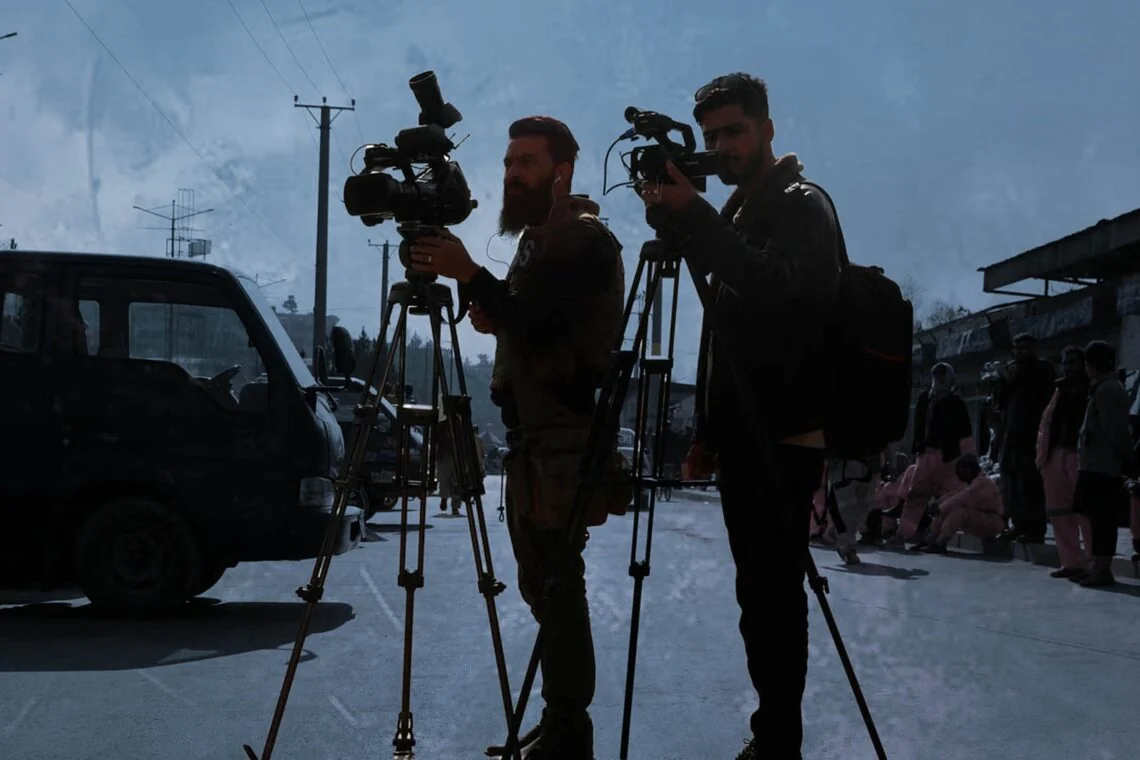
Several journalists in Afghanistan have expressed concern over growing restrictions and threats against their professional activities. They say censorship, detentions, threats, and the absence of an independent body to support journalists and address their complaints have made the media working environment more difficult than ever. According to these journalists, the Taliban have limited the scope of media activity by imposing censorship and creating an atmosphere of fear and intimidation. They stress that such treatment not only violates the freedom of media activity but also tramples on the fundamental rights of journalists.
Shahnaz (pseudonym), a journalist, complains about the difficult situation of journalists in Afghanistan under Taliban rule. She says journalists face serious problems, including censorship, detention, and threats.
The journalist says: “Journalists in Afghanistan face numerous challenges, including censorship, threats and detention, restricted access to information, security and economic pressures, and the lack of an independent authority to address their complaints. Women journalists, however, face even more severe restrictions and pressures. Journalists in Afghanistan are deprived of the right to freely express the truth and are forced to speak and report in line with the demands and orders of the Taliban.”
Naser (pseudonym), a journalist, says journalists in Afghanistan face numerous problems and challenges, particularly economic hardship, restricted access to information, and the lack of an authority to support and defend their rights.
The journalist says: “The support and cooperation of international organizations can play an effective role in solving the problems of journalists in Afghanistan, particularly in defending their rights and addressing their economic problems. In cooperation with governments, these organizations can help create support mechanisms and provide a more suitable environment for the growth and development of journalism.”
Ayesha (pseudonym), a journalist, says journalists in some areas face administrative restrictions and a lack of coordination among the Taliban’s security institutions when preparing reports. According to her, to cover events and prepare reports, journalists are obliged to obtain written permission separately from each security department of the group or to coordinate with them beforehand, a matter that makes media work difficult.
The journalist says: “Although in some cases journalists may also face threats, in my view the main challenge at present is the lack of coordination between the Taliban’s security institutions and journalists. Most importantly, there is the issue of the absence of a clear law and framework for the work of journalists.”
Ahmad (pseudonym), another journalist, says the Taliban have imposed wide-ranging restrictions on media activities by taking microphones from journalists, imposing censorship, and creating an atmosphere of fear and intimidation. He says this situation is a clear violation of the rights and freedoms of journalists.
The journalist says: “Journalists in Afghanistan face the risk of detention, threats, and being barred from continuing their professional activities at every moment. Out of fear of interrogation and mistreatment by the Taliban, we cannot cover many events and news stories. The microphone is a journalist’s weapon. When this tool is taken away, what is left for the journalist?”
Omid (pseudonym), a media activist, says journalists under Taliban rule face serious economic challenges. According to him, since the Taliban took control and imposed restrictions on the activities of private institutions, especially media outlets, the economic situation of journalists has become more difficult day by day. Meanwhile, a large number of women journalists have been confined to their homes, and the few who still work in the media must continue their jobs amid various concerns and restrictions.
The media activist says: “A large number of male journalists have also become unemployed and stuck at home following the closure or forced suspension of several private media outlets. On the other hand, journalists who are still working in the media work for very meager monthly salaries. On one hand, the financial resources of media outlets that were previously dependent on foreign aid have been cut off, and on the other hand, some media outlets with a better financial situation exploit the difficult circumstances and desperation of journalists by hiring them for very low wages.”
Meanwhile, Reporters Without Borders (RSF) has placed Hibatullah Akhundzada, the Taliban Supreme Leader, on its annual list of “Enemies of Press Freedom” alongside 32 other individuals and institutions.
On the occasion of the International Day to End Impunity for Crimes against Journalists, the organization has published a list of 33 individuals and institutions as “Enemies of Press Freedom.”
RSF has categorized the list into five sections: political, security, legal, economic, and social, and has placed the Taliban Supreme Leader in the political section of the list.
Rabab Fatima, Head of the Office of the United Nations Assistance Mission in Afghanistan (UNAMA), has also called for the protection of journalists on the occasion of the International Day to End Impunity for Crimes against Journalists. Fatima added that the safety of journalists who have dedicated their lives to the pursuit of truth must be a priority in Afghanistan and around the world.
You can read the Persian version of this report here:
سانسور و تهدید طالبان؛ خبرنگاران افغانستان میان سرکوب آزادی بیان و فشارهای اقتصادی گرفتارند