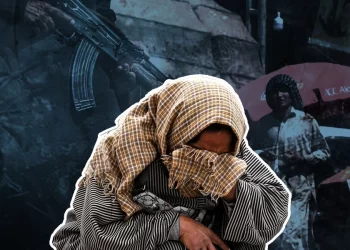
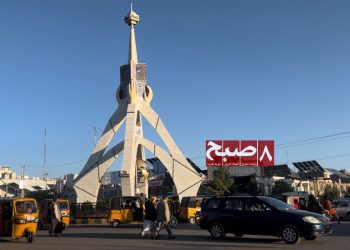
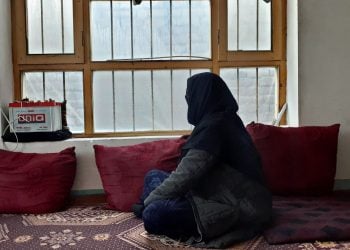
Residents of Kabul are increasingly alarmed by a surge in thefts, especially pickpocketing, across the city. They say that despite repeated Taliban promises to guarantee public safety, the group has failed to curb these crimes. According to many residents, pickpockets operate most often in crowded areas, public buses, and narrow alleyways, where people are least able to protect themselves.
In conversations with the Hasht-e Subh Daily, residents explain that although they have filed formal complaints with Taliban-controlled security districts, authorities have taken no effective or practical steps to stop the thefts. They say this ongoing inaction has deepened public fear and insecurity. Many Kabul residents believe that the negligence of Taliban security officials has allowed these crimes to continue unchecked.
Sakina, a Kabul resident, recalls that last week thieves stole her mobile phone and cash in the middle of a busy market. She says that when she went to a Taliban security district to file a complaint, officers sent her to another district for follow-up. There, officials delayed her case and treated her dismissively before finally accepting the complaint.
Sakina says: “I was carrying 20,000 afghanis in cash and a mobile phone worth at least 80,000 afghanis. As soon as the theft happened, I checked a shop’s security camera, but the crowd made it impossible to see anything clearly. I went to District Six, but they said the area was not their responsibility and sent me to District Three. When I arrived there, it was 11:40. They told me it was prayer time and ordered me to come back at 2:00. I waited until then, wrote my complaint, and completed all the paperwork, but nothing came of it. Taliban treat these incidents as unimportant.”
Hussain, a bank employee who asked to remain anonymous, says he went through a similar and painful experience a few days earlier. He explains that pickpockets stole a large sum of money from him at one of the city’s main intersections.
Hussain recounts: “It was ten minutes to seven. Every day I attend a course from 7:00 to 8:00 and then go straight to work. I was standing at the intersection when a taxi stopped. One person sat in the front seat, and another sat in the back with a large bag. I sat beside them. The man with the bag said, ‘Brother, there is not much space. Move the seat back and forth.’ While I was distracted and using my phone, they took my wallet. I realized what had happened only when we reached the market intersection and the man asked the driver to stop so he could adjust the seat. As soon as he got out, I knew my wallet was gone. I went to my course upset and shaken.”
Hussain says he later visited a Taliban-controlled district to file a complaint, but the process led nowhere. He adds that checking security cameras produced no results and questions why the specific time when the taxi and the suspicious individuals were present had not been recorded. He suspects that the Taliban may also be involved in the incident.
Describing his experience, Hussain says: “I went to the district, submitted my complaint, and completed all the procedures. We planned to review the cameras. On the first day, they said the camera officer was absent. On the second day, I called again and heard the same excuse. On January 1, we finally checked the footage and saw that nothing had been recorded between 7:00 and 9:00. I complained, but it made no difference. They claimed the camera had not recorded and kept misleading me. They told me to return another day. Pickpocketing has become widespread, and many people are complaining.”
Other Kabul residents say that poverty and desperation drive many people to steal, leaving them with no other way to meet basic needs. They argue that only by addressing poverty can theft decline and public safety improve.
Mujib Saabir, a Kabul resident, says the growing number of thefts has stripped people of their peace of mind. He dismisses Taliban claims of maintaining citywide security as empty slogans. According to him, some individuals turn to theft, robbery, and other illegal activities to obtain drugs.
Saabir says, “People are ready to do anything just to secure a piece of bread. At the same time, economic and social pressure have pushed many citizens into serious psychological distress. When poverty grows, corruption grows with it.”
Ahmad, another Kabul resident, also criticizes the current situation and accuses the Taliban of failing to secure the capital. He says the rise in theft has deeply damaged people’s sense of psychological safety.
Ahmad explains: “When hardship and desperation take over, and living conditions collapse, people do whatever they can to survive. These days, many people do not even earn 100 afghanis a day. Jobs are scarce, unemployment is rising, and as a result, pickpocketing and theft in Kabul have increased.”
Residents across various provinces of Afghanistan report a rise in criminal activity since the Taliban returned to power. They say unemployment and poverty have increased sharply, followed by higher rates of theft and abduction. Despite these concerns, the Taliban continue to claim that security prevails throughout the country.
Earlier, the United Nations Assistance Mission in Afghanistan (UNAMA) raised serious concerns about the misuse of Taliban uniforms in armed robberies, extortion, and illegal home invasions.
Human Rights Watch (HRW) has also reported that residents say unidentified armed individuals, disguised as Taliban forces, have carried out theft, threats, and intimidation against civilians.
You can read the Persian version of this report here:
جیببری در کابل؛ ناامنی پنهان زیر سایه ادعای تأمین امنیت طالبان