
As Ramadan approaches, many residents of Kabul worry about rising unemployment and shrinking job opportunities. The lack of steady work and income has left families struggling to prepare for the holy month. Poverty and joblessness have intensified economic pressures, pushing many households into serious financial hardship. In interviews with the Hasht-e Subh Daily, residents stressed that if this situation continues, it could threaten the daily lives of countless families. Alongside unemployment, soaring food prices in markets make it even harder for families to afford essential supplies for Ramadan.
This year, many families enter Ramadan anxious about their incomes and expenses. With fewer job opportunities and declining earnings, households have little ability to prepare, leaving many to face the month with empty tables.
Asad, a former government employee who lost his job after recent changes, is one of these residents. He has spent over eight months searching for work in private offices and online job sites without success. He says Ramadan this year feels heavier, with unemployment and the lack of stable income making life even harder. His greatest worry is the expectant gaze of his children at iftar.
“This year, unlike previous ones, we are not prepared for Ramadan,” he says. “Family problems have grown, and as the sole breadwinner, I am struggling with these challenges. I tried hard to find work, but I could not.”
Mir Agha, another Kabul resident, says that poverty and unemployment have worsened family life since the Taliban took power. He notes that this is not the first Ramadan that families have faced with empty tables.
“After the Taliban took control of Kabul, many people lost their jobs. Even those with master’s and doctoral degrees carry their diplomas under their arms and cannot find work,” he says. “This is a disaster. We urge private companies and institutions to allow open competition for jobs so the next generation can enter the labor market. If this continues, Afghanistan’s future will face darkness and ignorance, and fixing this will be extremely difficult.”
Jamal, another Kabul resident, says that despite studying abroad, he remains unemployed and has little hope of finding work in Afghanistan. He explains that the Taliban place heavy pressure on young people through their traditional practices, while private companies, lacking understanding, avoid hiring educated youth. With Ramadan approaching, he says even hard work cannot cover the expenses of his nine-member family.
“A group of young people who studied up to the master’s level abroad is now unemployed in Kabul. Private companies hire relatives, and government offices under Taliban control pressure employees in various ways. Finding work under Taliban rule is extremely difficult,” he adds.
Meanwhile, a manager at a private educational center in Kabul says unemployment has forced some students to drop out, choosing between continuing school and covering Ramadan expenses.
“When students came to pay their course fees, they told us they could not continue their studies and had no choice but to return to their home provinces for the month because their families could not support them,” says Mujeeb, an administrator at the center.
Toryalai, a student from Khost preparing for the university entrance exam, says that because his father is a daily-wage laborer, he cannot stay in Kabul. Ramadan has increased his living costs.
“The entrance exam preparation course costs only 6,000 afghanis, not including other expenses such as food and bread. My family cannot support me, so I must return to my home province to continue studying. I have no other choice,” he explains.
Economic experts warn that unless Afghanistan attracts significant investment, unemployment will continue. They note that the country relies heavily on imports, which keeps poverty and joblessness on the rise.
“Eradicating unemployment requires large-scale investment. The country needs more investment and factories because every investment creates jobs. The more work and investment we see, the more job opportunities arise. Poverty and unemployment follow the same path in Afghanistan. People have no savings; as long as they have a job, they survive. But the moment they lose work, they quickly fall into poverty,” says Nasir Rashtia, an economic expert.
Afghanistan, long struggling with humanitarian and economic crises, enters this year’s Ramadan with people hoping more than ever in their iftar prayers for better economic conditions and lasting stability.
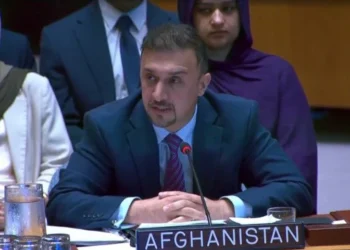
Earlier, the United Nations Office for the Coordination of Humanitarian Affairs (OCHA) warned that Afghanistan would remain one of the world’s largest humanitarian crises in 2026. Around 22 million people, or 45 percent of the population, will need humanitarian assistance.
OCHA estimates that roughly 17.4 million people, more than a third of the population, will face acute food insecurity, including 4.7 million in emergency conditions.
According to the UN report, Afghanistan’s unemployment rate has reached 75 percent, and over 90 percent of the population lives below the poverty line. Declining income per person, shrinking GDP, and reduced humanitarian aid paint a bleak picture of the country’s economic situation.
You can read the Persian version of this report here:
رمضان در سایه بیکاری و فقر؛ سفرههای خالی در کابل و نگرانی از آینده اقتصادی افغانستان