Recently, the human rights organization Rawadari released a copy of the “Penal Code of Taliban Courts,” a document that immediately stirred deep concern among human rights institutions and citizens across the country. Rawadari warned that the code is profoundly alarming and openly contradicts international human rights standards and the basic principles of a fair trial. The document repeatedly uses the term “gholam” in several sections, which means “slave”, a choice of language that effectively legitimizes slavery. The former Attorney General called it “a document proclaiming the conviction of all citizens,” describing it as a criminal policy rooted in discrimination and violence against women and children. The former head of the National Directorate of Security viewed the code as evidence of the politicization of religion and harsh interpretations, and stressed the urgent need to build a citizen-centered and law-based Afghanistan. The United Nations Special Rapporteur on human rights described the consequences of the document as “extremely concerning,” while the Afghanistan Ambassador to Austria said it reflects an ideological, authoritarian, and deeply unequal social framework. Legal experts echoed these concerns, warning that the code violates human dignity, equality among citizens, and the foundations of legal justice.
Mohammad Farid Hamidi, the former Attorney General of the country, responded to the Penal Code of Taliban courts on his X page by calling it “a document proclaiming the conviction of all citizens.” He said that labeling individuals as inferior, a classification applied to the vast majority of honorable and dignified citizens, amounts to a clear insult, a direct attack on dignity, and a serious violation of human worth.
Hamidi wrote: “This code embodies an unjust criminal policy based on open discrimination. It institutionalizes the encouragement of violence against women and children, humiliates citizens, disregards the sanctity of life, blood, property, honor, and dignity, violates legal and judicial equality before the law by dividing citizens according to political and social status, wealth and poverty, and enforces overt religious discrimination in Afghanistan.”
He added: “The Taliban’s actions during both periods of their illegitimate rule, along with the enforcement of arbitrary decrees that serve their group and personal interests, have placed honest and truth-seeking religious scholars at a decisive moment in history. These scholars must either protest against the anti-Islamic and anti-people policies of this group, a choice that brings honor and salvation in this world and the next, or remain silent and face disgrace here and loss in the hereafter. A hypocritical international community, an ineffective and aging United Nations, and a confused and silent humanity have allowed an ignorant and despotic group in the twenty-first century to legitimize slavery and divide citizens by gender, ethnicity, religion, political status, wealth, and poverty, subjecting them to humiliation.”
Richard Bennett, the United Nations Special Rapporteur on human rights for Afghanistan, responded by saying: “I am still reviewing the new Taliban law on penal principles, including from the perspectives of human rights and Sharia. Even so, it is already clear that its implications for the People of Afghanistan are deeply troubling. I will release more detailed statements at the appropriate time.”
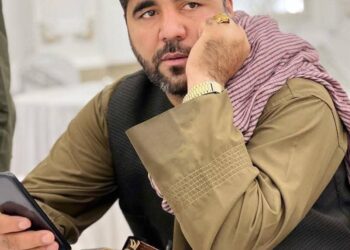
Rahmatullah Nabil, the former Director General of the National Directorate of Security of Afghanistan, wrote that the Taliban penal code once again proves that politicized religion and rigid, instrumental interpretations offer no future for Afghanistan. He said: “The time has come to choose a new and courageous path, to leave extremism behind and free religion from violent and politicized interpretations. Political movements, intellectuals, youth, free thinkers, moderate religious scholars, women, men, and all citizens of Afghanistan now face a shared historic responsibility.”
Nabil continued: “Afghanistan’s future depends on a new narrative, one that seeks a respectful separation of religion from government and builds a citizen-centered, law-based state grounded in human rights. Our struggle, beyond ethnicity, language, or religion, must restore religion to its ethical and human place while centering civic life and the dignity of citizens. Many nations have shown that religion remains respected only when it does not become a tool of political power, and that a state endures only when it rests on the will of its people. We can also reconcile religion with reason, tolerance, and everyday life.”
Calling on the People of Afghanistan, the former security chief wrote: “Today, this is a call to all political forces, civil society, academics, scholars, women, and youth. Let us unite around a just, humane, and citizen-centered Afghanistan and build a new national story for the future. Otherwise, we will repeat the bitter cycle of ignorance, extremism, and violence, a cycle that builds neither a future nor a homeland, and leaves only fire, smoke, blood, and destruction, a land that becomes neither a home for its people nor a refuge for religion.”
Many legal experts and human rights activists also reacted, describing the Taliban penal code as discriminatory and hostile to justice. They said it undermines human dignity and violates the principle of equality among citizens.
Najibullah Azizi, former head of the Internal Inspection Prosecution Office of the former Attorney General’s Office, wrote: “A penal code must be justice-oriented and free of discrimination. It must protect human dignity and equality, uphold the presumption of innocence, guarantee the right to defense and a fair trial, ensure proportionate and fair punishment, prohibit torture, and respect clear standards of justice, the rejection of oppression, and the protection of human rights.”
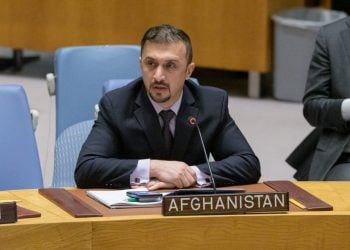
Manizha Bakhtari, the Afghanistan Ambassador to Austria, wrote that the Taliban penal code reflects a closed and authoritarian ideology that treats law not as a tool for justice, but as a means of obedience and social control. She said the document shows no understanding of law as a social contract or as a rights-based legal system, instead forcing individuals to submit to the official interpretation of those in power.
Bakhtari added: “This text clearly shows that the Taliban penal system deliberately divides society into unequal legal classes. Upper classes escape punishment through advice and warnings, while lower classes face the full force of discretionary punishment. This is not a flaw in implementation, but a core part of the code itself.”
At the same time, citizens of Afghanistan responded on social media by creating symbolic courts based on the social classifications outlined in the Taliban penal code. Through satire, they wrote that the code implies that a system cleric or judge owes only an apology, a wealthy aristocrat is exempt due to elite status, and a poor person, blamed for all corruption, is accused of misleading the other two and sentenced to two years in prison as a warning to others, after which the verdict is declared and justice is claimed to be served.
Several women’s protest movements also reacted strongly, saying the Taliban penal code has officially legalized violence, discrimination, and repression under the name of “law in Afghanistan.”
The Afghanistan Women’s Justice Movement said in a statement that the document strips women and girls of education, legitimizes domestic violence, sacrifices children, and entrenches an open system of gender apartheid. The movement stated: “This is not law. It is the legalization of brutality. We, the Afghanistan Women’s Justice Movement, condemn this crime and call on the international community to break its silence, hold the Taliban accountable, and stand with the women of Afghanistan.”
Rawadari had earlier explained that Article 9 of the Penal Code of Taliban courts divides society into four groups: religious scholars, aristocrats, the middle class, and the lower class. Under this article, punishment for the same crime depends not on the offense itself, but on the social status of the person who committed it. If a religious scholar commits a crime, authorities offer only advice. If an aristocrat commits the same act, the response is a court summons and limited guidance. For members of the middle class, imprisonment follows, while individuals from the lower class face both imprisonment and corporal punishment.
The statement also notes that by using the term “gholam” in several sections, which means “slave”, the Taliban code openly legitimizes slavery. Article 15 states: “For any crime for which no hudud punishment has been specified, a discretionary punishment shall be imposed, whether the offender is free or a slave.” Clause 5 of Article 4 further assigns the implementation of hudud punishments to the “imam,” while discretionary punishments may be carried out by the “husband” or the “master.”
You can read the Persian version of this report here:
واکنشها به نشر اصولنامه جزایی طالبان: «پارچه ابلاغ محکومیت همه شهروندان»