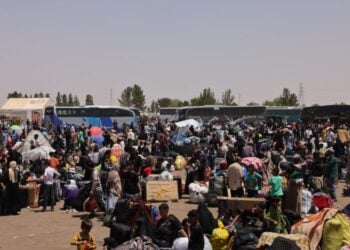
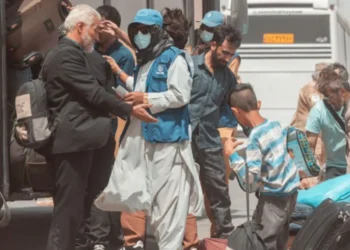
Pakistan has warned thousands of Afghan refugees to leave the country as soon as possible. Senior Pakistani officials have ordered individuals authorized to stay in Pakistan to leave Islamabad and Rawalpindi by June 30, 2025. Pakistan has also instructed thousands of refugees residing in the country while awaiting resettlement in third countries to leave these cities by March 31, 2025. Islamabad has emphasized that if these refugees are not relocated to their intended destinations, they will be deported to Afghanistan.
This warning from Pakistan has sparked widespread concerns among refugees who fled to the country fearing the Taliban. They state that the suspension of the U.S. immigration program and the slow processing by Western countries have left thousands in limbo. These refugees emphasize that they are trapped in a purgatory with no way forward or back. They say they are subjected to oppression, discrimination, and cruelty both in their homeland and in exile. They urge Western countries not to abandon their allies.
Following the mass expulsion of refugees from Pakistan, thousands of Afghan citizens who sought refuge in various Pakistani cities after the Taliban takeover, hoping to be relocated to third countries, have become deeply worried and disheartened after receiving this new warning. They state that they traveled to Pakistan following evacuation orders and have spent all their resources over the past three and a half years.
These refugees assert that their situation in Pakistan has now become even more difficult. They claim that in their pursuit of a safer environment, they have endured discrimination, oppression, and harsh treatment by Pakistani police over the past three years. They insist that Western countries, particularly the United States, should not reject or delay their cases, as the Taliban torture, detain, and kill them for their cooperation with the West.
Zahra, an Afghan refugee in Islamabad, told to The Hasht-e Subh Daily that the Pakistani government’s new decision has given her the same feeling she had when Afghanistan fell to the Taliban. She says that her case was referred by the United Nations to a European embassy in Pakistan more than three years ago, but she has yet to receive a visa. She and her family, including her two children, are struggling to survive in difficult conditions.
Discussing her financial and psychological hardships, she said: “We spent all our savings and sold our home, hoping to reach a better place. Now, for three years, the only response we’ve received from the UN is to wait. But how long must we wait? Now that things have worsened and the order for refugee evacuation from Islamabad has been issued, we don’t know where to go or how to survive, as we’ve used up all our resources.
Sara, a teenage girl who has been unable to attend school since the Taliban took power, said: “My heart is broken. I can no longer continue my studies. Every day passes in idleness and uncertainty. I can’t study in Pakistan, and our case status remains unclear. My family sold everything in Afghanistan to come here, and now we are stuck, not knowing what to do next. I don’t know what worse fate awaits us.
Shamsuddin (a pseudonym), another Afghan who traveled to Pakistan to process his immigration case for Germany, said: “I have become depressed; life has lost its meaning for me. We trusted the false promises of the United Nations and the international community and came to Pakistan, but now we have been abandoned in misery. I’m exhausted from police interrogations, humiliation, and insults. Sometimes, I even think about ending my life. At first, visas were extended for six months; now, we have to renew them every month, which is impossible for a refugee. The ban on living in Islamabad has made the Pakistani police even harsher toward us.
With the suspension of the U.S. refugee program, Pakistan has intensified pressure on Afghan refugees who came to the country to process their immigration cases. Pakistani Prime Minister Shehbaz Sharif announced last Thursday in a meeting with government officials that holders of Afghan Citizen Cards (ACC) must immediately leave Islamabad and Rawalpindi and will be expelled to Afghanistan along with undocumented refugees. He stressed that this order is part of the first phase of the relocation plan.
According to the Prime Minister’s directive, a separate order will be issued to assess the status of Afghan refugees holding Proof of Registration (PoR) cards. Pakistani authorities stated that those authorized to stay in the country until June 30, 2025, must leave Islamabad and Rawalpindi. Furthermore, Afghan refugees residing in Pakistan for resettlement in third countries must leave by March 31, 2025. The Prime Minister also instructed the Interior Ministry to prevent officials from granting illegal privileges to ensure that these individuals do not return to Pakistan after deportation. No public announcement on this matter is to be made.
The United Nations High Commissioner for Refugees (UNHCR) has expressed regret over the Pakistani Prime Minister’s decision, calling it concerning. The UNHCR stated that it is working with the International Organization for Migration to gather more information on the implementation of this decision while continuing discussions to support refugees. The UN has also warned that failure to comply with these orders and deadlines could lead to the arrest and deportation of refugees to Afghanistan.
Pakistan’s High Commissioner for Afghan Refugees has reported that approximately 2.9 million Afghan citizens reside in Pakistan, of whom 1.4 million are registered, while 700,000 remain unregistered. According to Pakistani media, these statistics were presented during a session of the Senate’s Standing Committee on States and Frontier Regions on Friday, January 1 .
The decision has drawn criticism from Human Rights Watch and several activists. The organization has condemned Pakistan’s recent policy as unjust and contrary to global human rights standards. Farishta Abbasi, an Afghanistan researcher for Human Rights Watch, said: “This decision puts thousands of journalists, civil society activists, and former military personnel in serious danger. She emphasized that Pakistan must adhere to international laws when dealing with refugees.
Pakistan’s Foreign Ministry recently stated that approximately 40,000 Afghan citizens awaiting resettlement in Western countries are currently in Pakistan. If they are not relocated by the end of March this year, they will be deported to Afghanistan.
You can read the Persian version of this daily report here:
آوارهگان در بنبست؛ از تبعیض در افغانستان تا بیرحمی در کشورهای همسایه | روزنامه ۸صبح