Several Kabul residents are complaining about the rising prices of food items in the capital’s markets. They say that alongside poverty and unemployment, fluctuations in the prices of food and fuel have made family life increasingly difficult. Residents emphasize that the closure of the Torkham crossing and the lack of serious market oversight have triggered a new wave of price hikes for food and fuel in Kabul, an issue that has heightened concerns among capital residents and placed many families under serious strain to meet their basic needs.
Several Kabul residents told the Hasht-e Subh Daily that the lack of strict oversight and the continued restrictions at the Torkham crossing have led to a significant increase in the prices of fuel, medicine, and several essential goods.
Abdullah, a driver in Kabul, says that with the closure of the Torkham crossing, food prices continue to rise day by day. He adds that in recent months, work has also been very scarce: “There is no work; I leave home in the morning, one day there is work, ten days there is none. If there is work, life can be managed, even if prices are high; but when there is no work, it becomes very hard.” He adds that rice and cooking oil have experienced the sharpest price fluctuations.
Abdullah explains: “Previously, we bought Palau rice for 2,500 Afghanis, but now it has reached 3,000 Afghanis. It has been two months since we last ate Palau rice. On the few occasions we really needed it, I bought only 100 or 200 Afghanis’ worth of rice.”
Ajmal, a resident of Kabul’s District 11, says with concern that a sack of first-grade Kazakh flour now costs 2,000 Afghanis. He says, “Because of the high prices, I have not been able to buy a full sack of flour. Sometimes I buy a few seers of flour, and sometimes I buy the cold bread from bakeries, which is cheaper.”
Ajmal stresses that not only flour, but sugar, cooking oil, and pulses have also become more expensive, and the prices of fresh vegetables have also risen. He adds, “At present, not only flour and rice, but pulses such as chickpeas and mung beans, potatoes, everything has become expensive. Even soap; previously, a bar of scented soap cost 25 Afghanis, now it costs 35 Afghanis.”
Rawnaq (pseudonym), another Kabul resident, criticizes the lack of control by the municipality over the prices of food, fuel, and vegetables, and says that the negligence of the Taliban have paved the way for abuse by some shopkeepers. He adds that flour is one example that is imported from other countries, but it is unclear why the closure of Torkham has caused its price to increase.
This Kabul resident emphasizes: “Every morning when we go to the market, the prices have changed. There is no official price list, and people are forced to buy whatever the seller says. This is even though not all of these goods are imported from Pakistan.”
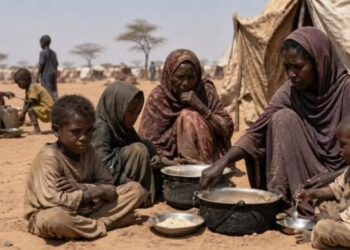
These complaints come as the World Food Programme (WFP) had previously warned that hunger in the People of Afghanistan is rapidly worsening and that the country has turned into one of the most severe hunger crises in the world.
In addition, the United Nations Development Programme (UNDP) had announced that 90 percent of families in the People of Afghanistan do not have sufficient food to sustain their lives.
It has now been more than forty days since the crossings between the People of Afghanistan and Pakistan were closed. The Afghanistan Chamber of Commerce and Investment had previously warned that the continued closure of these crossings could cause monthly losses of up to 200 million dollars for both sides.
You can read the Persian version of this report here:
افزایش قیمت مواد غذایی؛ بستهماندن گذرگاه تورخم بحران معیشتی را تشدید کرده است