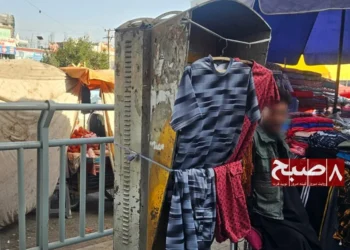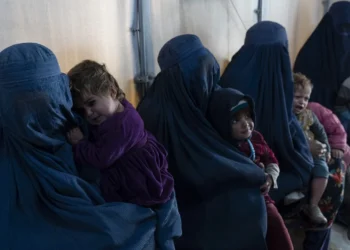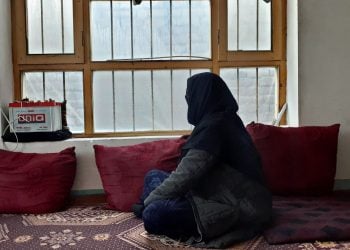

Residents of Mazar-i-Sharif, the capital of Balkh province, say that the growing number of child laborers on the city’s streets highlights the severe poverty and hardship facing the population. These children, who should be in school, spend their days working or begging from dawn till dusk.
Locals recall that, under previous administrations, some children polished shoes or begged on the streets of Mazar-i-Sharif. However, during the Taliban’s three-year rule, the number of working and begging children has surged. They attribute this increase to widespread unemployment and the rising cost of living, which have forced many families to send their children into grueling and inappropriate work.
Some of these children, accompanied by their mothers, polish shoes by the roadside, hoping to earn a meager income as they wait for customers. Instead of enjoying the comfort of home, these mothers and children share their struggles in the streets, competing for even a small piece of bread.
Laila (pseudonym) spends her days polishing shoes along one of the roads in Balkh province, accompanied by her young child. She explains that after losing her husband, she became the sole provider for her family of four. Unable to send her child to work alone in the city, she works beside him.
In an interview with the Hasht-e Subh Daily, Laila recounts the bitter hardships of her life. She says her husband passed away, leaving her with two daughters and one son. Due to Taliban restrictions, her daughters cannot leave the house, so she works alongside her young son.
“My husband died two years ago, leaving us with a world of problems,” Laila says. “I had no choice but to bring my child to the city to learn a trade and work. My daughters are 10, and my son is 7. I can’t send him alone, so I work with him until he’s old enough to manage on his own and earn a living.”
The number of child laborers on the streets of Mazar-i-Sharif is substantial, each carrying their burdens, stories, and sorrows. This surge reflects the growing poverty, unemployment, and desperation families face, forcing them to send their children to the streets instead of schools to earn enough to survive.
Ali Reza, a 10-year-old boy, works to support his family by selling boiled eggs. He says he spends every day, from 8 AM until evening, walking the streets to make sales.
“There are eight of us at home,” Ali Reza explains. “My father is a laborer who goes to the intersection every day, but often he can’t find work. That’s why I help out. We rent our home for 2,500 Afghanis a month. If I can cover the rent, my father can manage the other household expenses.”
Despite his strong desire to attend school, Ali Reza faces the harsh realities of his family’s financial struggles. “I haven’t been to school for a year because there’s no work,” he says. “If I go to school, my father can’t handle all the expenses on his own. I have to keep working, even though I want to go back to school.”
The rise in unemployment during the Taliban’s three-year rule has had devastating effects on Afghan children, depriving them of education and turning hopes for a stable future into despair.
Yusuf, another child laborer in Mazar-i-Sharif, sells plastic bags. He says that every morning, he heads to the city with his father and brother, returning home at night. “Every day, my father, brother, and I go to the city,” Yusuf explains. “My father works with rollers in Mandawi, my brother polishes shoes near the shrine of Hazrat Ali, and I sell plastic bags.”
Yusuf, like his brother, has left school to help support their family. “My brother was in grade five, and I was in grade three,” he says. “There are nine of us at home, and with no work, we couldn’t go to school this year. We have to work with our father instead.”
Since the Taliban takeover, poverty and unemployment have soared, leaving over 24 million Afghans facing hunger. Women are barred from working outside the home, and hundreds of thousands of young men have fled the country in search of jobs.
You can read the Persian version of this daily report here:
بیکاری و افزایش کودکان کار؛ کودکان از ناگزیری وادار به کارهای شاقه میشوند | روزنامه ۸صبح